


Does PM Modi believe anyone opposing him is urban Naxal, Congress asks
Despite frequent references to 'urban Naxals' in BJP speeches and campaign material, there is rarely any definition for who qualifies
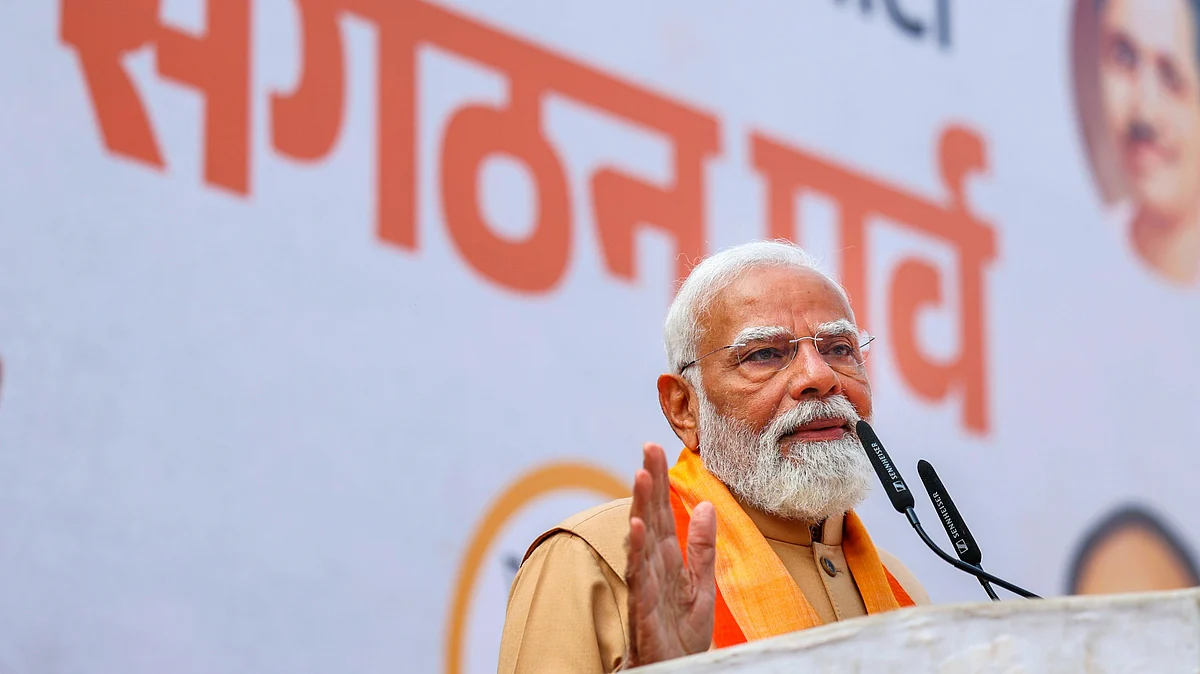


The Congress on Tuesday hit back at Prime Minister Narendra Modi for flagging the alleged influence of “urban Naxals”, citing a parliamentary reply from the Union government stating that the Union home ministry does not use the term. The Opposition party also questioned whether the prime minister believes anyone opposed to him is to be labelled as such.
Addressing party workers at the BJP headquarters after 45-year-old Nitin Nabin was declared the party’s new national president, Modi said, “Another major challenge is that of urban Naxals who are expanding their influence globally.” Responding to the remarks, Congress Rajya Sabha MP and general-secretary (communications) Jairam Ramesh noted that Modi had again spoken of a threat from what he described as “urban Naxals”.
“On March 11 2020, the Minister of State of Home answered a question in the Rajya Sabha saying that the Union Home Ministry does not use the phrase ‘urban Naxals’. On April 29 2024, the PM himself accused those calling for a caste census and those expressing concern on economic inequalities as suffering from an ‘urban Naxal’ mindset,” Ramesh wrote on X. “Will the prime minister clarify or does he believe that anyone opposed to him is an urban Naxal?” he asked.
Critics have long noted that despite frequent references to 'urban Naxals' in BJP speeches and campaign material, there is rarely any operational definition, list, or criteria offered for who qualifies.
Also Read: The BJP and the ghost of ‘urban Naxals’
The term is therefore deployed with considerable elasticity — broad enough to cover activists, academics, commentators, political rivals and, on some days, anyone writing a less-than-flattering op-ed. The absence of specifics has allowed supporters to treat “urban Naxal” as an all-purpose pejorative while leaving its precise contents to the imagination.
Opposition parties have for several years also accused sections of the broadcast media of acting as 'godi media' — a colloquial term used to suggest proximity to the ruling establishment where godi literally means 'lap' in Hindi — and of limiting or downplaying coverage of Opposition campaigns, press conferences and policy positions.
Congress leaders have argued that such gaps in coverage distort the political field and reduce scrutiny of the government, while regional parties have similarly complained that news agendas are increasingly driven by Central government messaging rather than multi-party debate. Several media watchdogs and academic studies have also noted the widening disparity in airtime granted to ruling and Opposition figures during major political events.
In his speech, Modi argued that social and political pressure was being deployed against supporters of his government. “If they tweet something positive about Modi even once or twice a year or say something positive on TV or write something positive in a newspaper, some journalists humiliate them so much that they are hounded and made untouchable…. This is the style of urban Naxals,” he said.
Modi claimed the BJP itself had been treated as untouchable for years, asserting that the country had begun to recognise such tactics. “Urban Naxals are continuously working to harm India. We have to defeat this nexus through the strength of our organisation and ideology,” he added.
With PTI inputs
Join our official telegram channel (@nationalherald) and stay updated with the latest headlines