


PM, allies ‘bruised, exposed for their lies’: Congress on Vande Mataram debate
The debate in Lok Sabha and Rajya Sabha sparks a clash of historical interpretation and political rhetoric
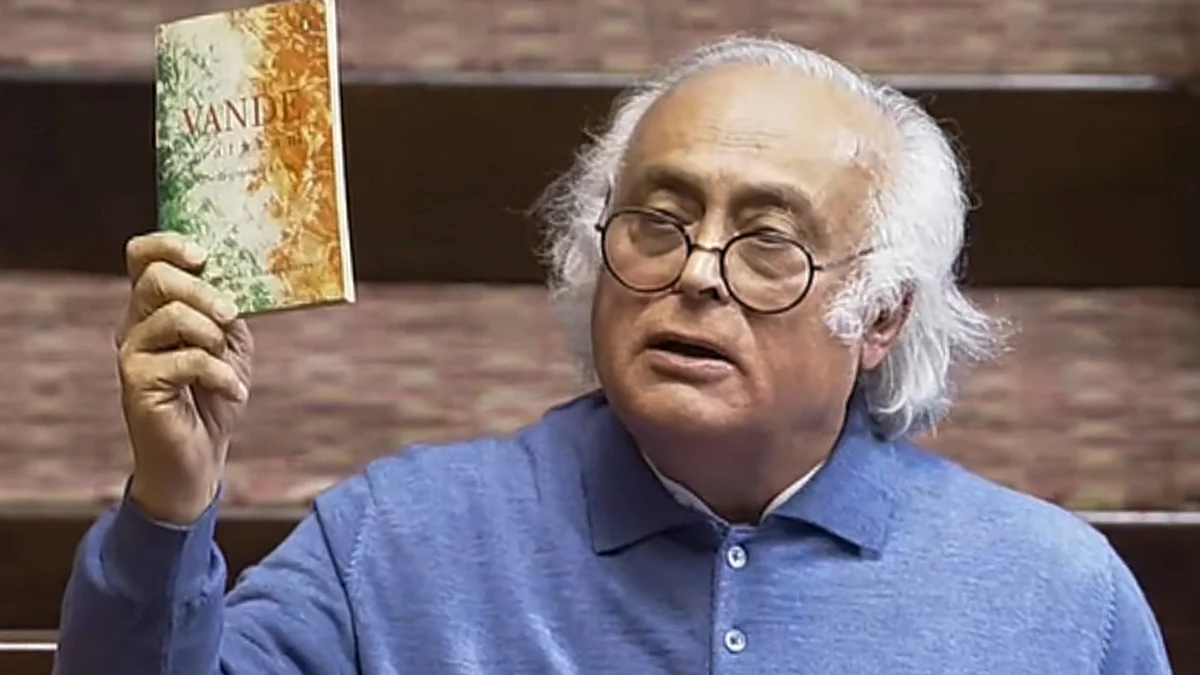


The recent parliamentary debate marking 150 years of Vande Mataram has ignited a fierce political skirmish, with the Congress on Thursday accusing Prime Minister Narendra Modi and his allies of being thoroughly “bruised and exposed for their lies”.
Congress general secretary Jairam Ramesh, overseeing the party’s communications, noted that the Lok Sabha and Rajya Sabha engaged in an extensive, three-day deliberation on the national song, with the national anthem also featuring in several speeches.
Posting on X, Ramesh contended that the prime minister and his brigade had evidently not consulted the two definitive scholarly works on the subject — Rudrangshu Mukherjee’s Song of India: A Study of the National Anthem and Sabyasachi Bhattacharya’s Vande Mataram — calling it “too much to expect” that they would, even after being “thoroughly bruised and exposed”.
Ramesh also drew attention to historian Sugata Bose’s remarks, noting that it was on Rabindranath Tagore’s advice that, in 1937, the Congress decided that only the first part of Vande Mataram would be sung at national meetings — a historical nuance he said “further exposes” the prime minister.
The debate, held in the Lok Sabha on Monday and continued in the Rajya Sabha on Tuesday and Wednesday, became a cauldron of historical interpretation and political rhetoric. Opposition leaders accused the BJP of distorting history, arguing that the 150-year commemoration was being leveraged to malign Jawaharlal Nehru and disrespect revered freedom fighters, including Tagore himself.
Prime Minister Modi, in his intervention, accused the Congress of betraying Vande Mataram, suggesting that Nehru had yielded to Muhammad Ali Jinnah’s opposition, fragmenting the national song and pursuing what he termed a path of appeasement politics.
The three-day discourse, marked by pointed exchanges between the treasury and opposition benches, delved not only into the legacy of Vande Mataram but also broader questions of nationalism, patriotism, and historical memory, leaving Parliament as the stage for yet another battle over India’s past and its interpretation.
With PTI inputs
Join our official telegram channel (@nationalherald) and stay updated with the latest headlines