


Revanth Reddy unveils Telangana Rising roadmap, targets $3 trillion economy by 2047
CM says vision document aims to transform the state into a global gateway through services, manufacturing and agriculture-led growth
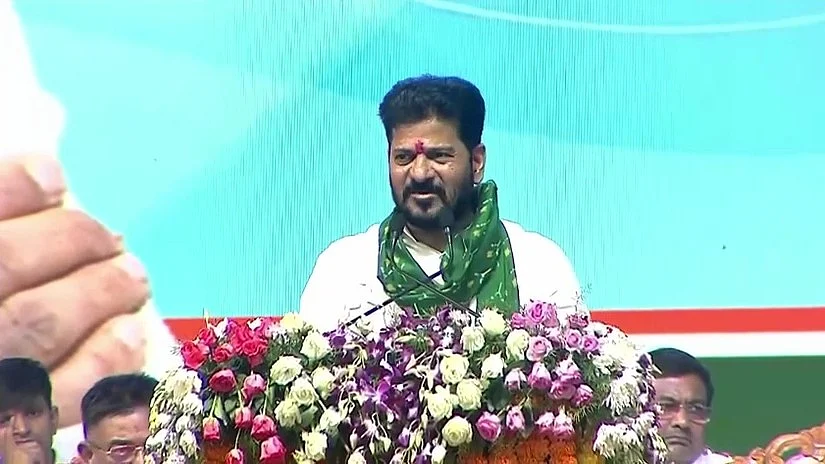


Telangana chief minister A. Revanth Reddy on Monday unveiled an ambitious long-term development roadmap for the state, declaring that his vision is to make Telangana not merely a gateway to India but a gateway to the world.
Addressing Telangana Formation Day celebrations at the Parade Grounds in Hyderabad, the chief minister said the state's development strategy is outlined in the ‘Telangana Rising – 2047’ vision document, which aims to transform Telangana into a $1 trillion economy by 2034 and a $3 trillion economy by 2047.
Reddy said the government has adopted a comprehensive master plan covering the entire state, which he described as a unique initiative. The vision document divides Telangana into three development zones — CURE, PURE and RARE — with each region assigned a distinct economic role.
Under the plan, the area within Hyderabad's Outer Ring Road has been designated as the CURE (Core Urban Region Economy) zone and will be developed into a world-class services hub. The government intends to create an eco-friendly and pollution-free urban ecosystem through measures including the relocation of polluting industries and the promotion of electric vehicles. The state has already introduced incentives such as exemptions on registration fees, road taxes and lifetime taxes for EVs.
The region between the Outer Ring Road and the proposed Regional Ring Road has been classified as the PURE (Peri-Urban Region Economy) zone. This belt is expected to emerge as a major centre for infrastructure development and manufacturing activity. As part of the strategy, the government plans to develop Bharat Future City, a 30,000-acre Greenfield smart city, while strengthening regional connectivity through projects such as a proposed bullet train hub at Shamshabad.
The third zone, RARE (Rural and Agricultural Region Economy), will focus on agriculture, agro-based industries and rural development. Extending from the Regional Ring Road to the state's borders, the zone will support irrigation projects, agricultural research, crop diversification and agro-industrial growth, according to the chief minister.
Reddy said his government was pursuing a balanced approach that combines economic development with social welfare. He claimed Telangana continues to set benchmarks in welfare delivery while implementing programmes aimed at farmers, women, youth and socially disadvantaged communities.
Highlighting the importance of agriculture in the state's growth strategy, he said Telangana had achieved a record food grain production of 236.87 lakh tonnes during 2025-26. He attributed the growth to government support measures and improved performance in crops such as paddy, maize and cotton, alongside significant gains in the livestock and fisheries sectors.
The chief minister said the government had spent Rs 1,56,496 crore on agriculture and farmer welfare over the last two-and-a-half years. He also highlighted the state's procurement efforts, noting that Rs 82,840 crore had been spent on purchasing crops directly from farmers since December 2023. During the current Rabi season alone, the government has procured 63.65 lakh metric tonnes of paddy and transferred Rs 11,903 crore directly into farmers' bank accounts.
Claiming Telangana has emerged as a national leader in paddy procurement, Reddy said the state accounted for nearly 60 per cent of the country's total paddy procurement during the Yasangi season. He urged farmers to embrace crop diversification to further strengthen agricultural sustainability and rural incomes.
The chief minister said the government's ultimate objective remains poverty eradication and inclusive development, adding that Telangana's long-term vision is aimed at creating a globally competitive economy while ensuring prosperity reaches every section of society.
With IANS inputs
Join our official telegram channel (@nationalherald) and stay updated with the latest headlines