


BJP turning into Bharatiya Jasoos Party: Congress
Party spokesperson Pawan Khera recalls BJP previously went to court challenging the scope of the constitutional right to privacy
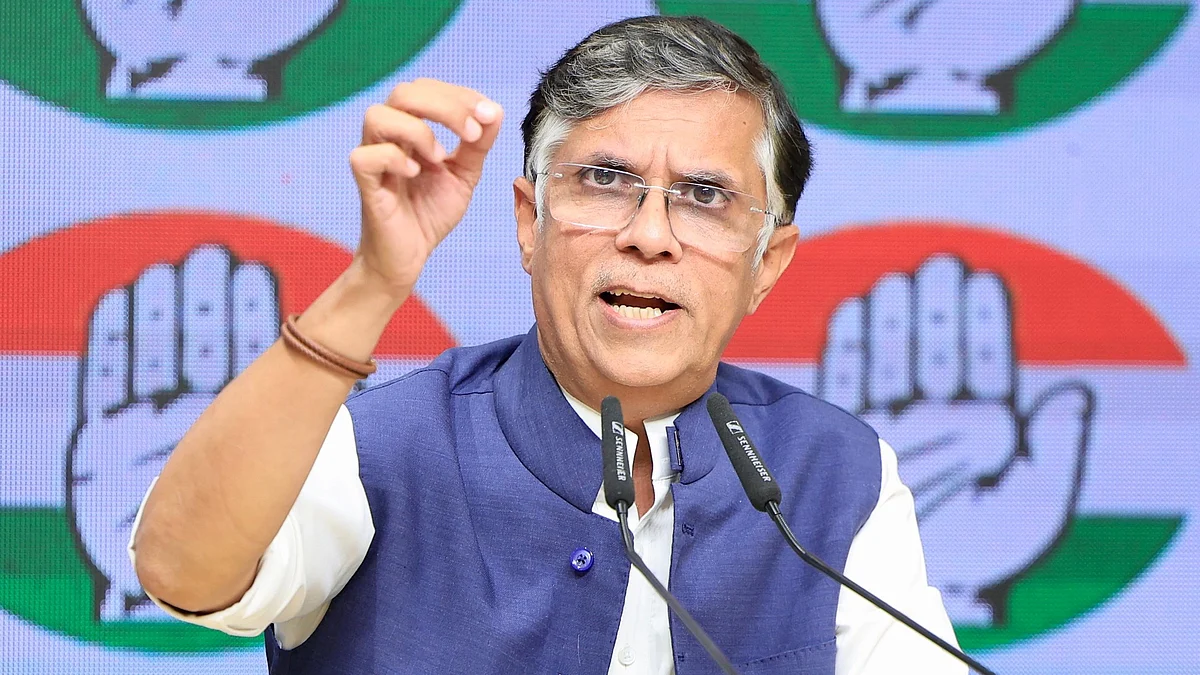


The Congress on Wednesday launched a fierce attack on the Modi government over its proposed move to install the ‘Sanchar Saathi’ mobile application on smartphones, alleging that the BJP was “intruding into the private lives of citizens”.
Addressing a press conference in Delhi, senior Congress leader Pawan Khera accused the government of systematically dismantling the fundamental right to privacy.
“The BJP has become the 'Bharatiya Jasoos Party'. It wants to peek into every citizen’s life,” Khera said.
He recalled that the Modi government had previously gone to court challenging the scope of the constitutional right to privacy. He also cited multiple instances from the past decade to argue that the government has consistently expanded its surveillance architecture.
“In 2018, the government authorised 10 agencies to intercept any computer without judicial oversight. There were attempts to push the DNA Profiling Bill. Plans were drawn up for a Social Media Hub to monitor digital conversations,” Khera said.
He then listed year-wise examples of what he described as an “assault on privacy”:
2019: Pegasus spyware scandal, involving surveillance of Opposition leaders, journalists, judges, and even Central ministers.
2020: Allegations of data leaks and misuse of personal information from the NaMo app involving whistleblowers and journalists.
2021: Government earned over Rs 100 crore by selling citizens’ personal data to private companies.
2023: The Right to Information (RTI) law was “deliberately weakened,” he said.
2025: Amendments to the Income Tax Act allegedly gave authorities sweeping powers to scrutinise emails, cloud accounts, messaging apps, social media, online banking, and IoT devices.
The party warned that such a move would grant authorities access to citizens’ financial records, personal photographs and private messages. “A copy of everything — two spies [Modi] will get it from you,” Khera alleged.
However, following criticism, the Centre clarified that Sanchar Saathi will not be mandatory for pre-installation.
Officials from the Department of Telecommunications (DoT) said clause 7(b) of the November 28 directive — which says the app’s “functionalities are not disabled or restricted” — applies only to manufacturers.
It ensures that if they choose to preload the app, they cannot hide it or disable its features. It does not prevent users from uninstalling it. DoT officials also said the app accesses only limited information with explicit user consent — basic permissions for registration and optional permissions for features such as handset verification or reporting fraud.
Khera raised a series of pointed questions for the Modi government:
• Is it not true that government-linked apps have previously been accused of planting files on citizens’ devices?
• Why is the government forcing an app onto every citizen’s phone?
• Couldn’t security have been ensured through less intrusive means?
• Was any public consultation held before issuing such a sweeping order?
• Who authorised the government to assume the blanket consent of 80 crore digital citizens?
• Why does the government want access to private conversations between partners, families and friends?
• And if the Modi government boasts of “minimum governance”, does this version of minimum governance include peeking into people’s bedrooms?
Join our official telegram channel (@nationalherald) and stay updated with the latest headlines