


Is age fraud turning out to be Indian sport’s biggest endemic after doping?
BCCI ban on leg spinner Rohit Yadav, member of Under-19 national team, is an acute embarrassment


It has been one of the worst-kept secrets in Indian sport, but a few recent high-profile instances of age fraud have once again raised questions about whether the problem has become endemic. The BCCI’s two-year ban on India Under-19 player Rohit Yadav, who was selected for the team’s series against Australia later this month, has stirred up a hornet’s nest all over again.
A leg-spinner who sought a transfer from Uttar Pradesh to Bengal, Rohit earned his India U-19 call-up after impressing at the junior level and claimed six wickets in the team’s last Youth Test against Sri Lanka U-19. He was subsequently selected for the series against Australia, but the BCCI’s ban, effective immediately, means a replacement will be named and Rohit’s dreams are dashed — for now.
Discrepancies in Rohit’s date of birth, revealed in his updated Aadhaar records during a verification by Cricket Association of Bengal (CAB) officials, set alarm bells ringing. The state association subsequently apprised the Indian board and sought necessary action.
When reached out for his comments, CAB secretary Bablu Koley said: “We had kept Rohit out of the state team as our officials tracked the discrepancies in his age proof in the Aadhar as well as digital birth certificate. He had a domicile issue as well and we have adopted a hard line against the menace of outstation and overage players plying their trade in local cricket. If a player is found to be overage in an international match, the BCCI would have been discredited too.”
Age-cheating offences in cricket attract considerable attention because of the sport’s popularity, but Aahna Mehrotra, a leading sports lawyer who has authored a paper on the subject, describes it as an “endemic”. Speaking to Reuters in an interview this week, Mehrotra said: “Age fraud runs across most disciplines that have age-group competitions and is at its worst at the sub-junior and junior levels, where the rewards are highest and the scrutiny is lowest.”
The curious case of Vaibhav Sooryavanshi, the 15-year-old who is now the flavour of Indian cricket, has repeatedly raised questions over whether the wonderkid is indeed the age he claims to be, given the power behind his strokes. The Bihar youngster has silenced many of his critics, particularly with his Orange Cap-winning performance in IPL 2026. Yet questions over whether he was actually born on 27 March 2011, continue to fuel public debate and scrutiny.
A decade ago, during the 2015-16 MAK Pataudi Memorial Lecture, former India captain Rahul Dravid spoke about the need to combat the growing menace of age fraud in Indian cricket. His main concern was the tendency to seek “short-term results” by fudging players’ ages, with parents often complicit. But in 2019, there was another shock when Manjot Kalra, a member of India’s 2018 Under-19 World Cup-winning team, was suspended by the Delhi & District Cricket Association (DDCA) from playing Ranji Trophy for a season for the same offence.
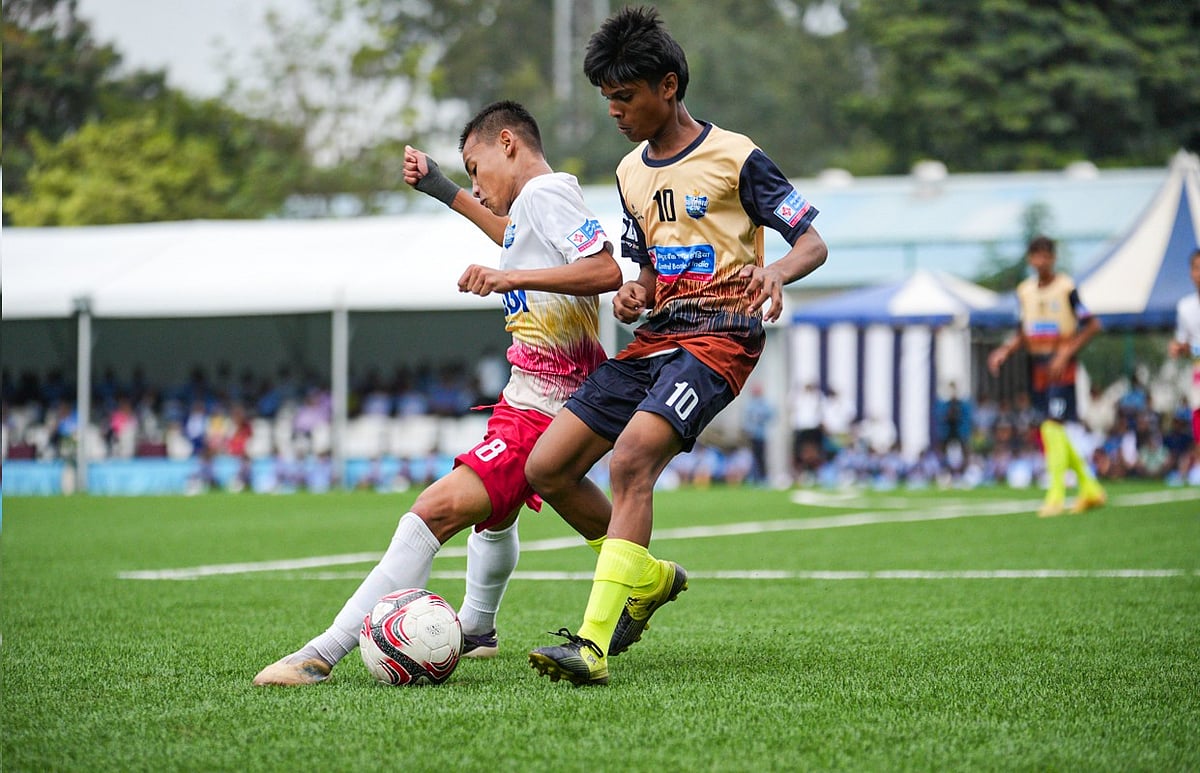
Over to wrestling: at least 500 youngsters were disqualified from India’s Under-17 championships in Gonda in June for age fraud, making it the latest in a string of such cases. The development came less than a year after nearly 20 teams were expelled from India’s premier school football tournament, the Subroto Cup, for fielding overage players.
Speaking to Reuters, PSM Chandran, president of the Indian Federation of Sports Medicine, said age fraud should be punished in the same way as doping, another modern scourge of sport. “We have such strict punishment for doping. Why can’t we have something similar for age fraud?”
“Age fraud is very much there, and the system is inadequate to stop it,” he said. “The federations have not done enough. The cricket board has taken the lead in recent times, but we need more from other federations.”
In 2012, the BCCI became the first sports body in India to adopt the TW3 method of “bone testing”, which assesses skeletal maturity through an X-ray of the left hand and wrist. India’s football and tennis federations have since adopted the method. Bone tests, while useful until about the age of 16, have their shortcomings.
“Certain bone tests are conducted in clinics that have no commitment to sports,” Chandran said. “I am aware of incidents where an athlete submitted someone else’s bone test, and it has happened more than once.”
Commenting on her 2024 paper, More Than Just a Number: How India Is Trying to Tackle Age Fraud in Sport, Mehrotra said parents and coaching centres often play a role, sometimes being complicit in such attempts. Financial incentives, including scholarships offered by the Union Sports Ministry to top performers at the Khelo India Youth Games in the Under-17 and Under-19 age groups, provide an incentive for such “short-term” gains, making the menace more difficult to curb.
Join our official telegram channel (@nationalherald) and stay updated with the latest headlines