


Britain itching to return to the EU
A decade after leaving, Britons have realised the Brexit was a mistake. While immigration remains a sensitive topic, the benefits of reintegration are compelling
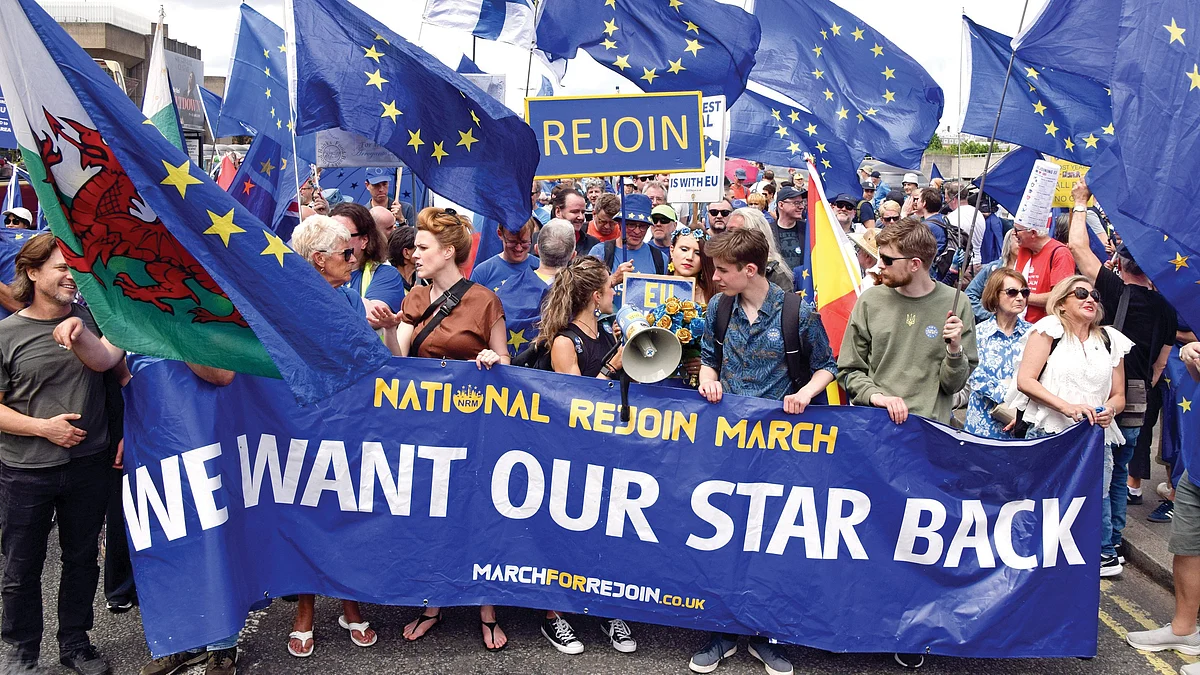


In a referendum held in 2016, Britain voted by a small margin to exit the European Union. As expected, the move lowered trade growth and trade turnover. As external demand slipped, so did production. Unemployment rose. Britain’s GDP took a big hit.
A decade later, Britons have realised Brexit was a mistake. Recent opinion polls indicate that if a plebiscite were held today, Britons would vote decisively in favour of reintegration with the EU.
Two years ago, Britain’s Labour party swept to power with a landslide. Their prime minister, Keir Starmer, sensed his people’s desire to reintegrate, but Labour’s election manifesto had ruled this out. It was a pledge Starmer couldn’t dishonour, but he smoothened trade with the EU for some essential goods.
His successor, Andy Burnham, has been more forthright about the need for Britain to close ranks with the EU. This week, in a speech in the House of Commons—Britain’s Lok Sabha—he confirmed there will be a summit between the UK and the EU on 20 November to explore their future relations.
“If we are serious about promoting growth, controlling immigration, upholding our values and security, it is a conversation we must have,” he said. He emphasised, “Our immediate priority is securing a successful outcome at the summit, and I believe we should then set up a serious dialogue about the different options for our relationship in the long term.”
He adhered to Starmer’s position that there will be no return to the EU before the next general election, which is due in 2029, but it is within Burnham’s powers to call a snap election to hasten the process. He hinted as much by saying, “At every stage, the British people will be the boss, and I am clear that public opinion currently supports a pragmatic approach like the one I am suggesting.”
On that fateful day in June 2016 when the UK chose to leave the EU, it was their elderly population and white working classes besides a section of British Indians that tilted the scales. The youth stayed at home to party, confident the verdict would be to remain in the union. Now, they are frustrated because they can’t move freely within the EU and have to put up with long queues at European airports. So they are impatient to return to the old order, which, from all indications, the Europeans would prefer as well.
Immigration is a burning issue in Britain. The rise of the far-right Reform UK party is founded on keeping foreigners out. Asked in Parliament if it was now harder for British authorities to control their borders, Burnham answered: “We are in a weaker position when it comes to controlling immigration than we were just over 10 years ago.” A reason for this is that after Brexit the UK
no longer enjoyed access to the Eurodac database, which contains biometric data about asylum seekers.
Reform (then under the garb of the Brexit Party) strenuously opposed free movement of people, which a member country of the EU was obliged to respect. This is still a sensitive subject in Britain. So, it was put to Burnham in the Commons if he would confirm a ‘no return to freedom of movement’. He replied, “What we have to look at are the options that are available for the long-term relationship.” Reform is on the defensive on the question of Britain’s reintegration with the EU. They know their old stance is unpopular, except among their hardcore supporters.
Burnham is aware that Britons want an end to their economic misery, and have more or less come round to the view that reintegrating is the solution. A study by the consultancy Frontier Economics projects that reintegration could boost Britain’s GDP by 2.5–3.6 per cent over the long term. So, a realignment of UK–EU ties is looking highly probable, though we do not at this point know the shape of the new arrangement.