Advertorial
Personal Loan vs Credit Card Debt: Which is Cheaper in 2026?
How Do Personal Loan and Credit Card Interest Rates Work in India in 2026?
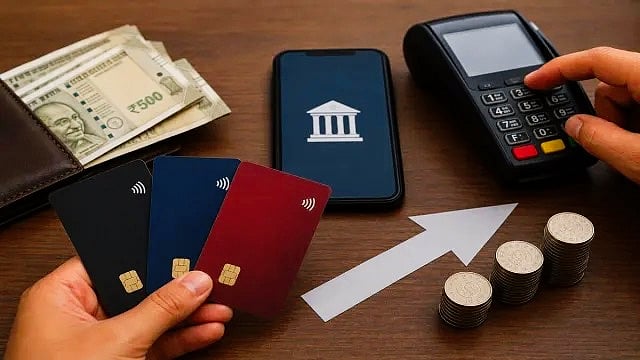
A personal loan is usually more affordable than credit card debt. Personal loan interest rates are usually lower and more predictable, whereas credit card interest rates vary widely and tend to climb steeply once you carry a balance past the due date. Credit cards are the smarter choice only when you're confident you can pay the bill in full and on time.
Quick Reads
A personal loan usually costs less per year than revolving credit card debt.
A fixed EMI sets a clear end date, while minimum payments stretch repayment.
A card can be cheaper when the full bill is paid on time.
Processing fees, GST, foreclosure charges, and card fees all change the real cost.
Comparing the annual rate and total cost, not the EMI, makes the choice easier.
Both a personal loan and a credit card generally require no collateral. This means that both of them are unsecured. However, interest works differently for the two. A personal loan is repaid through scheduled installments, whereas a credit card lets you borrow up to a set limit, and you can keep reusing it as you repay. Deciding which one is more affordable in 2026 depends on what your needs are and what your payment habits are.
How Do Personal Loan and Credit Card Interest Rates Work in India in 2026?
A personal loan follows a fixed repayment schedule. A credit card offers an interest-free period only when the total due is paid by the due date. This is how each one works:
A personal loan sets the cost of borrowing upfront, with a fixed rate and a clear end date. A card's cost depends on how quickly the balance clears. Knowing which situations suit each option makes the choice much easier.
When Does a Personal Loan Make Sense or a Credit Card Make Sense?
A personal loan makes sense when repayment runs for several months, and a fixed schedule helps. A card fits when you can pay the full balance by the due date.
When is a Personal Loan Cheaper?
A personal loan tends to cost less when the balance will take a while to clear, and the borrower wants a predictable schedule. This is usually cheaper when:
Borrowing continues beyond the interest-free period
You want a fixed EMI and a defined end date
You combine several card balances into one loan and the total cost drops
The loan costs less per year after fees, and the tenure isn't stretched just to lower the EMI
When is a Credit Card Cheaper?
A credit card tends to cost less when the bill clears quickly, since the interest-free period does the work. These situations fit best:
The total bill is paid by the due date
A promotional offer costs less after all fees and price adjustments
A small expense gets repaid within the interest-free period
An issuer's EMI conversion costs less than revolving the balance, and you don't need a cash withdrawal, since cash advances carry separate fees and interest
Don’t focus only on a low headline rate when comparing the two. Fees and charges can shift the total cost in either direction, so make sure you look through those carefully before choosing.
What Extra Costs Should Borrowers Check Before Choosing?
Both products carry costs beyond the headline rate. The Key Facts Statement and product terms list them before acceptance.
Personal Loan Checklist
Most personal loan costs are fixed at sanction and appear in the loan agreement. Checking them upfront shows the true price of the loan, beyond the interest rate. These are some things to go through:
Processing fee: Confirm the percentage and the taxes added on top.
Foreclosure charges: Check the percentage of outstanding principal and whether it drops off after a set number of EMIs.
APR and amortization schedule: This tells you the Annual Percentage Rate (APR), which shows the yearly cost of the loan, including fees. An amortization schedule focuses on explaining each installment’s principal and interest.
Credit inquiry: An application usually triggers one, and credit scores can sometimes change the fees that are added.
Credit Card Checklist
Card costs depend on how the card is used, so they show up only when a feature is triggered. Make sure you look at the issuer’s terms carefully before using cash advances or EMI offers so that you can avoid any surprises later on. These are some things to cross-check:
Cash advance fee: Check the percentage, the minimum amount, and the separate interest.
No-cost EMI: Look for the disclosed principal, interest, and upfront discount.
Utilization: Keep in mind that high utilization may factor into credit-risk checks.
Late fees: Confirm the charge applies only to the outstanding amount after the due date, and that the issuer discloses it.
GST and annual fees: Add both to the total cost.
Costs like these can change which option comes out cheaper. So the final call rests on comparing the total cost of each option and not just the interest rate.
Summing It Up
A personal loan is generally cheaper than revolving card debt when the balance stays unpaid past the interest-free period. A credit card is a better option when the total bill is paid by the due date, or when an EMI conversion’s disclosed cost is much lower. Make sure you compare the annual rate instead of the EMI, and add all additional charges to the total cost before making a decision. If you prefer a cheaper, more straightforward option, Finnable offers personal loans up to ₹10 lakh with processing fees of up to 5% plus GST.