Education
CBSE's three-language formula tightens curriculum, squeezes out foreign options
Schools, teachers and parents flag concern over choice, capacity, global competitiveness
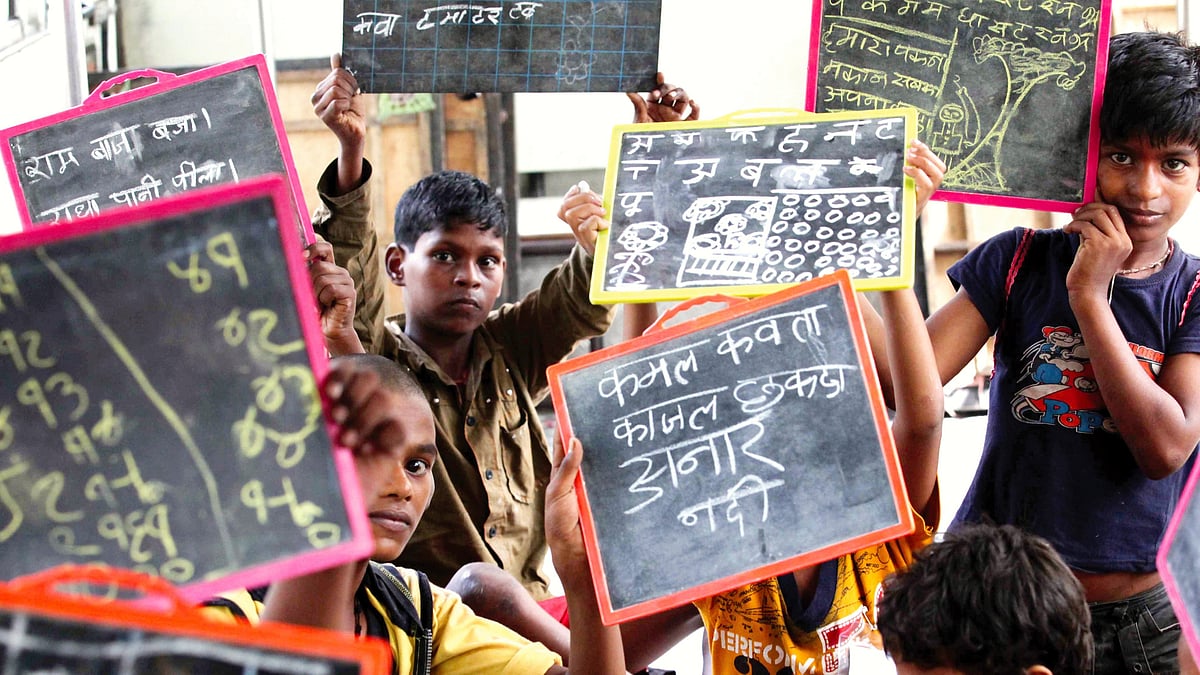
The recent directive by the Central Board of Secondary Education (CBSE)—making third language (R3) compulsory from Class VI—will reshape classrooms across India from the 2026-27 academic session.
The directive explicitly states that at least two of the three languages studied must be “native to India” as defined in the Eighth Schedule of the Constitution. In English-medium schools, where English has long been the medium of instruction, this effectively means English counts as the lone foreign language slot. Hindi typically fills the second (Indian) slot. The third must therefore be another Indian language—Sanskrit, Punjabi, Tamil, Bengali, Marathi or any of the 22 scheduled languages—leaving no room for French, German, Spanish or any other foreign language in the core curriculum.
The policy draws from the National Education Policy 2020 and the National Curriculum Framework for School Education 2023, both of which emphasise multilingualism, cultural understanding and national integration. However, its rollout has raised concerns over timing, preparedness and flexibility.
Under the R1-R2-R3 framework, students must study three languages through Class 10, with R3 introduced in Class 6. A CBSE circular dated 9 April 2026, directed schools to notify their chosen R3 languages within seven days, update records and begin instructions immediately using “locally available books/materials,” with official textbooks expected later.
For many schools, the transition has been abrupt. “There was no planning window,” said a principal of a Delhi-based CBSE school. “We were asked to finalise languages, inform parents and start teaching within days.”
Administrators across major cities report that foreign language offerings are being discontinued or pushed into optional formats. “French will no longer be offered as a language option in Class VI,” read a notice sent to parents by one private school.
Teachers trained in European languages say they face an uncertain future. “This policy leaves us with no clarity,” said a Spanish teacher at a Delhi school. “Within two to three years, most of us may lose our core roles unless we retrain.”
Some schools have indicated that foreign-language teachers could be retained temporarily if they upskill for other subjects. But for many, that offers limited reassurance. “We’ve spent years specialising in one field,” another teacher said. “Switching tracks isn’t easy.”
Resource gaps are another concern. With textbooks for several R3 languages yet to be released, schools are relying on improvised materials. “We are using worksheets, online videos and whatever we can find,” said a Mumbai school coordinator. “It’s far from ideal.”
In regions where the selected language is not widely spoken, finding qualified teachers is proving difficult. “If we choose a language like Tamil or Punjabi in a non-native region, where do we find trained staff?” a Pune-based principal asked. “The shortage is real.”
Critics also argue that the policy risks increasing the academic burden on students. While multilingualism can enhance cognitive skills, they say rigid enforcement may lead to superficial learning. “Children are already under pressure,” said a parent in Delhi. “Adding another compulsory language without choice may not help them learn better.”
Concerns have also been raised about reduced exposure to foreign languages at a formative age. “Languages like French and German open doors globally,” said an education consultant. “Removing them from the mainstream curriculum could limit opportunities in higher education and international careers.”
Supporters of the policy, however, maintain that it strengthens Indian languages and cultural awareness. They argue that greater familiarity with regional languages can foster national integration in a linguistically diverse country.
Even so, some educators believe a more flexible approach is needed. “Multilingualism should be about choice, not compulsion,” said a senior school administrator. “Students should have the option to combine Indian and foreign languages based on their interests and future goals.”
Others have called for a phased rollout with adequate preparation. “Teacher training, textbooks and infrastructure should come first,” an academic expert noted. “Policy implementation cannot run ahead of capacity.”
By closing the door to foreign languages just when cognitive receptivity to new tongues peaks, the policy narrows horizons rather than widening them. French, German and Spanish have long opened doors to European higher education, diplomacy, international business, tourism and the booming language-tech sector. In an economy that prides itself on global outsourcing and start-up ambition, reducing exposure to these languages is self-defeating.
As schools adjust to the new framework, the debate highlights a broader challenge: balancing cultural priorities with global competitiveness. For now, institutions are scrambling to comply, teachers are weighing their options and students may soon find their language choices significantly narrowed.
—Hasnain Naqvi, former history faculty member at St. Xavier’s College, Mumbai
Join our official telegram channel (@nationalherald) and stay updated with the latest headlines