Environment
COP 17: Countries on course to miss most global biodiversity targets agreed in 2022
As countries gather for COP17 biodiversity, conservationists warn that govts are failing to translate commitments into action
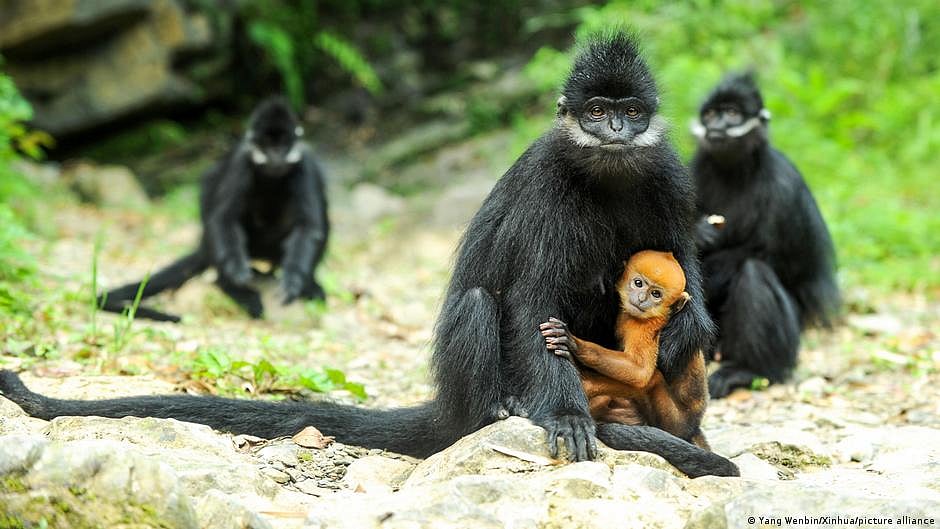
Governments around the world are on course to miss most of the global biodiversity targets agreed at a United Nations summit in Montreal in 2022, raising concerns about the pace of efforts to protect nature and reverse ecosystem decline.
The agreement, adopted at the COP15 biodiversity summit, committed countries to protecting 30 per cent of the planet, restoring nearly a third of degraded ecosystems and reforming at least $500 billion in environmentally harmful subsidies. However, a report assessing progress towards these goals indicates that countries are falling significantly short of their commitments.
The United Kingdom, which had called for ambitious action during the Montreal negotiations, is on track to meet only three of the agreement's 23 targets by the end of the decade. Countries are gathering at COP17 in Yerevan, Armenia, to review progress and discuss the next steps.
UN Secretary-General António Guterres warned ahead of the summit that the lack of progress meant “the war on nature has not ended” and that “nature will not survive on good intentions”.
He also called for governments to end subsidies for fossil fuels, arguing that they were contributing to climate change and biodiversity loss.
“Subsidising fossil fuels is subsidising suicide,” Guterres said, urging governments to redirect the money towards people and the planet.
“There’s a massive gap between countries agreeing to do something and actually doing it,” said Zac Goldsmith, a former UK government minister who was involved in the period when the agreement was reached.
UK faces criticism over delivery
British conservationists have criticised the gap between the government's international commitments and its domestic policies.
The UK government has weakened biodiversity net-gain rules in England, reduced funding for rainforest protection as part of aid cuts and rejected an outright ban on bottom trawling in marine protected areas, according to conservation campaigners. Natural England has also designated no new sites of special scientific interest to protect rare wildlife and habitats since 2023.
Craig Bennett, head of The Wildlife Trusts, said the UK needed to demonstrate that it could deliver on its commitments at home before urging other countries to meet their targets.
“For us to go around the world telling other countries that they must achieve these targets without us having a plan how to deliver them at home is a form of neocolonialism,” he said.
A UK government spokesperson said the government had backed nature recovery and climate resilience with £7 billion in funding and introduced powers to tackle water pollution, support species recovery and fund international conservation.
The government has also reinstated international climate finance commitments, pledging around £6 billion from its aid budget over the next three financial years, with approximately a quarter expected to be spent on nature.
Jonathan Hall, managing director of Conservation International UK, welcomed the renewed commitment but called for greater transparency over how the funding would be spent.
Political resistance and funding cuts
Efforts to protect biodiversity have faced political opposition in several countries, particularly where environmental measures affect agriculture and other economic interests.
In the Netherlands, EU measures introduced to tackle nitrogen pollution and protect vulnerable ecosystems triggered widespread farmer protests. The EU's nature restoration law, part of its wider environmental policy framework, also faced opposition from right-wing lawmakers in the European Parliament before being passed in a substantially weakened form.
Steven Guilbeault, Canada's former environment minister who helped guide the 2022 negotiations alongside China's environment minister Huang Runqiu, said governments often struggled to explain complex environmental policies to the public.
The return of Donald Trump to the US presidency has also dealt a blow to conservation funding, with cuts to the US Agency for International Development (USAID) and other government agencies leaving numerous projects without financial support.
Several European countries have also reduced funding despite committing to increase biodiversity finance to $30 billion annually by the end of the decade. The UK has restricted access to the Darwin Initiative, excluding at least 89 countries from eligibility earlier this year.
Attempts to mobilise private-sector funding have also fallen short. A fund intended to support companies using digital biodiversity data for commercial discoveries has reportedly raised only $6,000, despite hopes that it would generate hundreds of millions of dollars annually.
Some progress, but the gap remains
Despite the setbacks, some countries have made progress towards the biodiversity agreement's goals. One estimate suggests that countries could come close to meeting the target of protecting 30% of land, while the agreement has also helped formalise Indigenous territories in several countries.
French Polynesia has established large marine parks, while Kazakhstan has pursued rewilding initiatives, including efforts to reintroduce the Caspian tiger.
However, conservationists say these gains remain insufficient to address the scale of the crisis.
Li Shuo, director of the China Climate Hub at the Asia Society Policy Institute, said promised national plans and committed funding were failing to materialise at the required pace.
“Protection targets are falling short, promised national plans have yet to materialise, and committed finance is not reaching where it is needed,” he said.
With countries meeting in Armenia to review progress, the central challenge remains translating international commitments into effective domestic policies, sustained funding and measurable improvements in biodiversity.
Join our official telegram channel (@nationalherald) and stay updated with the latest headlines