Environment
Turkmenistan begins fixing methane mega-leaks after years of scrutiny & criticism
Secretive gas-rich nation has plugged eight major leaks, but UN says far more sources remain to be addressed
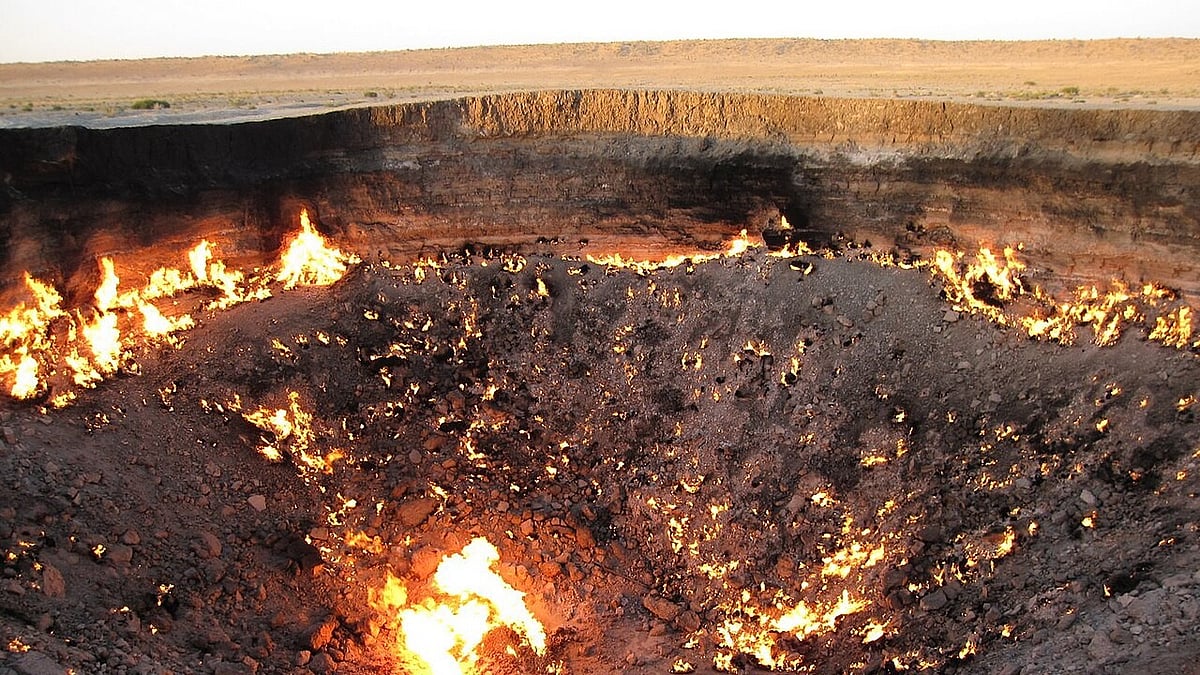
Turkmenistan has begun repairing the huge methane leaks from its ageing oil and gas infrastructure, marking a significant shift for a country previously identified as one of the world’s biggest sources of methane super-emissions.
The United Nations’ latest data shows that eight major leaks have now been stopped after repairs to corroded pipelines, faulty wells and malfunctioning flares. The progress has been welcomed by the UN as an important breakthrough, although officials cautioned that the scale of the country’s remaining methane emissions remains substantial.
The UN Environment Programme’s Methane Alert and Response System (MARS) sent 192 alerts about methane plumes to Turkmenistan over the past year. The country accounted for three of the six largest leaks detected worldwide by MARS in the past six months and nine of the 50 largest.
Turkmenistan responded to about 20% of those alerts with information gathered on the ground and, in some cases, plans to address the leaks.
Meghan Demeter, MARS programme manager, said the repairs demonstrated that satellite monitoring could translate into concrete action, including in countries where large numbers of leaks have been detected.
She described the documented repairs as a “breakthrough”, while stressing that eight repaired sites represented only a first step.
“There’s also a lot more sources in Turkmenistan that need to be addressed,” she said.
Turkmenistan was once the world’s worst methane leak hotspot
Methane is a far more potent greenhouse gas than carbon dioxide over shorter time periods and is responsible for a significant share of current global warming. Unlike CO2, however, methane remains in the atmosphere for a much shorter period, meaning cutting emissions can have a relatively rapid climate benefit.
The scale of Turkmenistan’s methane problem came under intense international scrutiny in 2023, when satellite data identified the country as having more super-emitting methane leaks than anywhere else in the world.
A super-emitter can release tonnes of methane every hour from a single source such as a valve, well or pipeline.
Earlier analysis found that methane emissions from Turkmenistan’s two main fossil fuel fields in 2022 had a climate impact greater than the UK's total carbon emissions that year.
The findings generated considerable attention inside Turkmenistan and encouraged the government to engage with the UN, European Union and other international partners over ways to tackle the leaks.
Turkmenistan joined the Global Methane Pledge in December 2023, two years after the initiative was launched.
Repairs begin after years of leaks
Turkmenistan has enormous natural gas reserves and is a major supplier to China. For years, the availability of large volumes of gas and the country's ageing infrastructure contributed to the continued leakage of methane.
The first leak identified through the MARS system was repaired in November 2024, after a faulty well was fixed.
The most recent documented repair took place in March this year, when a corroded pipeline in Lebap province was repaired.
The country has now stopped eight leaks identified through the satellite-based monitoring system.
However, Turkmenistan still has one of the highest concentrations of major methane emissions detected by MARS.
Its government and state energy companies Turkmenoil and Turkmengaz did not respond to requests for comment.
Satellite monitoring drives action
The MARS programme uses satellite observations to identify large methane plumes and alerts governments and companies so that the sources can be investigated and repaired.
Demeter said Turkmenistan's experience showed that the process from satellite detection to physical mitigation could work relatively quickly.
The latest data also highlights differences in how countries respond to methane alerts.
The US received 138 MARS alerts over the past year but did not respond to any of them or record a leak repair through the system during the period.
Iran, Russia and China also recorded no responses to their MARS alerts.
By comparison, Mexico, Brazil and Argentina responded to all their alerts, although responding to an alert does not necessarily mean a leak has already been repaired.
Mexico recorded the largest leak detected by MARS in the past six months — an extraordinary offshore release estimated at 37 tonnes of methane an hour, equivalent to the emissions of more than seven million SUVs. Mexico responded to all 23 alerts it received but had not yet completed a repair.
43 leaks sealed worldwide
Turkmenistan is not the only country where the satellite monitoring system has resulted in repairs.
According to the latest MARS data, 43 methane leaks have been sealed worldwide following alerts.
Kazakhstan, another former Soviet republic with ageing oil and gas infrastructure, has also stopped eight leaks, although it received only 38 MARS alerts over the past year.
Some repairs have required little more than fixing faulty equipment, while others have needed more extensive planning and investment.
In Algeria, one major leak was eventually stopped after having continued for almost four decades because of a faulty flare. Flares are designed to burn unwanted methane, converting it into the less potent greenhouse gas carbon dioxide.
For Turkmenistan, the repairs represent a notable change from the years when its methane emissions attracted global criticism. But with hundreds of satellite alerts still requiring attention, the UN says the country has only begun tackling the problem.
Join our official telegram channel (@nationalherald) and stay updated with the latest headlines