Environment
Why SC will not stay Calcutta HC proceedings on pleas against Great Nicobar project
Supreme Court asks Calcutta High Court to decide pleas challenging the Great Nicobar project without delay
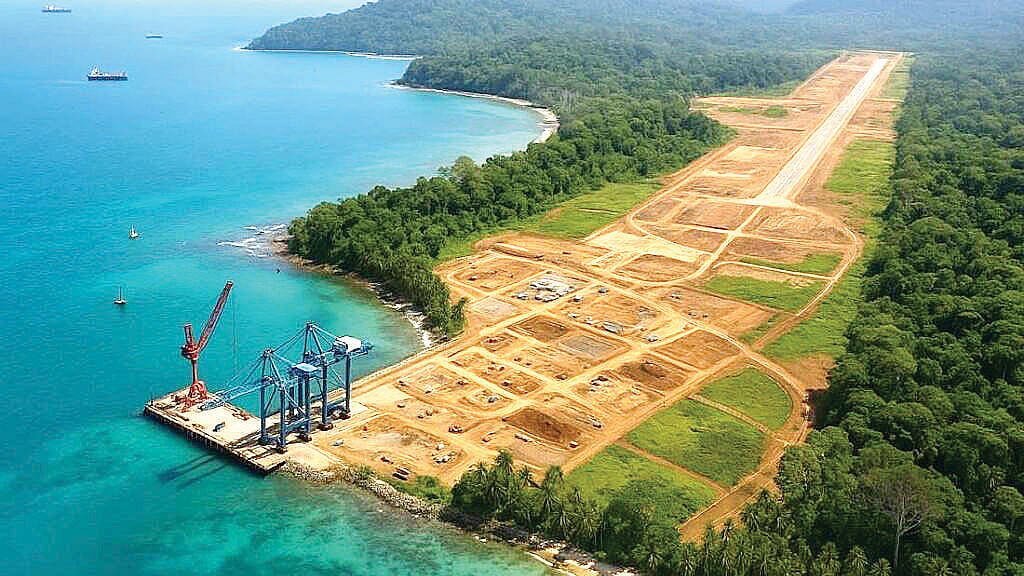
SC says preservation of culture is a constitutionally protected fundamental right.
It refuses to stay Calcutta HC proceedings on the Great Nicobar Island project.
The HC has been urged to decide the petitions, including constitutional issues, without delay.
The Supreme Court on Monday said preservation of culture is a constitutionally protected fundamental right and refused to stay proceedings before the Calcutta High Court on petitions challenging the Great Nicobar Island Project.
A three-judge Bench headed by Chief Justice of India Surya Kant instead urged the Calcutta High Court to hear the case and decide the issues without delay.
The petitions before the High Court were filed by former Union Environment Secretary Meena Gupta, challenging the project on grounds that it threatens the area's fragile ecosystem and allegedly violates the Forest Rights Act, 2006.
Appearing for the Centre, Attorney General R Venkataramani and Additional Solicitor General Aishwarya Bhati said the project, estimated to cost over Rs 72,000 crore and involving a container terminal, was of “immense” national importance and strategic value.
Venkataramani said there was “no loss of habitation” for the indigenous tribal population, including the endangered Shompen tribe of Great Nicobar Island.
Justice Joymalya Bagchi, who was on the Bench along with Justice V Mohana, said there should be some degree of filtration between what constitutes the security of the state and what involves commercial interests.
“Preservation of culture is a constitutionally protected fundamental right. When you are talking about tribe cultures in Nicobar ecology. Tribe culture requires constitutional protection,” Justice Bagchi observed orally.
Bhati submitted that the National Green Tribunal (NGT) had already twice disposed of the apprehensions raised regarding the project. It had upheld the environmental clearance given to the project, subject to conditions and the formation of a High Powered Committee to re-examine specific ecological impacts.
The law officer said even a review against the environmental clearance was subsequently rejected by the NGT in April 2023.
However, the Calcutta High Court had entertained writ petitions filed by Gupta highlighting the severe environmental threats the project may allegedly cause.
In May, the High Court dismissed the Union government's preliminary objections regarding Gupta's locus standi, after the Centre argued that she was not a local.
The High Court had scheduled the case for 25 and 26 November to hear constitutional issues concerning fundamental rights and preservation of the tribals' way of life.
Senior advocate S Muralidhar, appearing for Gupta, said the Union's argument on the maintainability of the writ petitions before the High Court had become academic as the tribal councils had already been impleaded.
Venkataramani said the tribes were integrated and were not in the protected category.
“The Shompen are classified as a Particularly Vulnerable Tribal Group,” Muralidhar intervened.
The Shompen and Nicobarese tribes are said to be affected by the project.
The Bench said the Union government could place the NGT decisions, with whatever persuasive value they may command, before the High Court.
Venkataramani urged the apex court to at least allow the Centre to continue pressing the question of maintainability before the High Court.
The Bench, however, said it would limit itself to asking the High Court Chief Justice to decide the case, including all the petitions, without delay.
The petitions before the High Court have claimed that diversion of over 130 sq km of pristine tropical forest violated the 2006 Act and threatened the Shompen and Nicobarese way of life and culture.
Join our official telegram channel (@nationalherald) and stay updated with the latest headlines