World
Congo’s Ebola outbreak outpaces response, aid groups warn of worsening crisis
Shortages, insecurity and underfunded health systems hamper efforts against rare Ebola strain in eastern DRC
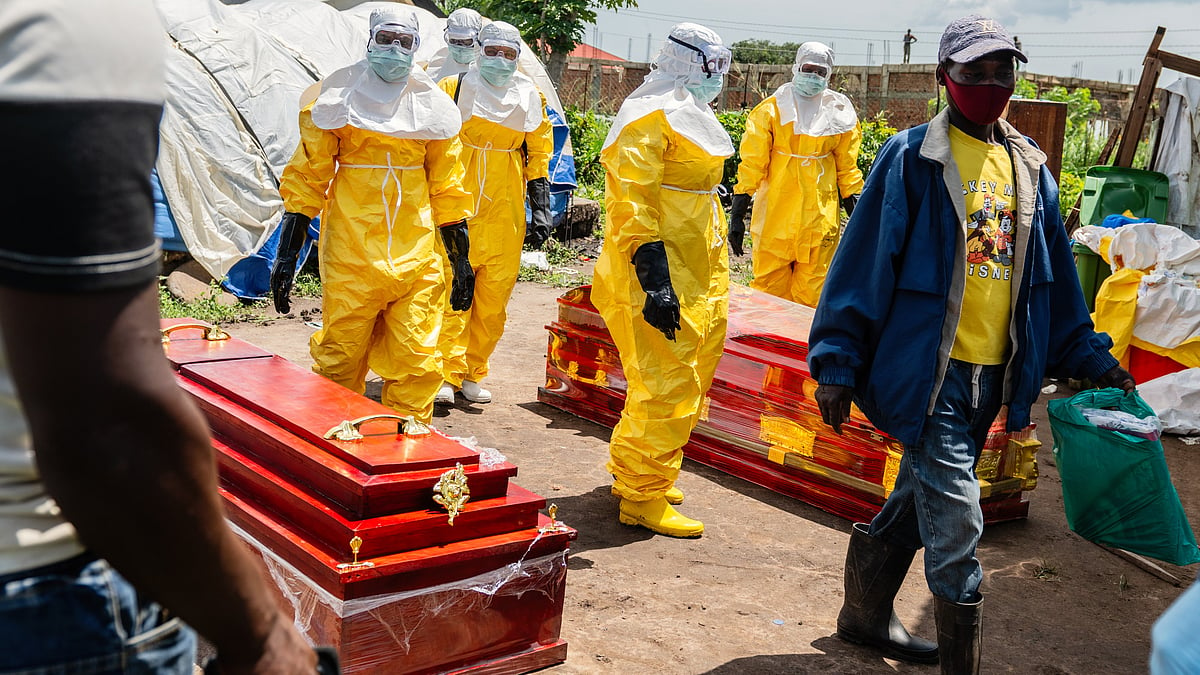
Healthcare workers and aid agencies in eastern Democratic Republic of Congo (DRC) have warned of severe shortages of supplies and trained staff as they struggle to contain a rare Ebola outbreak unfolding in a region already battered by armed conflict, displacement and a humanitarian emergency.
“The situation is worrying because this is gaining momentum,” Hama Amado, Bunia field coordinator for aid organisation Alima, told the Associated Press. “This is spreading in many areas. So everyone must mobilise. We are still far from saying that the situation is under control.”
The outbreak involves the Bundibugyo strain of Ebola, for which no vaccine or approved treatment is currently available. Authorities initially tested for a more common Ebola variant and received negative results, allowing the disease to spread undetected for weeks after the first known death.
Health workers and humanitarian groups say they are now racing to contain an outbreak that may be far larger than official figures indicate. Authorities have reported nearly 600 suspected cases and 139 suspected deaths so far. The World Health Organization (WHO), while assessing the global risk as low, said “patient zero” has yet to be identified.
Although nearly 20 tonnes of aid supplies have been flown into Bunia, where the first known death occurred, overstretched medical facilities remain under pressure. Doctors using outdated protective masks have reportedly been treating suspected Ebola patients in general wards because of a lack of isolation facilities.
Experts say early detection is critical to preventing deaths, but eastern Congo’s fragile healthcare system and disease surveillance network have been further weakened by international funding cuts. According to the United Nations, more than 920,000 internally displaced people are living in Ituri province, now the epicentre of the outbreak.
“Communities in eastern DRC are already facing immense pressure from conflict, displacement, and a collapsing health system,” said Dr Lievin Bangali, senior health coordinator for the International Rescue Committee in DRC.
“Years of underfunding, compounded by recent cuts to front-line health and outbreak preparedness programming, have weakened the ability to detect and respond to outbreaks quickly,” he said.
The organisation said funding shortages forced it to halt surveillance operations in three of five areas in Ituri over the past year.
‘He started bleeding and vomiting’
At a treatment centre in Rwampara, health workers in full protective gear handled the bodies of suspected Ebola victims while grieving relatives watched. In a break from traditional burial customs, workers disinfected bodies and sealed them in coffins for transport to secure burial sites. Some family members broke down in tears.
Relatives described symptoms worsening rapidly after initial misdiagnoses, often as malaria. “He told me his heart was hurting,” said Botwine Swanze, whose son died from suspected Ebola. “Then he started crying because of the pain. Then he started bleeding and vomiting a lot.”
Ebola spreads through contact with bodily fluids including blood, vomit and semen. Symptoms include fever, vomiting, diarrhoea, muscle pain and, in some cases, internal and external bleeding.
Hospitals overwhelmed, staff fearful
Schools and churches remain open in Bunia, although some residents have begun wearing facemasks, which are becoming harder to obtain. “It’s truly sad and painful because we’ve already been through a security crisis, and now Ebola is here too,” resident Justin Ndasi said.
Doctors Without Borders said its team recently identified suspected cases at Bunia’s Salama hospital but found no available isolation facilities.
“Every health facility they called said, ‘We’re full of suspect cases. We don’t have any space,’” emergency programme manager Trish Newport said on social media. “This gives you a vision of how crazy it is right now.”
At Bambu General Hospital in Ituri, suspected Ebola patients were reportedly sharing wards with people suffering other illnesses and injuries. In Mongbwalu, where the body of the first known victim was taken, cross-border movement into neighbouring Uganda continues and gold mining operations remain active, complicating containment efforts, according to civil society leader Chérubin Kuku Ndilawa.
“There’s no panic. People continue with their normal lives, but they’re also starting to spread the word,” he said, pointing to the lack of public handwashing facilities.
Conditions inside Mongbwalu General Hospital were markedly different. Dr Didier Pay said the facility was treating around 30 Ebola patients, while a student from a local medical institute died on Wednesday.
“The patients are scattered here and there in rather unusual conditions,” said medical director Dr Richard Lokudu. “We hope for the proper triage and isolation facilities to be installed today, and if that doesn’t happen, we will be completely overwhelmed.”
The hospital lacks adequate staffing and specialist training to manage suspected Ebola infections, he said. If confirmed cases rise sharply, “we have no protection”.
WHO warns outbreak likely much larger
WHO has declared the outbreak a public health emergency of international concern. WHO director-general Tedros Adhanom Ghebreyesus said this week he was “deeply concerned about the scale and speed of the epidemic”, while the organisation’s Congo chief warned the outbreak could persist for at least two months.
Investigations into the source of the outbreak are continuing, but WHO experts believe transmission may have begun months earlier. “Given the scale, we are thinking that it has started probably a couple of months ago,” said Anaïs Legand, a WHO expert on viral haemorrhhagic fevers.
Tedros said 51 cases had been confirmed in Ituri and North Kivu provinces, alongside two cases in Uganda, but cautioned that “the scale of the epidemic is much larger”.
The London-based MRC Centre for Global Infectious Disease Analysis has estimated that cases have been significantly undercounted and that the true number of infections may already exceed 1,000.
Violence compounds emergency
The outbreak is unfolding in one of Congo’s most volatile regions, where armed groups have long targeted civilians. Local leaders said militants linked to the Islamic State group killed at least 17 people on Tuesday in an attack on Alima village in Ituri province.
The assailants, identified as members of the Allied Democratic Forces (ADF), reportedly used firearms and machetes, torched homes and businesses, and abducted several people. Civil society groups have warned that other nearby villages also face threats of attack.
Alongside the ADF, another armed faction active in the region is CODECO, a loose coalition of militias drawn largely from the ethnic Lendu farming community.
With AP/PTI inputs
Join our official telegram channel (@nationalherald) and stay updated with the latest headlines