World
Iran launches fresh attacks, warns US will ‘bitterly regret’ sinking of warship
Tehran vows retaliation after naval clash as Israel reports new missile waves and expands strikes on Iran and Hezbollah targets
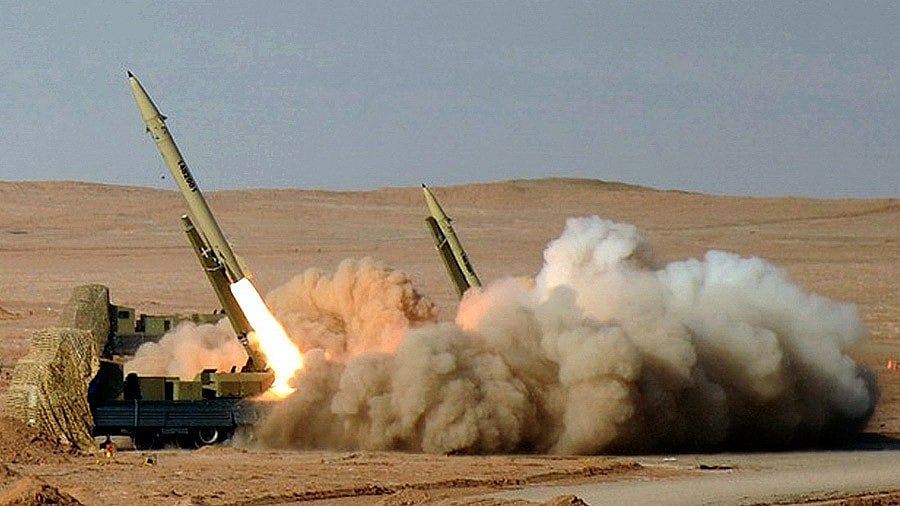
Iran launched a new wave of attacks on Thursday targeting Israeli territory and American military bases in the region, warning that the United States would “bitterly regret” sinking an Iranian warship in the Indian Ocean, as Israel said it had begun a “large-scale” attack on Tehran.
Air raid sirens sounded in Tel Aviv and Jerusalem after Israel reported incoming missile launches, while Iranian state television said additional strikes had targeted US bases in the region.
The Israeli military also said it had struck multiple sites in Iran linked to long-range ballistic missile launch systems and other military targets.
Iranian Foreign Minister Abbas Araghchi accused the US Navy of committing what he described as an “atrocity at sea” after the Iranian frigate IRIS Dena was sunk in the Indian Ocean.
“Mark my words: The US will come to bitterly regret (the) precedent it has set,” Araghchi wrote on social media.
The incident reportedly killed at least 87 Iranian sailors.
Separately, senior cleric Ayatollah Abdollah Javadi Amoli issued a call for retaliation during remarks broadcast on Iranian state television, urging violence against Israel and the United States and calling for “the shedding of Zionist blood” and “the shedding of Trump’s blood”.
The conflict began on Saturday after the United States and Israel launched strikes on Iranian leadership targets, missile infrastructure and nuclear facilities. The attacks reportedly killed Iran’s Supreme Leader Ayatollah Ali Khamenei and several senior figures in the Iranian establishment.
Since then, leaders on both sides have issued shifting statements about their objectives, ranging from weakening Iran’s military capabilities to suggestions that the government in Tehran could be toppled.
The fighting has killed more than 1,000 people in Iran, over 70 in Lebanon and about a dozen in Israel, according to official figures released by authorities in those countries.
Conflict spreads across the region
The conflict has also spilled into other parts of the Middle East and neighbouring regions.
A drone crashed near an airport in Nakhchivan, an Azerbaijani exclave bordering northern Iran and separated from the rest of Azerbaijan by Armenia. Another drone fell near a school in the area, injuring two civilians, Azerbaijan’s Foreign Ministry said.
Iran has not confirmed targeting Azerbaijan, though several regional countries have reported incidents since the conflict began.
Qatar temporarily evacuated residents living near the US Embassy in Doha as a precaution and later reported a missile strike on the city.
Saudi Arabia also said it intercepted and destroyed a drone in its northern province bordering Jordan.
Meanwhile, a commercial tanker was reportedly attacked off the coast of Kuwait early Thursday, according to the United Kingdom Maritime Trade Operations centre run by the British military. Officials said an explosion was reported but did not immediately determine the cause.
Since the conflict began, several maritime incidents have occurred in the Gulf of Oman and the Strait of Hormuz — a crucial shipping route linking the Persian Gulf to global markets through which roughly one-fifth of the world’s oil supply passes.
The disruption has rattled global energy markets. Brent crude oil prices have risen about 15 per cent since the start of the conflict amid fears that Iranian attacks could block shipping through the strait.
Iranian warship sunk by US submarine
Iran’s frigate IRIS Dena was sunk by a torpedo fired from a US submarine while the vessel was returning from a multinational naval exercise hosted by India in February.
The exercise also involved US forces, including a P-8A Poseidon maritime patrol aircraft, which is used for anti-submarine warfare, anti-surface operations and surveillance missions.
Sri Lankan authorities said 32 crew members from the Iranian vessel were rescued while its navy recovered 87 bodies from the sea.
Iranian Foreign Minister Araghchi said the ship had been carrying “almost 130” crew members.
US Defence Secretary Pete Hegseth confirmed on Wednesday that an American submarine had sunk the vessel.
Israel expands strikes on Iran and Lebanon
Israeli and American officials say Iranian missile launches have declined in recent days as strikes by Israel and the United States have destroyed missile stockpiles, launchers and drones.
Nevertheless, explosions were heard in Israel early Thursday as the country’s defence systems intercepted several waves of Iranian missiles.
Israel’s Home Front Command said it was easing nationwide restrictions imposed earlier in the week. Workplaces could reopen if there was access to nearby shelters, although schools would remain closed.
The Israeli military said it had carried out strikes on 80 Hezbollah-linked targets in Lebanon over the past 24 hours, including several command centres in Beirut.
Authorities in Lebanon said eight people were killed in Israeli attacks on Thursday, including two in a building hit in the Beddawi refugee camp in the northern coastal city of Tripoli and three others in a strike on a coastal highway.
In Beirut’s southern suburbs, two Israeli drone strikes late Wednesday hit vehicles, killing three people and injuring six, Lebanon’s health ministry said.
The Israeli military said one of the strikes targeted a Hezbollah member and said further details would be released later.
Join our official telegram channel (@nationalherald) and stay updated with the latest headlines