World
Israel the ‘biggest loser’ as Iran extracts major concessions from the US
Reactions to US-Iran MoU are split, with Israel alleging betrayal and critics in Iran and US faulting concessions, while analysts say Iran holds the upper hand
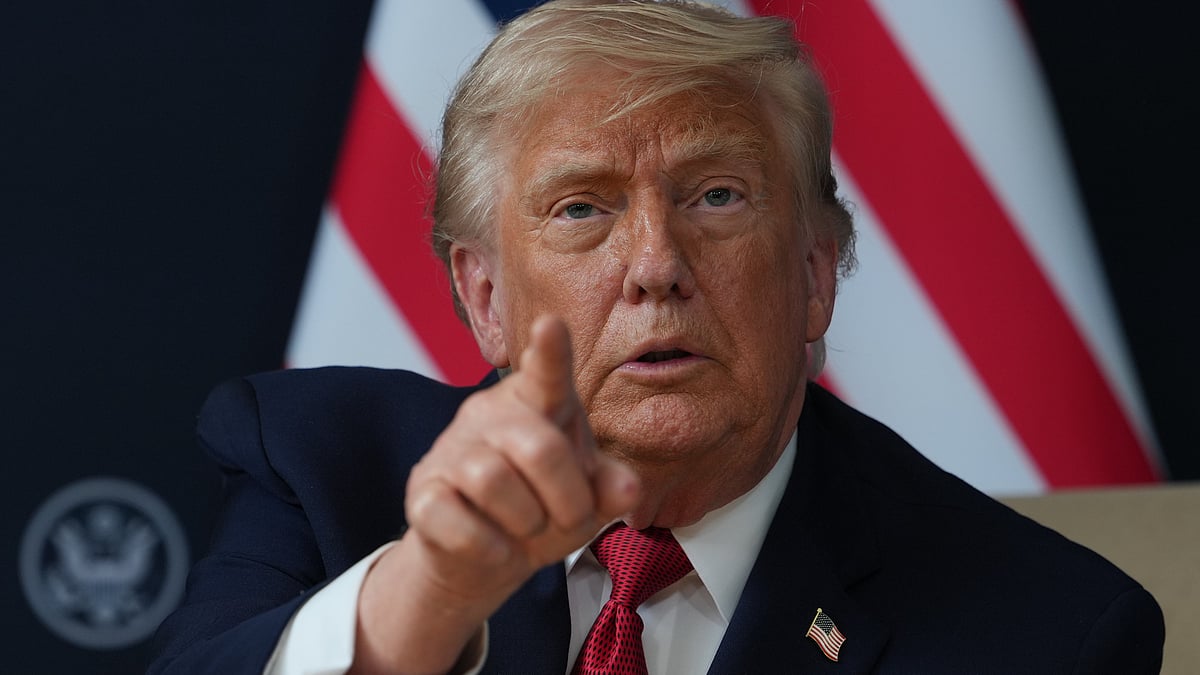
US President Donald Trump and Iran’s President Pezeshkian are learnt to have signed the “Memorandum of Understanding” to end the war on Iran, a White House official told Reuters.
Trump put his signature during dinner with French President Emmanuel Macron at the Palace of Versailles following a G7 summit, a US official told AFP. Iranian foreign ministry spokesman Esmaeil Baqaei, quoted by news agency IRNA, said the document “was finalised with the signatures of the presidents.”
The memo had been signed digitally on Sunday, 14 June, by vice-president J.D. Vance and Iran’s chief negotiator Mohammad Bagher Ghalibaf and witnessed by Trump, the official said.
The US president, who has repeatedly denied that the US is sending money to Iran as part of a deal, said Iranian assets frozen during the war should be returned. “It’s not our money, it’s their money, and we froze it,” Trump said. “At a certain point in time, I guess we’re going to have to give it back.” Trump said he considered keeping the frozen assets for the US, but said it would hurt the strength of the US dollar. “If we didn’t give it back, nobody would ever invest in the dollar again,” he said at the end of the G-7 summit.
Hours before the MoU was signed by the two presidents, CNN claimed to have got access to the draft of the MoU, which has not been released officially as yet. The CNN reported the 14-point agreement with the caveat that the text could change before it is made public. Earlier Bloomberg too had released details of a version of the 14-point agreement doing the rounds but the details were contested by Iranian officials and reported by Tasnim News Agency.
Speaking to CNN, US officials downplayed the significance of the memo itself, calling it a “political document” that does not reflect critical back-channel commitments Iran has made to the US, specifically on the future of Tehran’s nuclear programme. The White House did not respond to a request for comment when presented with the draft obtained by CNN. The semi-official Iranian news agency Tasnim described leaked versions of the draft as inaccurate. Bloomberg earlier published a version of the draft.
However, if the draft accessed and published by the CNN happens to be correct, the United States appears to have conceded more concessions than Iran. The foremost of these concessions is the US abandoning Israel to fend for itself. Israel was practically snubbed, denied a look at the draft agreement and told to stop bombing Lebanon and Beirut. The very first point of the MoU calls for an ‘immediate and permanent end to the war on all fronts, including Lebanon’.
The reaction in Israel has been marked by rage and disappointment. Tal Meir, a Channel 14 anchor in Israel and a prominent right-wing commentator denounced President Trump’s West Asia negotiators Jared Kushner, who is also the president’s son-in-law, and Steve Witkoff for negotiating the Iran deal and turning their backs on their "real home". Diplomatic correspondent Guy Azriel posted on X and said, “I can now confirm that Israel formally requested access to the Iran MoU and was denied. A remarkable and highly unusual development between close allies on an issue of such critical national security importance.”
President Trump himself was quoted as saying, “I think they could do better, with respect to Hezbollah. I am not saying they shouldn't protect themselves, I am saying — when two drones are shot into the desert and dropped harmlessly, you don't have to knock down buildings in Beirut. They could behave better. And, frankly, they could do a better job — I, I love them, as a partner they were terrific, but they could do a much better job with Hezbollah.”
Iranian-origin commentator Trita Parsi could not resist stating, “there is some poetic justice in that Israel is the biggest loser in the US-Iran deal, since it was Israel who aggressively pushed for this idiotic war of choice. And if it leads to Netanyahu losing the elections and ending up in jail, the justice will be near complete”.
Highlights of the MoU accessed by the CNN:
1. An end to the war on all fronts, including Lebanon
2. Iran and US to respect each other’s sovereignty and integrity
3. The two countries to negotiate and reach a final agreement within 60 days, extendable by mutual consent
4. The US will immediately lift the naval blockade and withdraw its forces within 30 days ‘after the final agreement’
5. Iran to remove technical obstacles and mines to ensure movement of merchant ships within 30 days
6. The US and its regional partners to create a comprehensive plan for rehabilitation and economic development of Iran while ensuring financing of at least $300 billion
7. The US commits to end all types of sanctions imposed on Iran by the US, IAEA and UN Security Council
8. Iran reiterates that it will never produce nuclear weapons.
9. Iran and US to maintain the status quo on both the nuclear programme, new sanctions and fresh military deployment
10. The US Treasury department will issue waivers for exports of Iranian crude oil and petrochemical products and related services including banking, insurance and transportation
11. The US undertakes to release and make available the frozen or restricted funds and assets of Iran ‘in light of the progress of negotiations’
12. Both the countries agree to establish an implementation mechanism
13. Iran and US will start negotiations for a final agreement
14. The final agreement will be approved through a binding resolution of the UN Security Council
Join our official telegram channel (@nationalherald) and stay updated with the latest headlines