World
Marco Rubio flags Iran’s internal divisions as key hurdle to US deal
US secretary of state says Iran’s divided power structure complicates talks and limits negotiators’ authority
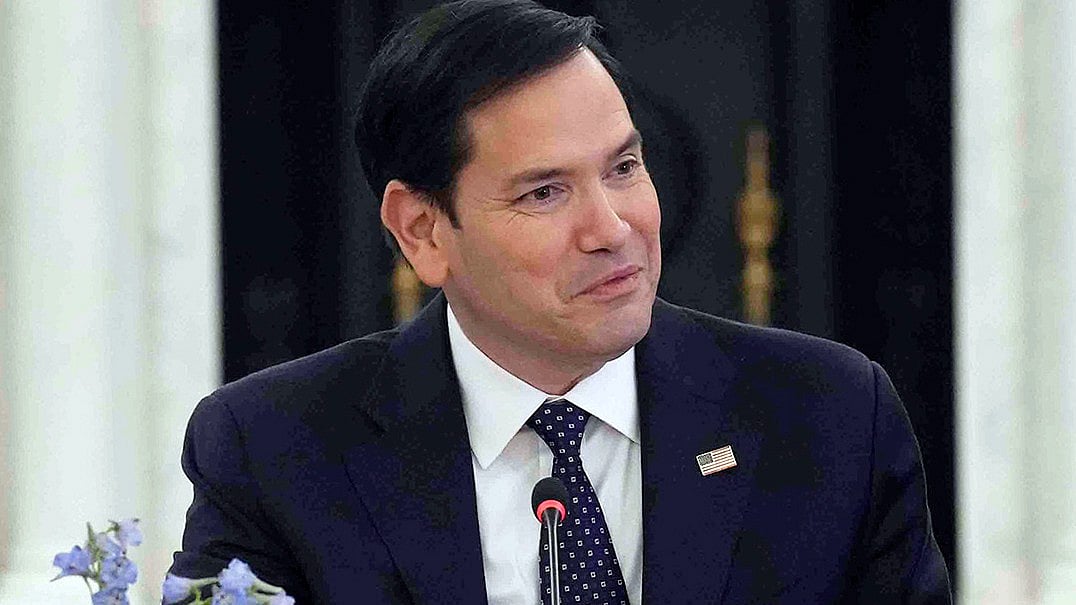
US secretary of state Marco Rubio on Monday pointed to deep internal fractures within Iran’s leadership as the primary obstacle to any potential agreement with Washington, even as he suggested that mounting economic strain may be nudging Tehran towards engagement.
In an interview with Fox News’ Trey Yingst, Rubio described Iran’s power structure as complex and divided, with competing centres of authority that complicate negotiations and limit what its representatives can credibly commit to at the table.
“Other than the fact that the country is run by radical Shia clerics, that’s a pretty big impediment. The other is that they’re deeply fractured internally… and I think it’s far more pronounced now,” Rubio said.
Dismissing the common framing of “moderates versus hardliners”, Rubio argued that all factions within Iran’s political establishment share a fundamentally hardline worldview — differing not in ideology, but in priorities and approach.
“People talk about moderates and hardliners. They’re all hardliners in Iran. But there are hardliners who understand they have to run a country and an economy, and there are hardliners that are completely motivated by theology,” he said.
He outlined a system marked by tension between pragmatic officials — such as the foreign minister, president and parliamentary leadership — and more ideologically driven actors, including the supreme leadership and elements aligned with the Islamic Revolutionary Guard Corps.
“You see a tension… between the Iranians who understand, let’s be hardliners but also balance that with the need to run a country, and the hardliners who don’t care and have this apocalyptic vision of the future,” Rubio noted.
According to Rubio, however, real authority ultimately rests with the latter group.
“Unfortunately, the hardliners with an apocalyptic vision of the future have the ultimate power in that country,” he said.
This internal dynamic, he stressed, adds an extra layer of complexity to US diplomacy with Tehran.
“Our negotiators aren’t just negotiating with Iranians. Those Iranians then have to negotiate with other Iranians… to figure out what they can agree to, what they can offer,” Rubio explained.
At the same time, Rubio signalled that Iran’s deteriorating economic conditions could be pushing its leadership to reconsider its stance.
“I think they are serious about getting themselves out of the mess that they’re in,” he said, pointing to rising inflation, payroll difficulties and the cumulative impact of global sanctions. “All those problems are there, and many of them are worse.”
His remarks come amid reports that Tehran has floated a proposal to reopen the strategically crucial Strait of Hormuz in exchange for the US easing its blockade on Iranian ports — though notably without offering concessions on its nuclear programme, a sticking point that continues to define the standoff between the two sides.
With IANS inputs
Join our official telegram channel (@nationalherald) and stay updated with the latest headlines