World
Much-hyped Trump address on Iran war delivers little clarity, no exit timeline
US President claims progress but signals weeks more worth of bombing
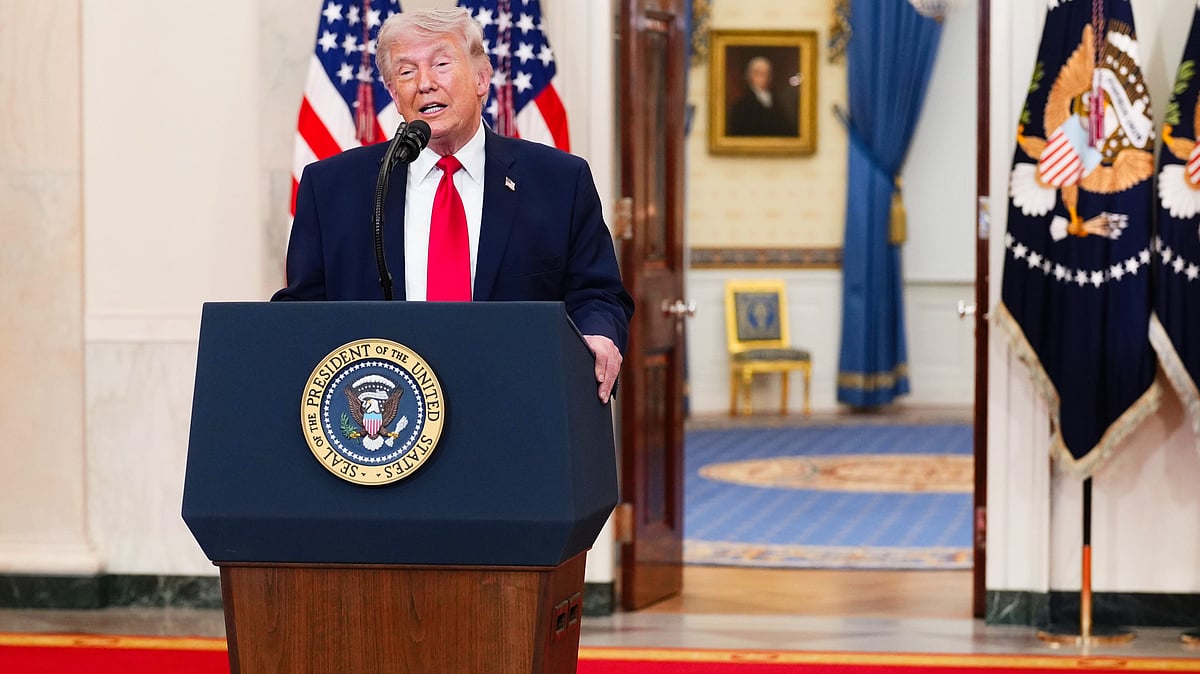
US President Donald Trump, in a primetime televised address on Wednesday night, claimed the US military had nearly accomplished its objectives in Iran but offered no clear timeline for ending the month-long war he launched alongside Israel on 28 February — a decision that came despite reservations within his own administration, triggered resignations and provoked growing public anger.
Facing a war-wary American public, sliding approval ratings and pressure from allies to clarify his objectives, Trump said the US had destroyed Iran’s navy and air force and crippled its ballistic missile and nuclear programmes, while vowing further escalation if Tehran fails to meet Washington’s terms.
“We have all the cards,” Trump said from the White House in his first primetime address since the conflict began. “They have none.”
The speech has also revived scrutiny of the war’s central justification: the claim that Iran was close to acquiring a nuclear weapon. Trump himself repeatedly asserted in 2025 that US strikes on Iran’s nuclear facilities had already destroyed the country’s nuclear capability, declaring that key enrichment sites had been “completely and totally obliterated”.
Subsequent intelligence assessments suggested the programme had in fact only been set back by months, not eliminated — raising questions about why a fresh war was necessary if the nuclear threat had already been neutralised.
Israeli Prime Minister Benjamin Netanyahu has warned of an imminent Iranian nuclear bomb since at least the early 2000s, repeatedly arguing that Tehran was on the brink of developing nuclear weapons. Those warnings have persisted for more than two decades without materialising, yet have continued to shape US strategic thinking.
Critics say Trump appears to have embraced this longstanding Israeli position despite intelligence assessments indicating Iran was not on the verge of deploying a nuclear weapon. US intelligence agencies had previously assessed that Iran was not actively building a bomb, even though it possessed the technical capacity to do so if it chose.
Internal dissent has surfaced within the administration. Joe Kent, director of the National Counterterrorism Center, resigned in March, warning that Iran did not pose an imminent threat requiring immediate military action, underscoring divisions over the decision to go to war.
Trump’s address broke little new ground and offered limited reassurance to Americans and US allies grappling with rising energy prices and uncertainty about the war’s trajectory. He declined to outline a concrete plan to wind down the conflict beyond saying the US would finish the job “very fast”.
He glossed over unresolved issues such as the fate of Iran’s enriched uranium stockpiles and the status of the Strait of Hormuz, a critical artery for global oil supplies that Iran has effectively closed during the conflict. Trump said the waterway would open “naturally” once the war ended.
Markets reacted nervously to the address, with stocks falling, the dollar firming and oil prices rising, reflecting expectations that the conflict may drag on.
While portraying Iran as militarily weakened, Trump also indicated the US could intensify attacks over the next two or three weeks, including strikes on electricity generation and oil infrastructure if negotiations fail. “We’re going to hit them extremely hard over the next two to three weeks,” Trump said. “We’re going to bring them back to the Stone Ages where they belong.”
Administration officials have floated options including seizing Iran’s remaining stockpiles of highly enriched uranium and deploying ground forces to capture strategic territory such as parts of Iran’s coastline and Kharg Island, through which the country exports most of its oil.
Military analysts warn that a ground invasion of Iran would likely prove far more costly than recent US conflicts, given the country’s size, terrain and regional alliances. Iran’s capacity for asymmetric warfare through allied militias across West Asia could expose US forces to prolonged attritional conflict, while disruption to shipping through the Gulf could send global energy prices sharply higher.
As Trump spoke, air raid sirens sounded in both Doha and Tel Aviv, underscoring Iran’s continuing ability to retaliate across the region despite sustaining significant losses.
Public opposition to the war appears to be growing. A Reuters/Ipsos poll conducted between Friday and Sunday found 60 per cent of voters disapprove of the conflict, while 66 per cent said the US should move quickly to end its involvement even if that means not achieving all of the administration’s stated goals.
Trump briefly acknowledged concerns about rising gasoline prices but insisted costs would soon decline, blaming Iran for disruptions to oil supplies and suggesting that countries dependent on Gulf energy should take greater responsibility for reopening the Strait of Hormuz once hostilities end.
He also criticised NATO allies for not offering to help secure the waterway, even threatening to reconsider the US relationship with the 76-year-old alliance, though he did not mention the bloc directly in his speech.
Urging Americans to “keep this conflict in perspective,” Trump compared the war with longer US military engagements in Iraq, Vietnam and Korea, signalling that Washington may be preparing the public for a prolonged campaign.
With additional troops continuing to move toward the Gulf region and strategic objectives still evolving, critics warn the US risks being drawn into another open-ended war justified by a nuclear threat narrative that Washington itself had previously declared resolved.
With agency inputs
Join our official telegram channel (@nationalherald) and stay updated with the latest headlines