World
Tehran in the crosshairs: US air raids enter 11th night
Strikes on Tehran and Tabriz represented a shift from earlier operations concentrated around southern Iran and Gulf region
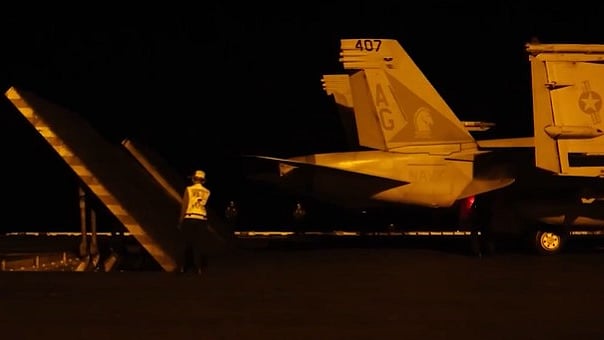
Iran faced another night of intense bombardment as the United States launched its 11th consecutive evening of air strikes, targeting what Washington described as Tehran’s military infrastructure and its ability to threaten shipping in the strategic Strait of Hormuz.
The latest wave of attacks sent shockwaves across Iran, with loud explosions reported in the capital Tehran, where air-defence systems were activated at multiple locations. Strikes were also reported in Bushehr, Sirik, Behbahan, Omidiyeh, and Tabriz, marking a widening battlefield beyond the southern regions that had been the primary focus of recent attacks, the Al Jazeera reported.
US Central Command (CENTCOM) said American forces hit Iranian military operations centres, maritime facilities, aircraft hangars, drone storage sites and logistics hubs, calling the strikes part of an effort to curb Tehran’s ability to disrupt commercial traffic through the Strait of Hormuz.
Iranian media reported blasts near a military zone outside Tabriz in the northwest, while officials in Khuzestan province said areas near Behbahan and Omidiyeh were targeted in missile attacks. The strikes on Tehran and Tabriz represented a shift from earlier operations concentrated around southern Iran and the Gulf region.
Tensions also spilled across the Gulf, with Kuwait saying its air-defence systems intercepted an Iranian drone attack. Tehran has previously targeted several Gulf states, including Kuwait, Bahrain and Qatar, since the latest escalation with Washington began.
US officials defended the campaign, saying the goal was to protect freedom of navigation through the Strait of Hormuz, a crucial global oil route. Secretary of state Marco Rubio said Washington remained open to diplomacy but warned that Iran must demonstrate seriousness in negotiations.
The conflict has also intensified political battles in Washington. Defence secretary Pete Hegseth told lawmakers that the US operation had already cost $37.5 billion and sought an additional $90 billion in funding, drawing sharp criticism from Democratic senators.
Meanwhile, US President Donald Trump threatened further escalation, saying Washington could soon strike a suspected Iranian nuclear site known as Pickaxe Mountain. Iran’s military leadership warned that any attack on its nuclear facilities would trigger a broader regional response.
Amid fears of a wider conflict, diplomatic efforts gathered pace. Iranian interior minister Eskandar Momeni held talks with Pakistani officials in Islamabad, while Qatar and Saudi Arabia discussed renewed efforts to push for de-escalation.
As missiles continue to fly and diplomacy struggles to gain ground, the Strait of Hormuz has emerged as the flashpoint at the heart of a deepening US-Iran confrontation, with global energy markets and regional stability hanging in the balance.
Join our official telegram channel (@nationalherald) and stay updated with the latest headlines