Nation
As Mumbai battles floods, over 1,200 Maharashtra villages rely on water tankers
Minister acknowledges water scarcity across 25 districts even as heavy monsoon rains lash parts of the state
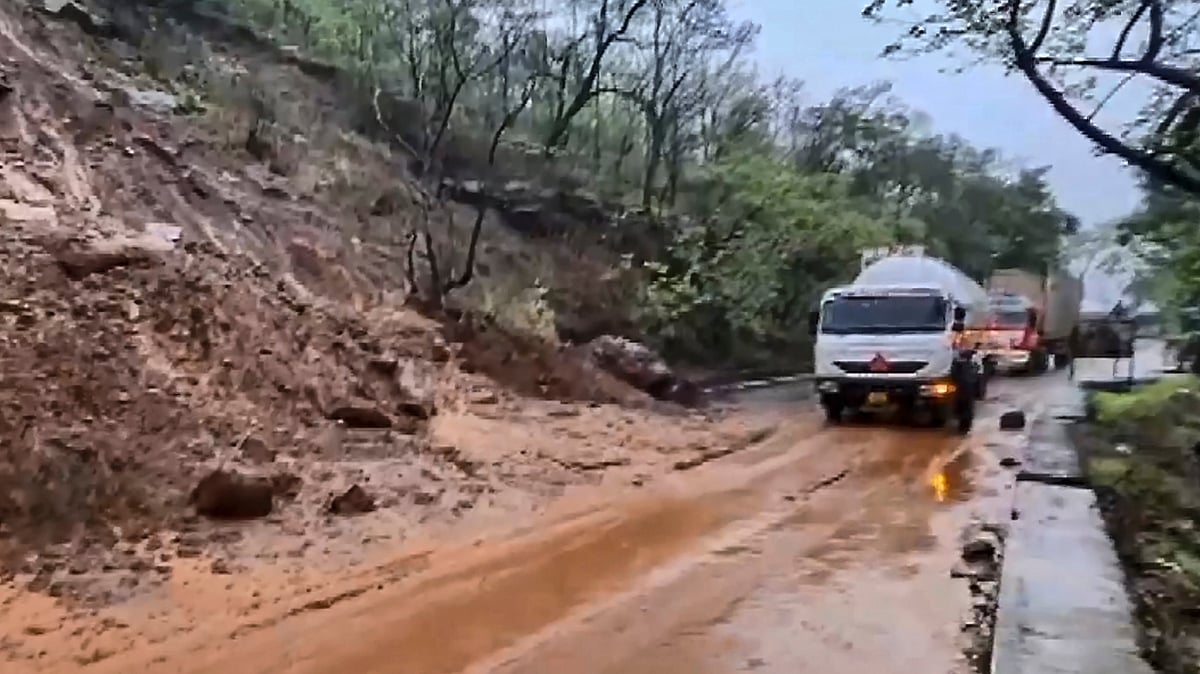
Even as torrential monsoon rains inundate Mumbai and several parts of Maharashtra, the state government on Wednesday acknowledged in the legislative Assembly that large swathes of the state continue to grapple with acute drinking water shortages, with more than 1,200 villages dependent on tanker supply.
Replying to a starred question by Congress MLA Amit Deshmukh, drinking water and sanitation minister Gulabrao Patil admitted that Deshmukh's claims of widespread water scarcity were "partially true".
Patil informed the House that, according to a report dated 22 June, 25 of Maharashtra's 36 districts were facing water scarcity, with 1,279 villages and 3,389 hamlets receiving drinking water through 1,413 tankers.
Deshmukh had questioned the government's assessment, claiming official reports identified only 2,285 scarcity-hit villages, whereas the actual number was between 8,000 and 9,000.
In response, the minister said the government had undertaken relief measures in 12,406 villages and hamlets affected by water scarcity. These included requisitioning private wells, repairing water supply schemes and public taps, and implementing other emergency arrangements to ensure access to drinking water. He added that officials managing dams had been instructed to plan water utilisation carefully until 31 August.
The government's admission comes even as heavy rainfall since the beginning of July has caused flooding in Mumbai and several other parts of the state. However, the uneven distribution of the monsoon has left the drought-prone Marathwada region facing a markedly different reality.
The eight-district region has received only 158.4 mm of rainfall so far this season against the normal 182.1 mm, or about 87 per cent of its average rainfall.
Rainfall has been particularly deficient in Latur, which has received just 64.2 per cent of its seasonal average, followed by Parbhani at 64.7 per cent, Hingoli at 77 per cent and Nanded at 77.2 per cent. Beed has received 91 per cent of normal rainfall, Dharashiv 94 per cent, while Chhatrapati Sambhajinagar and Jalna have recorded above-normal rainfall at 106.9 per cent and 114 per cent, respectively.
Despite isolated districts receiving surplus rain, reservoir levels across the region remain under pressure. The combined storage in Marathwada's 11 major dams stood at just 34.21 per cent, down sharply from 49.86 per cent during the corresponding period last year.
The Sina Kolegaon dam in Dharashiv has run completely dry, while the region's largest reservoir, the Jayakwadi dam, has only 28.69 per cent of its storage capacity remaining.
Water scarcity continues to affect daily life across Marathwada, with 103 villages spread across Jalna, Parbhani, Nanded, Beed and Latur relying on tanker supply.
Ironically, Jalna — the district that has received the highest rainfall in the region this season — accounts for the largest tanker operation. As many as 107 tankers are supplying drinking water to 20 villages and 32 hamlets there.
Beed follows with 65 tankers serving 21 villages and 36 hamlets, while Nanded, Parbhani and Latur are being supplied through 15, 12 and one tanker, respectively.
To augment drinking water supply, the administration has also requisitioned 882 wells, providing water to 691 villages across the region. Nanded accounts for the highest number of acquired wells at 247.
This version leads with the government's admission and immediately contrasts the images of flooded Mumbai with drought-hit Marathwada, making the irony central to the story before moving into the detailed rainfall and reservoir data.
With PTI inputs
Join our official telegram channel (@nationalherald) and stay updated with the latest headlines