Nation
Cabinet nod for Census 2027: Rs 11,718 cr sanctioned, 30 lakh enumerators to be involved
This will be the 16th Census of India since Independence, an exercise deferred from 2021
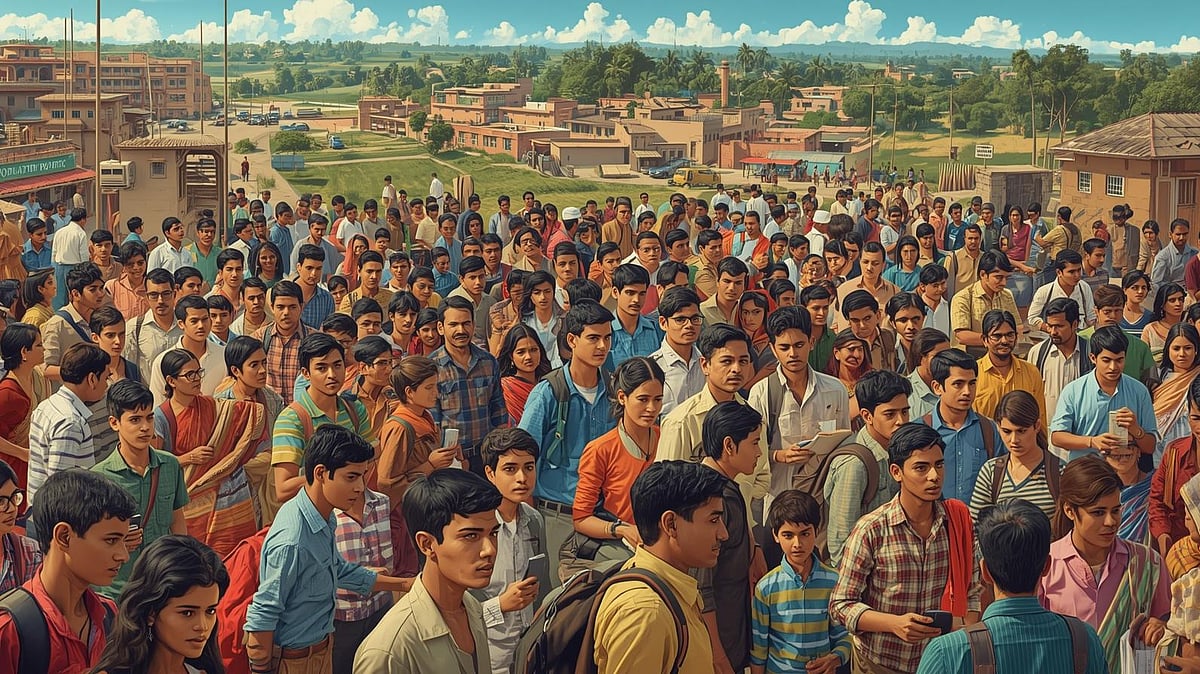
In a landmark decision set to reshape the country’s demographic and social-data landscape, the Union Cabinet on Friday approved Rs 11,718 crore for the Census of India 2027, which will include caste enumeration for the first time and will mark the transition to India’s first fully digital Census.
Briefing reporters after the meeting chaired by Prime Minister Narendra Modi, information and broadcasting minister Ashwini Vaishnaw said the Cabinet had cleared the proposal for what will be the 16th Census since Independence, an exercise deferred from 2021 owing to the Covid-19 pandemic. Approximately 30 lakh enumerators will be deployed nationwide, making it one of the largest digitally supported field operations in the world.
The minister confirmed that the Census will be carried out in two major phases:
House-listing and housing census from April-September 2026
Population enumeration (PE) in February 2027
For Ladakh, and the snow-bound, non-synchronous areas of Jammu & Kashmir, Himachal Pradesh and Uttarakhand, the population enumeration will take place earlier, in September 2026.
Calling it a “first-ever digital census”, Vaishnaw said enumerators would visit households with dedicated mobile applications for data collection, available on both Android and iOS. The digital infrastructure is expected to generate 1.02 crore human days of employment, supported by around 18,600 technical personnel engaged at local levels over roughly 550 days.
A new Houselisting Block (HLB) Creator web map application has also been developed to aid charge officers in field operations.
Vaishnaw emphasised that the digital census ecosystem has been designed as a “very robust system” with all applicable personal data protection safeguards. “Data of the micro-level will be collected from each household and a macro picture will be present. Individual data will be kept confidential while the macro-level data of the Census will be published,” he noted.
The data architecture will include:
A Census Management & Monitoring System (CMMS) for real-time oversight
A Census-as-a-Service (CaaS) platform supplying ministries with clean, machine-readable datasets
Faster and more user-friendly dissemination tools, enabling results down to the village and ward level
The government said efforts would be made to ensure the coming Census data is released in “the shortest possible time,” improving accessibility for planners, researchers and policymakers.
The 2027 Census will, for the first time since Independence, collect caste data electronically during the population enumeration phase. This marks a historic break from post-1931 practice; the last caste-based count conducted by the British covered the period between 1881 and 1931.
The Cabinet Committee on Political Affairs, chaired by the PM, had approved the inclusion of caste enumeration on 30 April, reopening a debate that has spanned decades.
In 2010, then Prime Minister Manmohan Singh told the Lok Sabha that the question of a caste census would be placed before the Cabinet, but the UPA government ultimately opted for a separate survey — the Socio-Economic and Caste Census (SECC) — rather than embedding caste questions within the decadal Census.
The Census remains India’s principal source of granular demographic data, covering housing conditions, amenities, assets, language, religion, Scheduled Castes and Tribes, migration, fertility and economic activity. The 2011 Census counted 1.21 billion people, with men comprising 51.54 per cent and women 48.46 per cent.
Officials said the digital transformation — from household-level microdata collection to instant supervisory monitoring — is intended to improve accuracy, reduce delays and enable far more detailed social and economic analysis.
All Census functionaries will receive an additional honorarium for the extra duties they undertake alongside their regular work, the government added.
With caste enumeration now formally incorporated, the 2027 Census is set to become a defining statistical and political exercise, generating datasets that will have long-term implications for social policy, welfare architecture and debates around representation.
With PTI inputs
Join our official telegram channel (@nationalherald) and stay updated with the latest headlines