


Andre Béteille, 1934–2026: Quiet architect of Indian Sociology
Andre Béteille’s passing marks the end of an era in Indian sociology, but his influence will endure in classrooms, research, and public debate
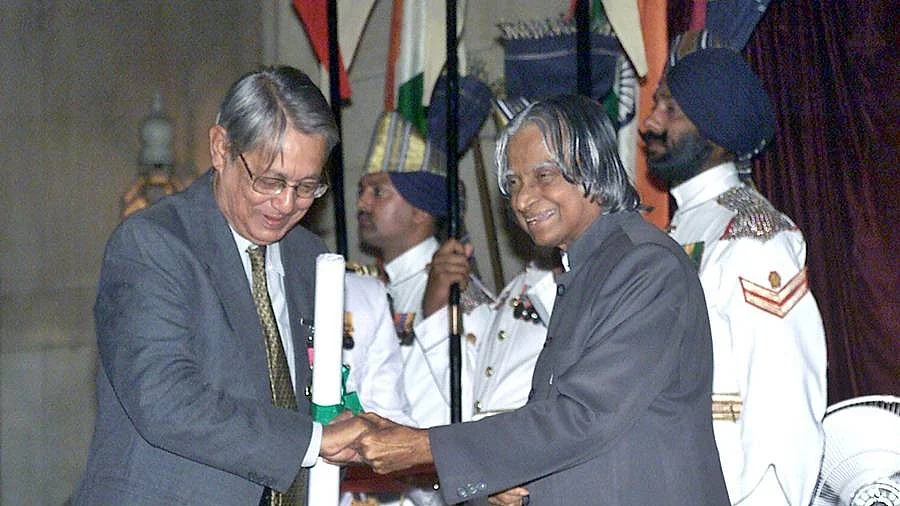


Andre Béteille, who passed away in 2026 at the age of 91, leaves behind a legacy that is at once monumental and understated. As one of the founding pillars of modern sociology in India, he combined meticulous fieldwork, lucid prose, and a deep ethical commitment to equality, shaping generations of students and redefining how India’s social order is studied and understood.
His memoir Sunlight on the Garden — a finely observed account of childhood in colonial Chandannagar and intellectual youth in Calcutta —only deepens the sense that Béteille was not just a scholar but a witness to, and interpreter of, India’s turbulent mid-twentieth-century transformation.
From Chandannagar to Delhi: A Life in Social Thought
Born in 1934 in Chandannagar, then a French colonial enclave in Bengal, Béteille grew up at the crossroads of European rationalism and Bengali intellectual ferment. Fluent in English, French, and Bengali, he moved between worlds without losing a distinctively Indian sociological sensibility. After initial training in physics, he turned to sociology at the University of Calcutta, a shift that would place him at the heart of India’s post-Independence social-scientific awakening.
His early experiences—famine, communal riots, Partition, and the fracturing of a cosmopolitan Bengal—left an imprint on his later work on inequality, violence, and the fragility of democratic institutions. *Sunlight on the Garden* captures these formative years with a novelist’s eye, yet even in personal recollection Béteille’s sociological gaze is evident: he treats his own life as a case study in the interplay of class, language, and colonial modernity.
The Teacher Who Put Teaching First
For over three decades, Béteille taught at Delhi School of Economics, where he became synonymous with rigorous yet humane pedagogy. Colleagues and students alike recall a professor who treated the classroom as a space of democratic dialogue rather than didactic authority. He once wrote that in his career he had “always put teaching ahead of research,” a stance that resonated with the demands of the Indian university system and with his belief that sociology must be accessible to students, not just specialists.
His lectures on social stratification, caste, and political institutions were marked by conceptual clarity and a refusal of jargon. Many of today’s leading Indian sociologists trace their intellectual formation to those seminars, where Béteille insisted on empirical grounding, comparative thinking, and a constant questioning of received wisdom.
Caste, Class, and the Science of Inequality
Béteille’s most influential work emerged from his village-level study of Sripuram in Tamil Nadu, later published as Caste, Class and Power: Changing Patterns of Stratification in a Tanjore Village (1965). This book broke from purely cultural or ritual-centric accounts of caste, instead analysing how caste, class, and political power were mutually constitutive and historically changing. By tracking landholding, occupational shifts, and electoral politics, he showed that caste was not a static “tradition” but a dynamic structure embedded in economic and institutional life.
Later works such as Inequality and Social Change and The Backward Classes in Contemporary India extended this concern with stratification into broader questions of affirmative action, social mobility, and the limits of liberal reform. In Equality and Universality: Essays in Social and Political Theory (2002), he brought together his reflections on rights, citizenship, and the moral foundations of democracy, arguing that equality must be understood not as uniformity but as the removal of arbitrary hierarchies.
Between Society and Politics: A Public Intellectual
Beyond village ethnography, Béteille wrote incisively on Indian political institutions, the sociology of religion, and the politics of education. In Society and Politics in India (1991), he offered a sweeping yet grounded analysis of how social structures—caste, class, community—shape political behaviour and state formation in post-colonial India. His essays on secularism, nationalism, and the university warned against the instrumentalisation of education and the erosion of academic autonomy, themes that remain acutely relevant today.
Béteille was a liberal in the best sense: committed to individual freedom, institutional integrity, and reasoned debate, yet deeply aware of how social inequality distorts both democracy and everyday life. His writing avoided polemic; instead, he deployed calm argumentation to unsettle complacency, whether about caste privilege, bureaucratic power, or the role of intellectuals in public life.
A Life of Distinctions and Quiet Dignity
Internationally recognised, Béteille held visiting appointments at the University of Manchester, Cambridge, the London School of Economics, the University of California at Berkeley, and several advanced-study institutes in Europe. He was elected a Corresponding Fellow of the British Academy and an Honorary Fellow of the Royal Anthropological Institute, distinctions that reflected the esteem in which he was held beyond India. In 2005, the Government of India conferred on him the Padma Bhushan for his contributions to literature and education, a rare honour for a social scientist.
Yet Béteille never courted celebrity. His memoir *Sunlight on the Garden* reveals a man shaped by quiet observation, modesty, and a deep sense of responsibility toward his students and his discipline. In an age of increasingly performative public intellectuals, his life stands as a reminder that scholarship can be both powerful and unostentatious, rooted in careful work rather than spectacle.
A Lasting Intellectual Garden
Andre Béteille’s passing marks the end of an era in Indian sociology, but his influence will endure in classrooms, research, and public debate. From Caste, Class and Power to Equality and Universality, his books continue to challenge readers to think critically about inequality, institutions, and the possibilities of a more just society. As students turn the pages of *Sunlight on the Garden*, they will encounter not only the story of a remarkable life but also the intellectual foundations of a discipline that Béteille helped to shape with rare clarity, integrity, and grace.
Hasnain Naqvi is a former member of the history faculty at St. Xavier’s College, Mumbai
Join our official telegram channel (@nationalherald) and stay updated with the latest headlines