


UGC’s tougher equity rules target caste bias on campuses, but critics flag risks
New 2026 framework widens definitions, tightens accountability and strengthens enforcement across higher education
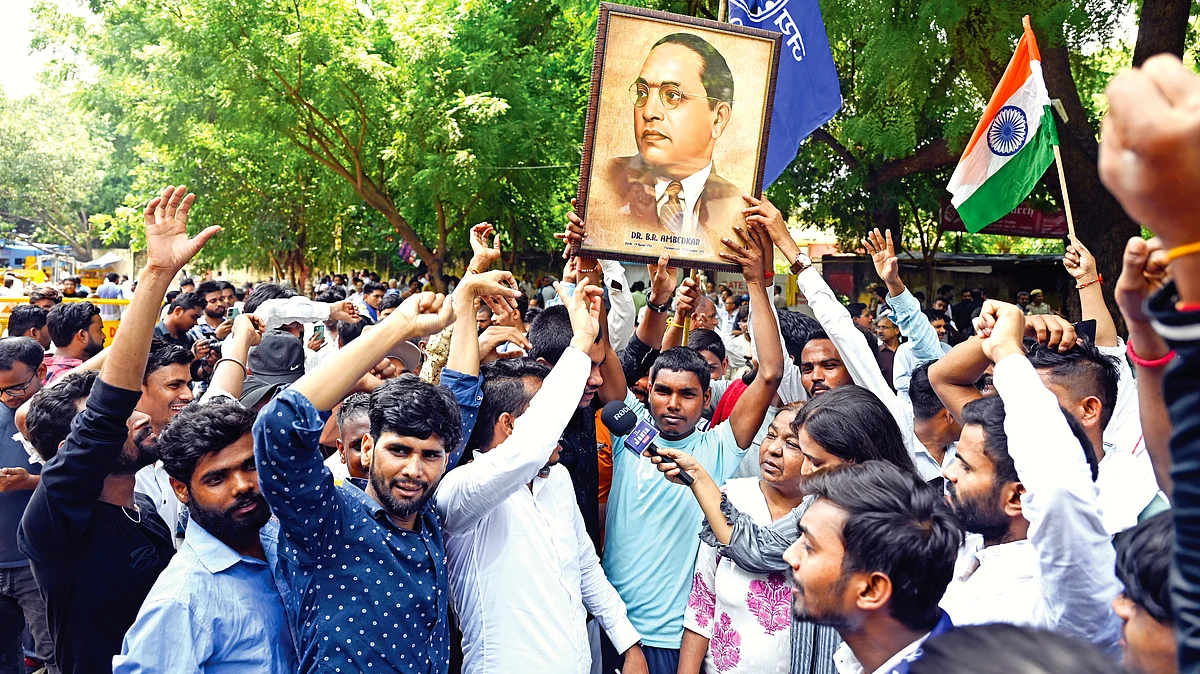


The University Grants Commission (UGC) has rolled out a strengthened regulatory framework aimed at making India’s university campuses safer and more inclusive, as complaints of caste-based discrimination continue to rise sharply and judicial scrutiny of student welfare intensifies.
Notified last week, the UGC (Promotion of Equity in Higher Education Institutions) Regulations, 2026 replace the earlier 2012 rules and significantly expand their scope. The Times of India reported that the move comes as official data show that complaints linked to caste bias have more than doubled in recent years, increasing by 118.4 per cent from 173 cases in 2017–18 to 378 in 2023–24.
At the heart of the new framework is a decisive shift in responsibility. The regulations place the burden of action squarely on institutions, making vice-chancellors and principals directly accountable for preventing discrimination and responding to complaints within prescribed timelines.
On paper, the regulations aim to ensure that no student, teacher or staff member is denied dignity or opportunity on the basis of identity. In practice, however, critics argue that the rules embed a far-reaching surveillance and compliance architecture that reaches into almost every aspect of campus life, from classrooms and hostels to committees and corridors, without building equivalent procedural protections for those accused of wrongdoing.
The 2026 framework replaces the UGC’s earlier equity rules and transforms advisory guidelines into enforceable obligations. Institutional heads are now the first point of accountability, backed by strict reporting requirements, mandatory oversight structures and the threat of severe penalties, including the loss of UGC recognition and funding.
Institutions that fail to comply can be barred from UGC schemes, prevented from offering degree or online programmes, and, in extreme cases, removed from the UGC’s recognised list, a step that would effectively strip them of their academic standing.
Critics warn that this concentration of responsibility may incentivise defensive decision-making. “When non-compliance carries existential risks for institutions, the pressure is to demonstrate action at any cost, not necessarily to ensure fairness,” said a senior academic administrator.
For the first time, caste-based discrimination is explicitly defined to cover Scheduled Castes, Scheduled Tribes and Other Backward Classes, correcting a key omission in earlier drafts. More broadly, discrimination is defined to include explicit, implicit, indirect and structural forms of unfair treatment, as well as any act that undermines dignity or equality in education on grounds such as caste, religion, gender, disability and place of birth.
While the breadth of these definitions is intended to capture subtle and systemic disadvantage, critics argue that the regulations leave too much open to interpretation. The framework offers no guidance on thresholds of proof, standards of evidence or how committees should distinguish between discriminatory conduct and legitimate academic or administrative decisions.
“This is a classic case of expansive language with minimal guardrails,” said a legal scholar specialising in education law. “It grants enormous interpretive power to internal committees, which may differ widely in competence, independence and training.”
Every higher education institution is now required to establish an Equal Opportunity Centre (EOC) to promote inclusion and support disadvantaged students. Each EOC will be supported by an Equity Committee headed by the institution’s chief and must include representation from SCs, STs, OBCs, women and persons with disabilities. The committees are mandated to meet at least twice a year.
EOCs must also publish bi-annual reports detailing campus demographics, dropout rates, complaints received and their status, introducing a new layer of transparency. Oversight will be provided by a national-level monitoring committee, comprising representatives from professional councils and civil society, which will review implementation and cases of discrimination at least twice a year.
The regulations further introduce round-the-clock equity helplines, mobile “equity squads” to monitor vulnerable areas of campuses, and designated “equity ambassadors” across hostels, departments and facilities to flag concerns early.
These mechanisms have drawn particular concern from critics, who argue they risk creating a culture of informal surveillance and chilling everyday academic interaction and debate. “Universities are not policing zones,” said a former vice-chancellor. “When vigilance becomes constant monitoring, it alters how people speak, teach and disagree.”
The mandatory 24-hour Equity Helpline has added to the unease. While intended to provide immediate support to those facing discrimination, the requirement to forward complaints disclosing a prima facie offence to the police directly links campus grievance mechanisms with the criminal justice system.
Academics warn this could encourage premature escalation, deter open academic engagement and push administrators towards risk-averse decision-making, particularly in sensitive or ambiguous cases.
The complaint-handling process is governed by tight deadlines. Equity Committees must meet within 24 hours of receiving a complaint, complete inquiries within 15 working days, and institutions must initiate action within a further seven days. Appeals may be taken to an ombudsperson.
While speed is vital for complainants, critics argue that complex allegations—especially those involving academic judgement, administrative discretion or contested facts—cannot always be examined fairly within such compressed schedules. “There is a real danger that procedural closure will trump substantive justice,” one ombudsperson said.
Perhaps the most sustained criticism relates to what the regulations omit. There are no explicit safeguards for respondents, no provisions dealing with malicious or knowingly false complaints, and no requirement to protect the confidentiality or reputation of the accused during the inquiry process.
Nor do the rules acknowledge the mental and professional harm caused simply by being subjected to an investigation, even where allegations are ultimately not upheld. Appeals to the ombudsperson may correct procedural errors, critics note, but they do little to repair reputational damage or emotional distress.
“This is a one-sided procedural design,” said a senior faculty member at a central university. “It assumes good faith on one side and offers no equivalent protection on the other.”
Although the regulations formally apply to all stakeholders, they explicitly prioritise historically disadvantaged groups. Courts have traditionally upheld such remedial approaches under Article 14 of the Constitution, which permits differential treatment to achieve substantive equality.
However, critics argue that the risk lies not in the objective but in how the rules are implemented. Wide discretion combined with weak procedural safeguards, they warn, could result in uneven outcomes across campuses, particularly affecting individuals from the unreserved General Class. Unequal application, rather than unequal text, could itself raise constitutional concerns.
UGC data show that Equal Opportunity Cells have already handled more than 1,500 complaints in recent years, even as audits have pointed to uneven resolution and patchy documentation. The Supreme Court has repeatedly sought caste-wise data from regulators, underscoring the demand for credible reporting and accountability.
Vice-chancellors acknowledge that the 2026 regulations mark a clear shift from advisory guidance to binding obligations. Whether they translate into lasting change, observers say, will depend on transparent data, independent oversight and consistent follow-through — factors that will determine how far India’s campuses move from policy intent to lived equity.
Join our official telegram channel (@nationalherald) and stay updated with the latest headlines