Nation
Delhi AQI crisis: CAQM warns of health hazards, outdoor sports in Delhi-NCR suspended
Authorities urge residents to take precautions as hazardous air threatens the elderly, children, and those with respiratory issues
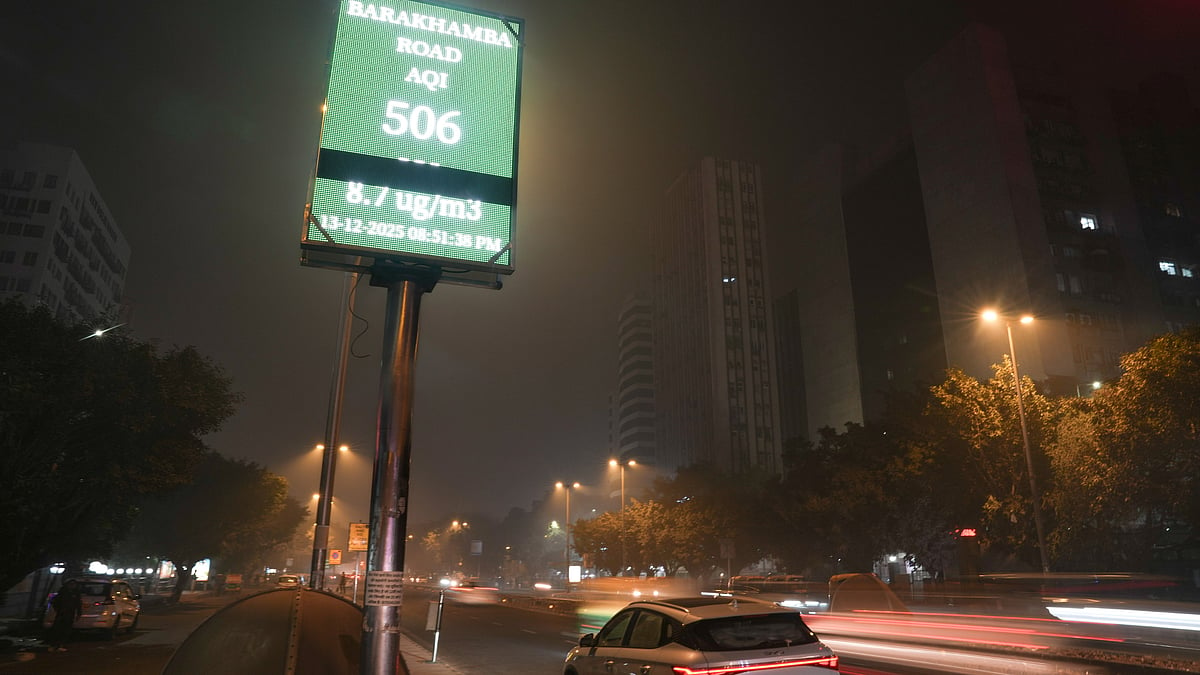
Amid a thick pall of smog having descended upon the national capital, the CAQM (Commission for Air Quality Management) has directed the Delhi government and NCR states to immediately suspend all outdoor physical sports activities, warning that their continuation amid poor air quality poses a “serious health risk to children”.
In a letter to the chief secretaries of Delhi, Haryana, Rajasthan and Uttar Pradesh on Saturday, the Commission said it was concerned that “some schools and institutions in Delhi-NCR were still holding outdoor sports activities” despite earlier directions issued in line with a Supreme Court order dated November 19.
The CAQM said the continuation of outdoor physical activities during periods of adverse air quality is “contrary to the spirit and intent of the apex court's observations and the Commission's instructions.” It recalled that in a letter dated November 19, it had already called for the “postponement of physical sports competitions scheduled during November and December.”
The Commission directed NCR governments to ensure strict and immediate compliance, issue necessary instructions to schools, educational institutions and sports bodies to discontinue outdoor activities, and sensitise schools and parents about the associated health risks.
A choking blanket of toxic smog settled over Delhi and the National Capital Region on Sunday, plunging the city into a hazardous haze that blurred visibility and deepened an already alarming air quality crisis. What had been a ‘severe’ pollution level only a day earlier surged further, as residents woke to a pall of thick, acrid air that seemed to hang oppressively over streets, parks, and neighbourhoods alike.
According to the CPCB (Central Pollution Control Board), the city’s average AQI (Air Quality Index) climbed to a perilous 461 at 7 am, up from 431 on Saturday. Every one of Delhi’s 40 air quality monitoring stations reported readings in the ‘severe’ category, with several teetering near the maximum measurable limit. Rohini bore the brunt with an AQI of 499, Bawana at 498, Vivek Vihar 495, and Ashok Vihar and Wazirpur each registering 493. Other hotspots included Narela at 492 and Anand Vihar at 491.
Across the city, the haze rendered the morning surreal. ITO recorded 485, Mundka 486, Punjabi Bagh 478, Nehru Nagar 476, and both Chandni Chowk and Okhla stood at 470, a stark reflection of the pervasive, smothering pollution blanketing the capital.
The crisis extended beyond Delhi. Across the National Capital Region, Noida registered an alarming 470, Ghaziabad 460, Gurugram 348 (‘very poor’), and Faridabad 220 (‘poor’), underscoring the widespread reach of the toxic air.
Dense fog compounded the smog, reducing visibility to near zero in many areas. The hazardous conditions prompted authorities at Indira Gandhi International Airport to activate low-visibility protocols. Flights continued to operate, though pilots navigated under heightened caution amid the thick morning murk. The India Meteorological Department (IMD) warned that visibility could fall to as little as 100 metres in the early hours before gradually improving to around 800 metres later in the day as the shallow fog lifted.
Meteorologists said the stagnation of weather conditions, coupled with lingering emissions and the enveloping fog, created a perfect storm for deteriorating air quality. Residents were urged to take precautions as the hazardous air posed severe health risks, particularly for the elderly, children, and those with respiratory conditions.
As Delhi and its neighbouring cities struggle under the weight of this invisible, poisonous haze, the capital’s skies serve as a stark reminder of the environmental and health challenges that continue to plague the metropolis.
With IANS inputs
Join our official telegram channel (@nationalherald) and stay updated with the latest headlines