Nation
DGCA grounds 4 VSR aircraft after Baramati crash, tightens charter safety rules
Regulator orders corrective action following special audit into fatal Learjet accident in Baramati that killed the former Maharashtra deputy CM Ajit Pawar
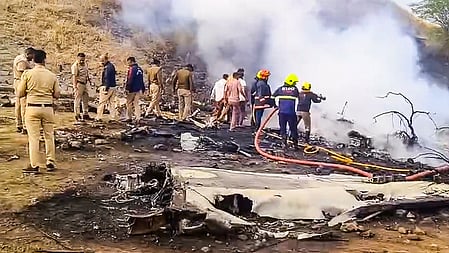
India’s aviation regulator has grounded four aircraft operated by VSR Ventures Pvt Ltd after a special safety audit uncovered multiple procedural lapses in the wake of last month’s fatal Learjet crash in Maharashtra.
The Directorate General of Civil Aviation (DGCA) ordered the audit after a Learjet 45 (registration VT-SSK) crashed in Baramati on 28 January, killing several people, including Maharashtra’s Deputy Chief Minister Ajit Pawar. The regulator said the multi-disciplinary inspection identified shortcomings in airworthiness oversight, flight operations and safety management systems.
As an immediate corrective measure, the DGCA has grounded Learjet 40 and 45 aircraft bearing registrations VT-VRA, VT-VRS, VT-VRV and VT-TRI until continued airworthiness standards are satisfactorily restored. The company has been issued deficiency reports and directed to submit a root cause analysis of the non-compliances for further regulatory assessment.
Union minister of state for civil aviation Murlidhar Mohol said the preliminary investigation report into the Baramati crash would be published on or before 28 February, in line with the 30-day requirement set out under International Civil Aviation Organisation (ICAO) norms. A final report will follow after completion of the full inquiry.
The Aircraft Accident Investigation Bureau (AAIB) is conducting a technical, evidence-based investigation. The Digital Flight Data Recorder (DFDR), manufactured by L3 Communications, has been successfully downloaded at the bureau’s facility in New Delhi. However, the Cockpit Voice Recorder (CVR), produced by Honeywell, sustained thermal damage. Technical assistance has been sought from the state of design and manufacture in accordance with ICAO procedures.
Prior to the accident, the DGCA said it had conducted 51 regulatory audits of non-scheduled operators during 2025, along with several surveillance inspections of VSR Ventures across flight safety, flight duty time limitations, maintenance compliance and documentation standards. According to the regulator, earlier findings had been addressed and closed.
In a parallel move, the DGCA on Tuesday announced a series of stringent measures aimed at strengthening oversight of Non-Scheduled Operators (NSOPs), citing a recent rise in aviation incidents. The announcement followed another fatal crash involving an air ambulance in Jharkhand’s Chatra district, in which all seven people on board were killed.
The regulator said it would introduce a mandatory disclosure policy requiring charter operators to publish key safety information on their websites, including aircraft age, maintenance history and pilot experience. A safety ranking system for non-scheduled operators is also planned, with assessment criteria to be made public.
Enhanced surveillance measures will include random audits of Cockpit Voice Recorders, cross-verification of ADS-B tracking data, fuel records and technical logs to detect unauthorised operations or falsified information.
The DGCA warned that senior management would be held personally accountable for systemic safety breaches. Pilots found violating Flight Duty Time Limitations or attempting landings below prescribed safety minima could face licence suspensions of up to five years, while operators risk suspension of permits for serious non-compliance.
Additional scrutiny will apply to older aircraft and fleets undergoing ownership changes. Operators running in-house Maintenance, Repair and Overhaul (MRO) facilities will also be audited, with those failing to meet standards required to outsource maintenance to approved organisations.
The regulator emphasised that many weather-related accidents stem from poor operational judgement rather than unpredictability. It has directed operators to implement real-time weather monitoring systems and strengthen pilot training with greater emphasis on weather awareness and decision-making in challenging conditions.
Phase one of the special safety audit covering selected operators is due for completion in early March, after which a second phase will extend the review across the remaining non-scheduled sector.
With IANS inputs
Join our official telegram channel (@nationalherald) and stay updated with the latest headlines