Nation
SC says ‘bail is rule even under UAPA’, questions denial of bail to Umar Khalid
Top court says smaller benches cannot dilute binding precedent on liberty, speedy trial
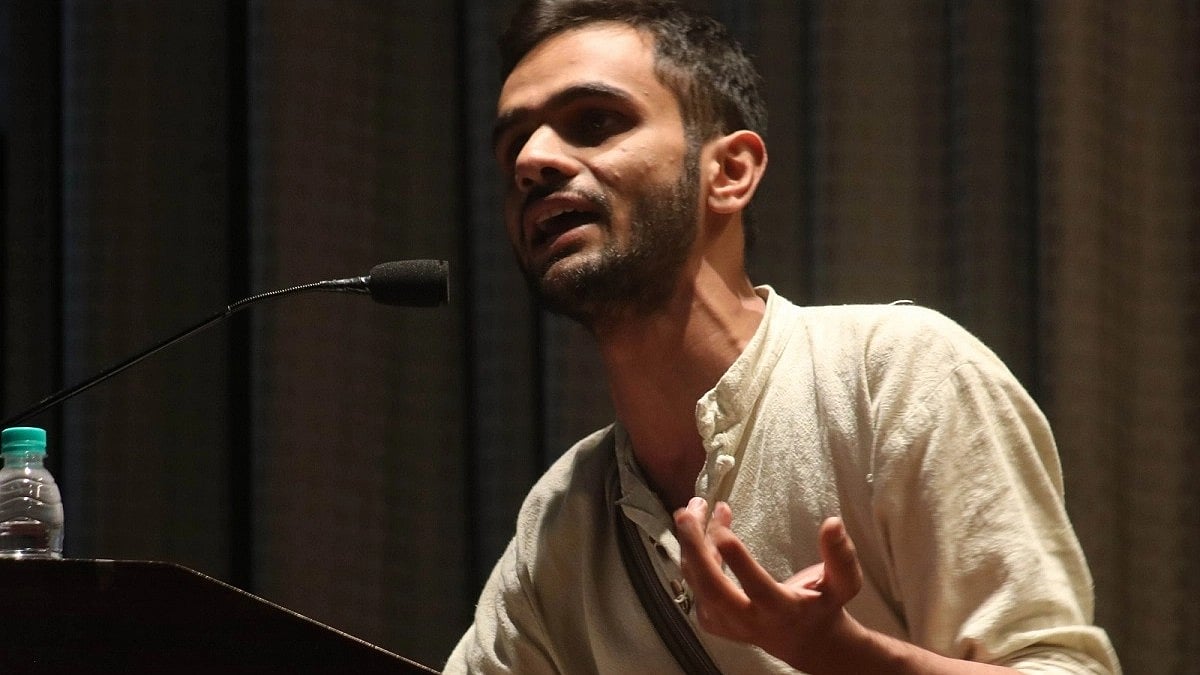
The Supreme Court of India on Monday strongly reaffirmed that “bail is the rule and jail the exception” even in cases under the stringent Unlawful Activities (Prevention) Act, while questioning an earlier verdict denying bail to former JNU student leaders Umar Khalid and Sharjeel Imam in the Delhi riots conspiracy case.
A bench of Justices B.V. Nagarathna and Ujjal Bhuyan said a recent judgment rejecting bail to Khalid and Imam appeared to dilute the binding precedent laid down by a larger bench in the landmark Union of India vs K.A. Najeeb case.
“They cannot dilute, circumvent or disregard binding precedent,” Justice Bhuyan observed, stressing that smaller benches were bound by rulings of larger benches.
Observations made while granting bail in narco-terror case
The remarks came while the apex court granted bail to Syed Iftikhar Andrabi, a Jammu and Kashmir resident arrested by the National Investigation Agency in June 2020 in a narco-terror case.
The NIA had alleged Andrabi was part of a cross-border heroin trafficking network funding militant groups such as Lashkar-e-Taiba and Hizbul Mujahideen. His bail pleas had earlier been rejected by both the special NIA court and the Jammu and Kashmir High Court.
Granting him relief, the Supreme Court held that prolonged incarceration without completion of trial could not be justified merely because stringent anti-terror charges had been invoked.
Court flags ‘hollowing out’ of Najeeb ruling
The bench specifically referred to the judgment in Gulfisha Fatima vs State and said it failed to properly apply the principles laid down in the K.A. Najeeb ruling.
In January this year, another two-judge bench of the Supreme Court comprising Justices Aravind Kumar and N.V. Anjaria had denied bail to Umar Khalid and Sharjeel Imam, citing delay in trial proceedings.
The court on Monday said that interpretation gave the impression that the Najeeb judgment was merely a narrow exception to Section 43D(5) of the UAPA.
“It is this hollowing out of the import of the observations in Najeeb that we are concerned with,” Justice Bhuyan said.
‘Judicial discipline must prevail’
The bench stressed that constitutional guarantees under Articles 21 and 22 — including the right to personal liberty and speedy trial — cannot be overridden indefinitely by statutory restrictions under anti-terror laws.
“Even under the UAPA, bail is the rule and jail is the exception,” the court held, warning against a growing tendency among smaller benches to weaken larger bench rulings without referring matters to a higher bench.
Join our official telegram channel (@nationalherald) and stay updated with the latest headlines