


Broken judicial system: Saket Gokhale on denial of bail to Umar, Sharjeel
TMC MP accuses State of criminalising dissent as Supreme Court leans on UAPA to keep activists jailed without trial
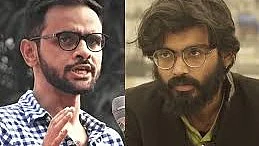


The Supreme Court’s refusal to grant bail to activists Umar Khalid and Sharjeel Imam is nothing short of an indictment of India’s justice system, Trinamool Congress (TMC) Rajya Sabha MP Saket Gokhale said on Tuesday, accusing the Centre of weaponising draconian laws to imprison those it finds inconvenient.
In a blistering post on X, Gokhale said the continued incarceration of Khalid and Imam — despite their trials not having even begun — laid bare what he described as a “broken judicial system” where accusations by the State are treated as proof, and liberty becomes collateral damage.
“There cannot be a presumption of guilt in cases like Umar’s and Sharjeel’s, where trial hasn’t even begun,” Gokhale said, warning that constitutional guarantees mean little if courts fail to defend them. “The Constitution is only as good as the paper it’s written on unless its values are upheld by courts,” he added, calling such judicial failures nothing less than a collapse of democracy and society itself.
Gokhale accused the Modi government of routinely invoking laws such as the Unlawful Activities (Prevention) Act (UAPA) and the Prevention of Money Laundering Act (PMLA) to lock up critics and dissidents. “That’s the nature of an authoritarian State,” he said, adding pointedly that while such tendencies may not be new in Indian politics, it is the judiciary alone that has the power — and responsibility — to stop them.
Recalling recent rulings, the TMC MP noted that some Supreme Court benches had attempted to push back. He cited judgments by Justices Abhay Oka and Augustine Masih, which reaffirmed that bail must be the norm, not the exception, even in UAPA cases. Other benches, he said, had tried “bit by bit” to blunt the harshest edges of the PMLA within the limits of judicial power.
“But that principle has been abandoned here,” Gokhale argued. “Accusations by the State cannot be taken at face value. They must be tested through a fair trial.” Instead, he said, Khalid and Imam now face the prospect of languishing in jail for at least another year — still without their day in court.
To underline what he called the moral inversion of the system, Gokhale drew a sharp contrast with BJP leader Kapil Mishra. Mishra, he said, was “openly seen inciting mobs” during the February 2020 Delhi riots and yet “never faced justice”. Today, Mishra is a minister. “As a minister, Kapil Mishra is now the State,” Gokhale said.
Mishra had led a pro–Citizenship Amendment Act gathering at Maujpur Chowk in northeast Delhi on 23 February 2020, where he issued a public ultimatum to the Delhi Police to clear protest sites — a speech that has since been repeatedly cited in public debate over accountability for the riots.
“That same State has levelled accusations against Umar and Sharjeel,” Gokhale said. “And the Supreme Court chose to lean towards those accusations instead of following the settled principle of ‘innocent until proven guilty’. A system that rewards Kapil Mishra while keeping Umar Khalid and Sharjeel Imam in jail is deeply and fundamentally broken.”
On Monday, the Supreme Court held that an “act of terror” under the UAPA is not limited to the final act of violence alone, but also encompasses those who contribute through planning, coordination, mobilisation or other forms of concerted action. On that basis, it refused bail to Khalid and Imam, saying there were reasonable grounds to believe that the allegations against them were prima facie true. Both have now been in jail for over five years without trial.
The court stressed that the law does not restrict terrorism to the use of weapons, asserting that what matters is not merely the instrument used, but the design, intent and effect of the alleged acts.
Join our official telegram channel (@nationalherald) and stay updated with the latest headlines