


Why denial of bail to Umar Khalid is so shocking
Many legal experts stunned by SC’s hard denial of bail to Khalid, even harsher denial of another bail plea during the next year
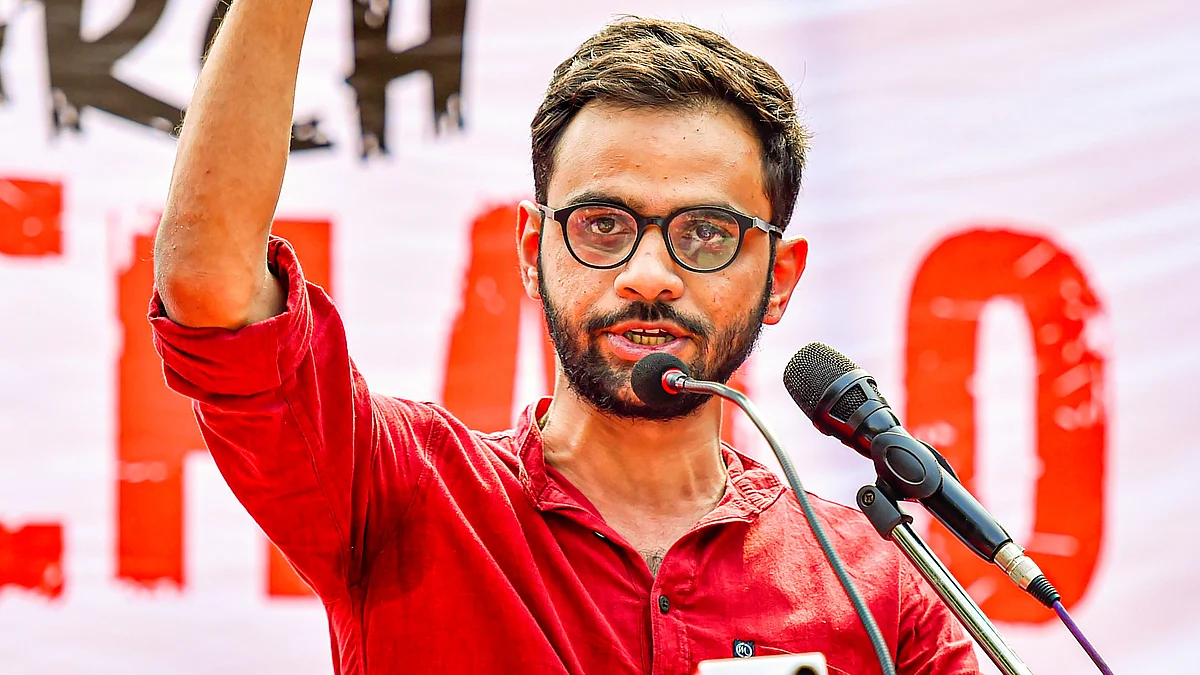


Umar Khalid never gave any public call to incite violence. On the contrary, his much circulated speech had him say, “We will not respond to hate with hate or to violence with violence.” No evidence has been produced in court to show that he was involved in funding the anti-CAA agitation (it is a different matter that even if he had, it would not be proof of incitement) or transporting arms. When the 2020 riots began in parts of Delhi, he was not even present in the city.
So what was the evidence against Khalid relied upon by the prosecution? Significantly, the key prosecution witnesses have all been anonymous, so-called ‘protected witnesses’. Most of these witness statements have been in the nature of hearsay, such as ‘X saw Khalid with Z’, ‘A heard Khalid say…’ and ‘B heard C say that Khalid said…’.
Some of the prosecution witnesses during the trial were actually given names like 'Romeo' and 'Juliet'. The defence argument that these statements were unreliable, were recorded long after the riots, were contradictory etc. was noted by the trial court which, however, held that they can be considered only during the trial, which is yet to commence.
These are some of the reasons why at least a section of the legal fraternity is shocked at the Supreme Court denying bail to Khalid on Monday, 5 January, and laying down that he will not have the liberty to renew his appeal for bail for at least another year, or until the protected witnesses are examined.
The Supreme Court bench of Justices Aravind Kumar and N.V. Anjaria held that it was “satisfied that the prosecution material disclosed a prima facie case” against Khalid. It added that there were reasonable grounds to believe that the conduct of Khalid was prima facie a terrorist act as defined under the Unlawful Activities Prevention Act (UAPA).
"…continued detention has not crossed constitutional impermissibility to override the statutory embargo,” the court ruled. Several legal experts seem to believe that by going into the merits of the evidence when the trial has not even commenced, the Supreme Court has been grossly unfair.
The court added that it was convinced of Khalid’s central role in the alleged conspiracy. “The complexity of the prosecution, the nature of the evidence relied upon, and the stage of the proceedings do not justify the enlargement on bail at this juncture… in the alleged conspiracy, the material suggests involvement at the level of planning, mobilisation and strategic direction, extending beyond episodic or localised acts… acts that disrupt supplies or services essential to the life of the community, as well as acts that threaten the economic security of the nation,” it ruled, did not allow enlargement on bail.
The Supreme Court’s denial of bail to Khalid (similar grounds were cited to deny bail to Sharjeel Imam, another incarcerated scholar whom this report refrains from mentioning because his case deserves a separate look) flies in the face of several earlier judgments by Delhi and Bombay High Courts, which in 2021 had ruled that in a case involving the draconian UAPA, the judiciary’s role was not to act as a stenographer for the prosecution and mechanically reproduce allegations in the chargesheet, and keep people in jail until the 10 or 15 years it takes to complete a trial.
Also Read: Is Sonam Wangchuk the next Umar Khalid?
The two high courts had pointed out that given how strict the UAPA’s threshold requirement is for bail, courts must subject the prosecution’s case to an equally strict scrutiny.
As has been clear during the bail proceedings involving Khalid in the trial court and Delhi High Court, factual evidence was hardly concrete or specific. By accepting the prosecution’s charge that Khalid’s actions — mostly delivering speeches and attending meetings of activist-protesters — prima facie made him out to be a terrorist, the SC has not only prejudiced the trial but also failed Khalid. The least the court could have done was to elaborate upon why it was inclined to believe that the scholar was engaged in terrorist activities.
An earlier judgment of the Delhi High Court on a bail application moved by Khalid is worth citing to show how difficult it is to prove allegations under UAPA wrong unless courts strictly scrutinise the evidence. The ruling of the high court denying bail to Khalid included this illuminating section on the nature of UAPA, as quoted in a blog by lawyer and constitutional law expert Gautam Bhatia:
“It may be reminded that under the UAPA, it is not just the intent to threaten the unity and integrity but the likelihood to threaten the unity and integrity; not just the intent to strike terror but the likelihood to strike terror; not just the use of firearms but the use of any means of whatsoever nature, not just causing but likely to cause not just death but injuries to any person or persons or loss or damage or destruction of property, that constitutes a terrorist act, within the meaning of section 15 of UAPA…”.
Join our official telegram channel (@nationalherald) and stay updated with the latest headlines