Nation
SIR row: Mamata urges SC to ‘save democracy’, alleges Bengal being targeted
Top court issues notice to EC, says genuine voters must remain on electoral rolls
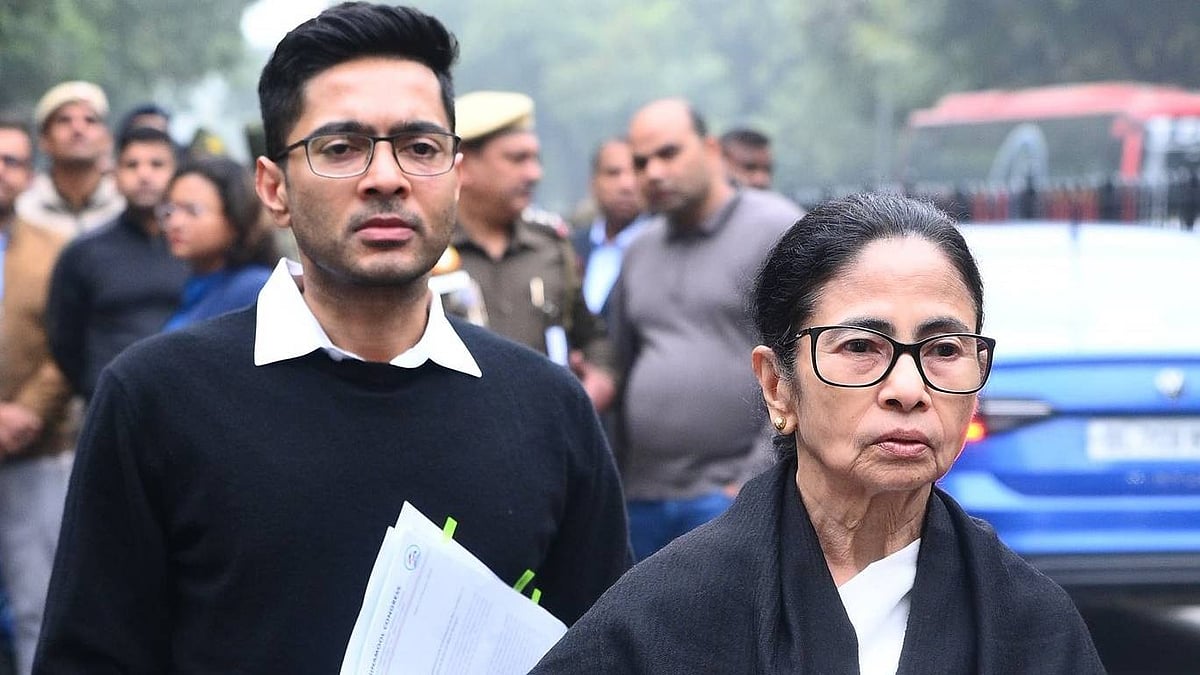
West Bengal Chief Minister Mamata Banerjee on Wednesday urged the Supreme Court of India to intervene in the ongoing Special Intensive Revision (SIR) of electoral rolls in the poll-bound state, alleging that West Bengal was being selectively targeted and its people were being “bulldozed”, and calling on the court to “save democracy”.
Taking note of Banerjee’s petition — and her rare appearance to advance arguments before the apex court while holding office as chief minister — a bench comprising Chief Justice Surya Kant, and Justices Joymalya Bagchi and Vipul M. Pancholi issued notices to the Election Commission of India and the Chief Electoral Officer of West Bengal, seeking their replies by 9 February.
During the hearing, Banerjee, who was permitted by the bench to supplement the submissions of her counsel, senior advocate Shyam Divan, alleged that the SIR process was being carried out in an arbitrary manner in West Bengal.
“West Bengal is being targeted. Why is the same yardstick not being applied in Assam?” Banerjee asked, alleging that the state’s population was being “bulldozed” through the ongoing electoral roll revision.
“We are not getting justice anywhere. I have written six letters to the Election Commission,” she told the bench, seeking its intervention.
Divan submitted that the SIR process had resulted in a large number of voters being flagged under “logical discrepancies”, leaving little time for corrective measures as the exercise is scheduled to conclude on 14 February.
He said notices had been issued to around 1.36 crore voters on the ground of logical discrepancies, which include mismatches in parental names or age differences between a voter and their parent being less than 15 years or more than 50 years when compared with the 2002 electoral roll.
Divan argued that in many cases, discrepancies were minor, such as spelling errors, and could have been easily rectified.
The Chief Justice observed that misspellings could occur due to variations in Bengali dialects and said electoral roll revision often involves complexities such as migration.
“Every problem has a solution. We must ensure that no innocent person is left out. Genuine persons must remain on the electoral roll,” the bench said.
Banerjee also alleged that Aadhaar was not being accepted during the revision process and claimed that several living persons had been wrongly declared dead.
Senior advocate Rakesh Dwivedi, appearing for the Election Commission, rejected the allegations and said the West Bengal government had provided limited administrative support for the SIR, deploying only about 80 grade-two officers and relying largely on lower-level workers such as Anganwadi staff.
Banerjee countered this, stating that the state had provided whatever assistance was sought by the poll panel.
The bench recalled that on 19 January it had issued directions to ensure transparency in the SIR process and prevent inconvenience to voters, including directing that names flagged for discrepancies be displayed at gram panchayat and block offices.
Banerjee has earlier warned that continuation of the SIR in its present form could lead to “mass disenfranchisement” and undermine democratic processes, allegations the Election Commission has denied.
With PTI inputs
Join our official telegram channel (@nationalherald) and stay updated with the latest headlines