Nation
Bengal: Durga Puja gets a BJP makeover
Featuring a Gujarat event management firm, Adani awards, Sherawali and other alien delights
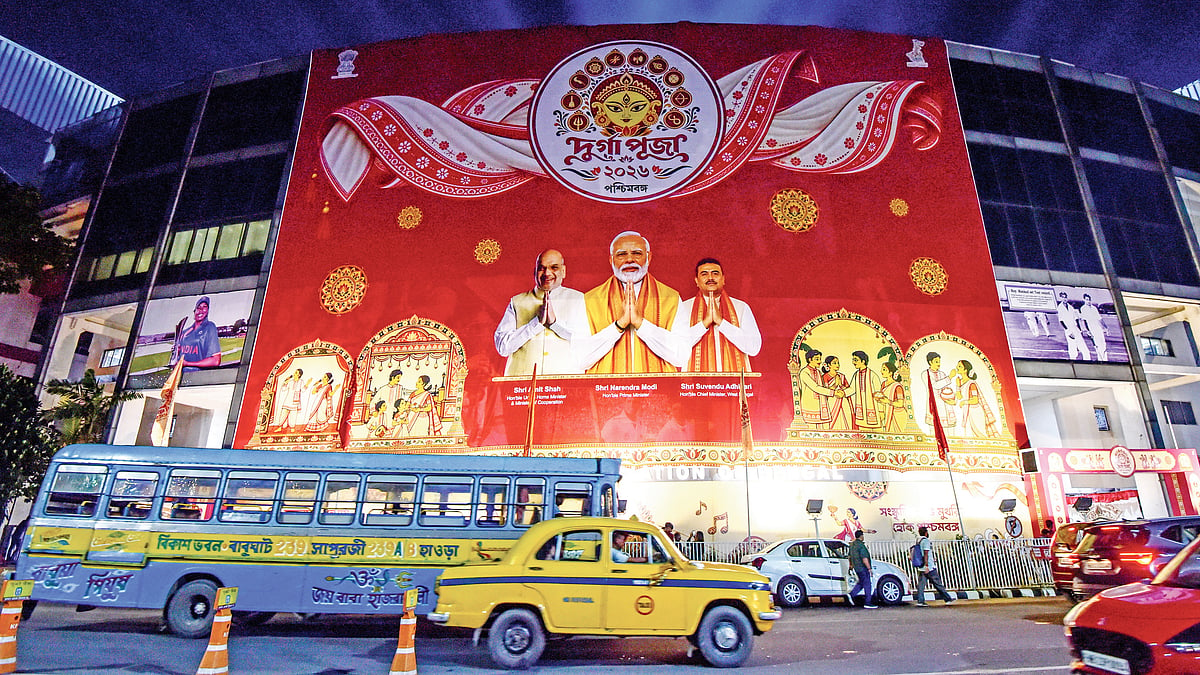
Kolkata, indeed the whole state of West Bengal, is witnessing a culture shock. Giddy with power, the new BJP government in the state is going bananas over Durga Puja this year. From painting busy flyovers in rainbow hues, ‘inspired’ by international pedestrian plazas, to splurging an eye-popping Rs 180 crore on a show at Eden Gardens — the city's iconic cricket stadium — the state is witnessing the kind of Durga Puja it has never seen before.
Gobananas, a Gujarat-based event management company, was paid a reported-but-unconfirmed Rs 180 crore for the Eden Gardens event. Finance minister Swapan Dasgupta, facing criticism for ignoring local event managers and talent, is reported to have blamed the local firms. At a private gathering, he reportedly told his guests, “We hope companies from West Bengal will draw lessons and be prepared to play a bigger role next year.” His explanation was greeted with diplomatic silence but what Dasgupta left unsaid was how the tender rules made it impossible for local companies to bid.
The government’s ‘request for proposal’ required a hefty Rs 1 crore deposit and 3 per cent performance security that small bidders couldn't possibly cough up. Also, bidders had to have an average annual turnover of Rs 50 crore or more and a track of executing national/international events that cost Rs 20 crore or more in the last decade, specifically for government projects. That effectively shut the doors on local players.
****
No one was surprised that the contract went to a Gujarati firm. But it was the spending spree and style that raised eyebrows. Chief minister Suvendu Adhikari had invited Prime Minister Narendra Modi and home minister Amit Shah to the event, which explained the ‘cost no bar’ approach. But Bengalis were aghast to see the gaudy, televised laser-and-drone spectacle and the bastardised ‘dhunuchi naach’, a traditional high-energy devotional dance ritual performed in front of the goddess.
Not to be left behind, the Adani Group made its branding debut by deciding to reward eight puja pandals. Out of some 40,000 public ‘sarbajonin’ pujas statewide, these eight were rewarded handsomely — sculptors got Rs 10 lakh each and organisers Rs 15 lakh. It also enrolled 1 lakh people on ‘first come basis’ for a preview of the select pandals. Influencers were roped in as special guests to publicise the hassle-free ‘darshan’ and arrangements made by the group’s volunteers.
The aim, according to Adani Group advisor Sanjay Thade: “We want to showcase the grandeur of Kolkata’s Durga Puja to national and international delegates so that it becomes one of the most recognisable festivals in the world.” One wonders if he knew that in 2021, Durga Puja in Kolkata became the first festival from Asia to be included in UNESCO’s Intangible Cultural Heritage list.
The Adanis have also pledged to revamp Kumortuli, the famous village of potters and sculptors.
****
The hand of ‘outsiders’ clearly oblivious to Bengali cultural mores and festival lore was visible in other ways too. What else can explain Durga sporting eight, nine, eleven or even twelve arms — instead of the sacred ten-armed (dashabhuja) form? Official Kolkata Municipal Corporation advertisements copy-pasted the Hindi word ‘swachchata’, which in Bengali, means transparency, not cleanliness as intended. Sorry KMC, that was a terrible mishit!
Communication professional Sreeraj Mitra blames “this murder of the Bengali language” on “the over-dependence on AI translations.” Jawhar Sircar, former Prasar Bharti CEO and secretary, department of culture, government of India, advised the state government to refrain from teaching Bengalis how to welcome Durga, their daughter. “People who have done it seem to be unaware that Bengali and Hindi have different syntax and nuances,” Sircar said.
****
And then, of course, there is the food. The number of non-vegetarian food stalls, is fewer this year. Eateries are taking care to not advertise non-veg with images of Goddess Durga in the background.
The cultural shift is in your face. Jagrata and Sherawali have made a triumphant debut, and BJP leaders are competing to take over the Pujas in their localities.
Hindi bhajans and Hanuman Chalisa are much in demand and a Hindu outfit of some description has occupied the space outside the CPI(M) office on Alimuddin Street to hold round-the-clock Chandipath.
When the communists discovered their 60-year-old bookstall occupied by a Hindutva outfit, they had to seek redress in court, while the police looked the other way.
Local sponsors of cultural events, often builders, are hard to find this year as they are still negotiating arrangements and commissions with the new ‘rulers’. In the absence of a clear power hierarchy, leaders at various levels are flexing their muscles, they say.
Another tradition to take a hit this year is the release of new Bengali music during this season. Navratri, garba events and Hindi devotional songs have edged out Bengali, it seems. It is all very disorienting for anyone who knew what made Durga Puja an ‘intangible cultural heritage’ worth celebrating.
Join our official telegram channel (@nationalherald) and stay updated with the latest headlines