Nation
Why are children dropping out of school?
The ‘Gujarat model’ of dropouts and school closures is becoming worryingly widespread, writes Rashme Sehgal
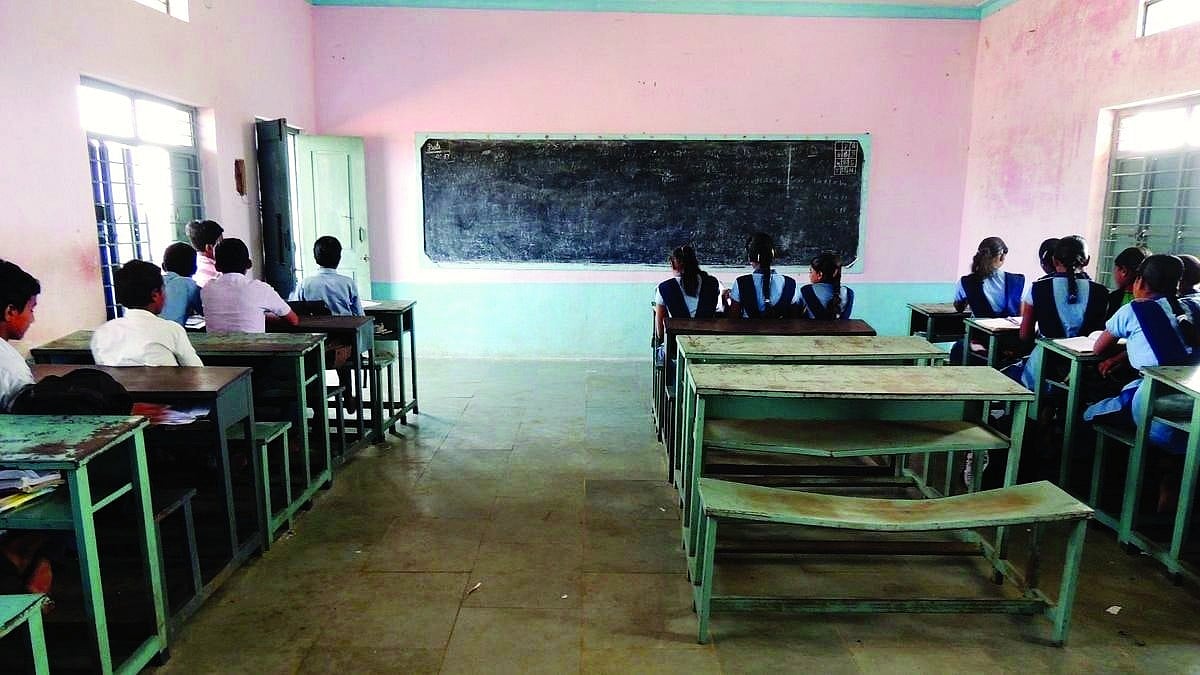
Between 2020 and 2025, around 1.1 lakh adolescent girls dropped out of school in Gujarat alone, taking the shine off the Union government’s slogan ‘Beti Padhao Beti Bachao’. With 2.4 lakh students no longer attending school, the prime minister’s home state has seen a 341 per cent surge in dropouts. Across India, 29.8 lakh of the 65.7 lakh dropouts are girls.
In Gujarat, 5,000 government schools have been shut down. Prof. Hemant Kumar Shah, a leading educationist and economist from the state, believes this was done to favour private education. The figures bear him out: over the last decade (2014–24), 8 per cent of government schools closed down, while private schools expanded by 14.9 per cent.
Union minister of state for education Jayant Chaudhary informed the Lok Sabha that 89,441 government schools closed nationwide, dropping from 11,07,101 in 2014–15 to 10,17,660 in 2023–24. In the same period, private schools rose from 2,88,164 to 3,31,108.
He provided no reasons for the closures, merely stated that education falls under the concurrent list, making the opening, closing and rationalisation of schools the responsibility of state and Union Territory governments.
Investment in government schools has declined and existing schools are woefully understaffed. “We have 70,000 vacancies with no policy worth the name for teacher recruitment,’’ says Shah.
On 12 February 2024, the Gujarat education minister admitted in the Assembly that 1,606 of the state’s 32,000 government primary schools were running with only one teacher, who handled all classes from Classes 1 to 8.
****
Why are children, especially girls, dropping out of the education system?
Dev Desai, a panchayat member from Khanpur Rajkuva block in Gujarat’s Patan district, shed light on the problem. “In my own village, after the local school shut down, children have to walk five to six kilometres to get to the nearest school. Parents are conservative and won’t send their daughters to study that far. Once a girl drops out, they wait till she is 16 and marry her off,” he said.
Prof. Roop Rekha Verma, former vice-chancellor of Lucknow University, believes that depriving millions of children of even basic education is part of the BJP’s systematic anti-knowledge campaign. “They are threatened by education. They do not want people to grow up with open minds... ”
Educationists also point out that schools with fewer students cannot be written off as ‘underperforming’ as smaller villages will naturally have fewer children.
****
Statistics from other BJP-run states such as Uttar Pradesh, Assam and Madhya Pradesh are equally dismal. The education department of Uttar Pradesh closed 10,000 schools and merged 29,000 primary schools in what has been described as ‘an initiative to streamline educational resources’.
Of the one lakh students who dropped out in 2025, 56,000 are girls. Between 2022–24, a total of 741,626 students dropped out. Interestingly, UP has a low dropout ratio at the primary level, which accelerates in the senior classes.
Assam reported a 25.1 per cent dropout rate at the secondary level, 6.2 per cent at the primary level and 8.2 per cent at the upper primary level in 2023–24. This is significantly above the national averages of 1.9 per cent (primary), 5.2 per cent (upper primary) and 14.1 per cent (secondary).
Bihar has India’s highest secondary school dropout rates, with recent data (2023–24) showing around 21 per cent to 25.6 per cent of students leaving before Class 12, way above the national average. Though some figures suggest a marginal improvements for girls, Bihar is evidently unable to retain students, particularly secondary school boys (Classes 9–10).
Shockingly, in 2024–25, Tamil Nadu recorded a sharp increase in school dropout rates across primary (Classes 1–5), upper primary (6–8) and secondary (9–10). This according to the latest Unified District Information System for Education Plus data released by the Union ministry of education.
For a state that has long sustained some of the lowest dropout rates in the country, the latest figures are worrying. Tamil Nadu now trails its southern counterparts in the primary school category, with Kerala (0.8 per cent), Karnataka, Telangana (both 0 per cent) and Andhra Pradesh (1.4 per cent) all recording lower dropout rates.
Jammu and Kashmir saw a decline of 21.4 per cent in the number of government schools: from 23,874 in 2014–15 to 18,758 in 2023–24. In the same period, Odisha’s government schools declined by 17.1 per cent (from 58,697 to 48,671); Arunachal Pradesh’s by 16.4 per cent (from 3,408 to 2,847); Uttar Pradesh’s by 15.5 per cent (from 1,62,228 to 1,37,102).
Jharkhand saw a decline of 13.4 per cent (from 41,322 to 35,795); Nagaland of 14.4 per cent (from 2,279 to 1,952); Goa 12.9 per cent (from 906 to 789) and Uttarakhand by 8.7 per cent (from 17,753 to 16,201).
In Punjab, there’s another aspect to the problem. The state faces a financial crisis after the Centre withheld over Rs 515 crore under Samagra Shiksha as a penalty for Punjab’s refusal to implement the PM-SHRI scheme, affecting school repairs and teachers’ salaries.
****
High school dropouts are indicative of another malaise: the rise of child labour. “In Gujarat, the state government chooses not to acknowledge this,” says Prof. Shah. “As an educationist, it saddens me to see the BJP model being accepted throughout the country.”
A recent World Bank report highlighted that millions of Indian students struggle with basic reading and math. With an emphasis on rote learning over critical thinking and creativity, India ranks poorly in learning outcomes compared to other developing nations.
While the government has earmarked nearly Rs 3 lakh crore for the Samagra Shiksa programme (2021–26), critics point out that much of this funding remains unspent.
Join our official telegram channel (@nationalherald) and stay updated with the latest headlines