Opinion
An idiot’s guide to Macaulay’s legacy
Hasnain Naqvi on the Sangh Parivar’s politically motivated misreading and the battle over access to knowledge
Delivering the sixth Ramnath Goenka lecture on 17 November, Prime Minister Narendra Modi replayed an old familiar theme of the Sangh Parivar — the exhortation to free India of the ‘Macaulay mindset’, or to use their ‘Indian’ language of choice 'मैकाले की मानसिकता से मुक्ति'. The invocation is not new, nor did Mr Modi start it — it has been an integral part of the RSS–Jana Sangh–BJP lexicon for decades.
The invocation is convenient for the Parivar because it serves as a dog-whistle against the old Nehruvian–Congress elite who were English-educated and by default secular. It dovetails perfectly with the RSS demand for ‘Bharatiya’ education (भारतीय शिक्षा पद्धति) and the replacement of the ‘Macaulay model’ with something rooted in India’s ancient texts.
Most conveniently for the Parivar, in this framing of Macaulay’s legacy and his effect on Indian education, to be ‘anti-colonial’ is to be ‘anti-English’, which segues neatly into their pro-Hindi/ Sanskrit cultural nationalism.
But for the Parivar, India is frustratingly diverse, as it has found on several occasions when it has tried to force Hindi down the throats of reluctant Indians who speak a myriad other tongues. The National Education Policy (NEP) is the newest weapon of coercion in this enterprise.
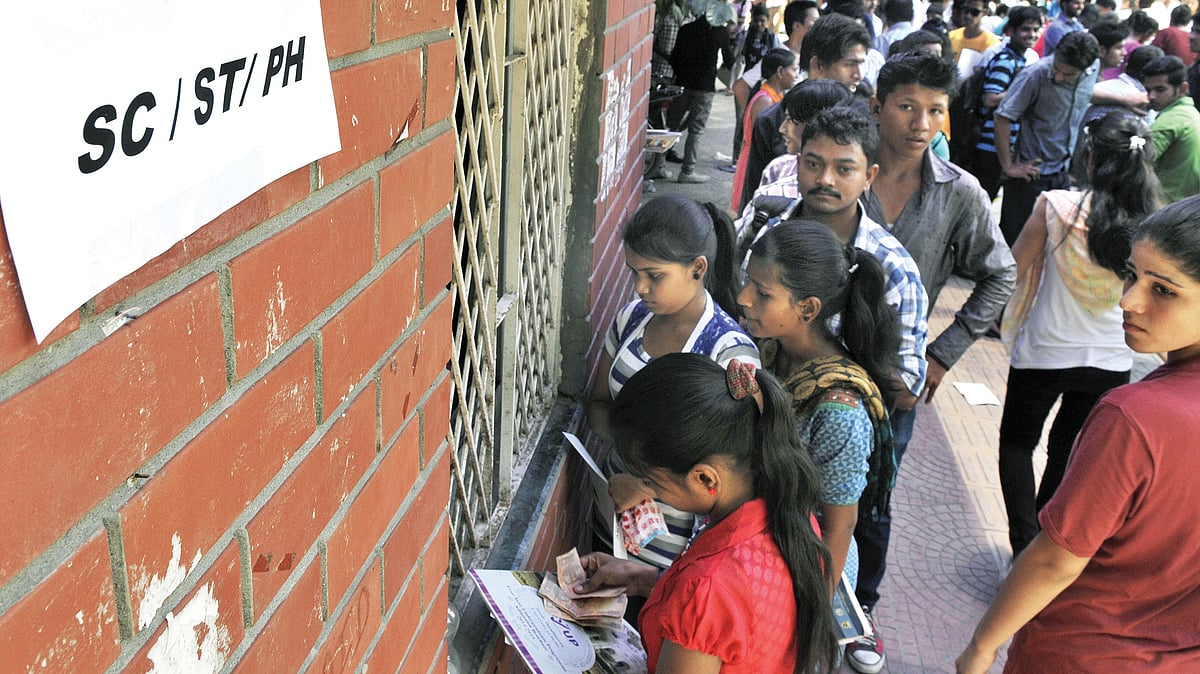
Inconveniently for the BJP–Sangh, Macaulay’s legacy, imperfect as it may be, represents a more meaningful freedom for many Indians, who comprise the ‘bahujan’ majority of anti-caste agitations. For them, this is a deeper conflict over India’s knowledge order — who controls it, who benefits from it and whose histories and aspirations it serves.
Despite Macaulay’s colonial arrogance, many Dalit thinkers have an unshakeable belief that his ‘reforms’ cracked open a caste-sealed system of learning that had kept them out for millennia. Chandra Bhan Prasad — writing recently in the Indian Express — reminds us that English education created the first structural breach in the Brahminical monopoly over knowledge.
For these thinkers, Macaulay may have been a colonial supremacist, but he was an accidental emancipator. Historian Ruchira Sharma reminds us that social reformer Savitribai Phule even wrote paeans in praise of Macaulay.
It wasn’t really in Macaulay’s design to open up education in this way — it was a byproduct of his proposed ‘reforms’ to create an intermediary class of Indians, ‘a class of persons Indian in blood and colour, but English in tastes, in opinion, in morals and in intellect who would act as interpreters between the British rulers and the millions they governed.’ (from ‘Minute by the Hon’ble T.B. Macaulay, dated the 2nd February 1835’, more commonly referred to as ‘Macaulay’s Minute on Education’ or ‘Macaulay’s Minute’.)
The Dalit embrace
When Dalit intellectuals defend Macaulay, they do so not as acolytes of empire but as critics of caste. For centuries, Manusmriti-based social arrangements reserved literacy, scripture and intellectual life for the upper castes. For Dalits, education — oral, textual, philosophical — was off-limits. When Macaulay pushed for English education, the doors creaked open.
Suddenly, Dalits could access the same language as the ruling classes, the same texts, the same administrative opportunities. English became both an escape hatch and an equaliser.
This is why Chandra Bhan Prasad calls English ‘the greatest gift’ modern India received — not because it was Western, but because it was casteless. A Dalit child learning English did not carry the historical weight of Sanskritic exclusion; the classroom could not easily reproduce the ritual hierarchy of the gurukul.
English created India’s first truly horizontal linguistic sphere — where caste could be disguised, challenged or defied. It became the medium through which Dalits articulated modern democratic claims, from Phule to Ambedkar to post-Mandal political thinkers.
In the ‘bahujan’ imagination, Macaulay is tied to this emancipatory trajectory.
Arrogance versus practical merit
To acknowledge these benefits is not to romanticise Macaulay, or to deny his arrogance about the greatness of English — ‘I have no knowledge of either Sanscrit or Arabic. But I have done what I could to form a correct estimate of their value… I am quite ready to take the Oriental learning at the valuation of the Orientalists themselves. I have never found one among them who could deny that a single shelf of a good European library was worth the whole native literature of India and Arabia.’
This feature of Macaulay’s legacy has overshadowed the practical merits of what he built — particularly in law and education. His uniform criminal code, drafted through the Indian Penal Code (IPC), was revolutionary not because it was British but because it decisively broke with Manusmriti’s jurisprudence. India moved from a hierarchical legal regime — with differential punishments based on caste and gender — to a universal framework in which all persons were equal before the law.
Macaulay’s contempt for indigenous knowledge must be condemned, but the system he designed dismantled discriminatory structures deeply embedded in the subcontinent long before colonialism.
Macaulay versus Manu
The Sangh–BJP invocation of ‘civilisational pride’ often conflates cultural recovery with a revival of ancient hierarchies. Manusmriti’s social and penal codes institutionalised rigid caste segregation, gender inequality and differential punishments.
By contrast, Macaulay’s ‘reforms’, no doubt colonial in design, introduced a uniform criminal law, equality before law, meritocratic entry to administration and access to modern scientific knowledge.
So, what is framed as ‘Western versus Indian’ is perhaps more accurately seen in the post-colonial context as ‘hierarchy versus equality’. Dalit thinkers recognise this distinction sharply but upper caste traditionalists often blur it.
For sure India’s modernity must draw on its own civilisational depth but it must do so without resurrecting structures that Ambedkar described as ‘a system of graded inequality’.
Hasnain Naqvi is a former member of the history faculty at St Xavier’s College, Mumbai. You will find more of his writing here
Join our official telegram channel (@nationalherald) and stay updated with the latest headlines