Opinion
Budget 2026-27: What about the environment, madam finance minister?
Eleven years down the line this catastrophic deficiency in planning persists, even though a new, and compelling, dimension has been added now with the acceleration of Climate Change
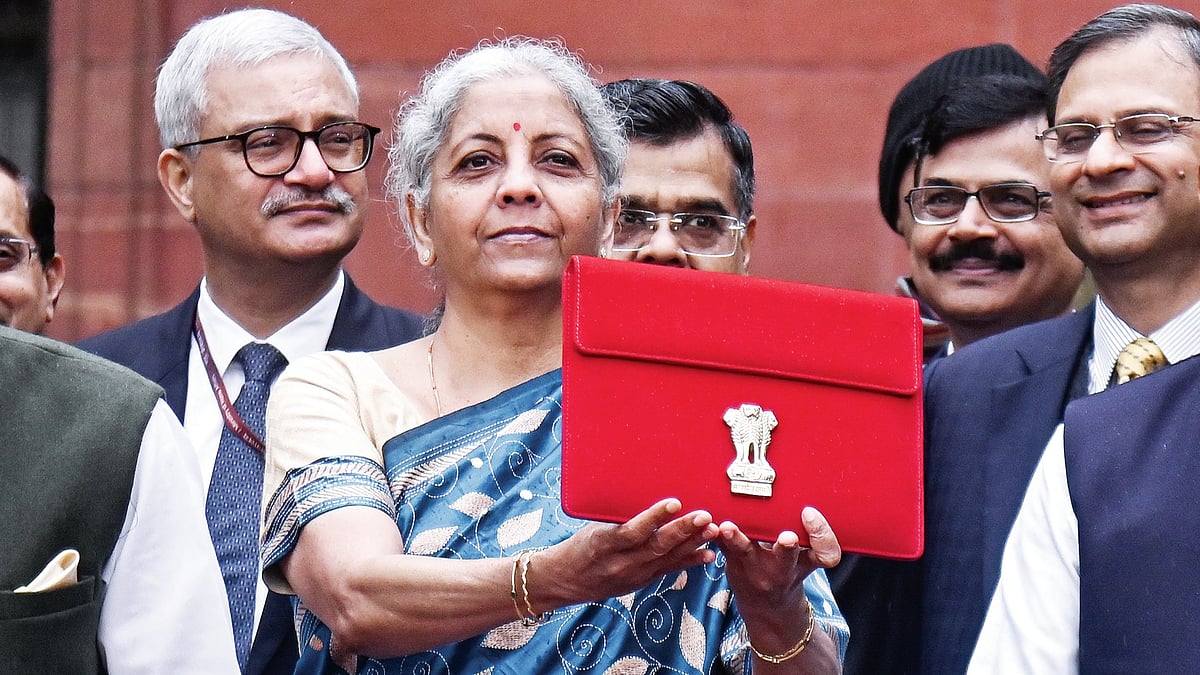
Preservation and protection of the natural environment has never been a priority in our annual Budgets; ALL Finance Ministers have taken it for granted and have treated it as an infinite resource rather than a living entity to be nurtured and carefully harvested on a sustainable basis. In July 2014 I had written a blog on these pages about precisely this: Budget 2014- Shortchanging the Environment. Eleven years down the line this catastrophic deficiency in planning persists, even though a new, and compelling, dimension has been added now with the acceleration of Climate Change (CC). The need now is, not only to provide public funding for measures to counter CC (adaptation, mitigation) but also for rehabilitation of those directly affected by it- poor farmers, landless labourers, fishermen, nomadic tribes. Unfortunately (and predictably) this Budget, like its predecessors, does none of this.
We should perhaps have expected this from the tone of the Economic Survey 2026, released a couple of weeks earlier. In it, the Chief Economic Advisor blatantly bats for growth and neoliberalism at the cost of the environment. Defying all science he states that cutting carbon emissions should not be our top priority, and that "a 3*Celsius world would be a liveable one"(!) Confounding all evidence and scientific global consensus, he goes on to maintain that "growth and prosperity strengthen resilience and reduce vulnerability.." Yes, sir, they do, but only if done in a sustainable and ecologically friendly manner, which is not how it is happening in India. Maybe, if the Economic Advisor had paid more attention to what a fellow economist (without any political bias), Gita Gopinath, had said in Davos, he would have better understood the problem, and how wrong he is.
This govt. suffers from a severe case of CID (Compulsive Infrastructure Disorder); Capex is fine and needed for growth, but so is the environment. There are huge environmental costs to rapid infrastructural expansion- both the World Bank and the IMF estimate this at between 3.5%-5% of our GDP, which comes to about USD 200 billion or 180000 crore rupees.
The 2026-27 budget proudly mentions the creation of a mineral corridor (for rare earths) in four southern states, three more high-speed rail corridors, zero duties for maritime catches in India's EEZ or the high seas, tax exemptions for setting up data centers, but there is no mention of how the environmental consequences of these initiatives shall be addressed or mitigation of them funded. Are these corridors necessary at all, given the large number of expressways being built all over the country? The corridors shall lead to large scale land acquisition and displacement of populations, adding to the 60 million project refugees already created since Independence. Hundreds of thousands of trees (and mangroves, since rare earths are found in large quantities in coastal areas) shall be felled. The boost to maritime fisheries is welcome, but where are the guard rails to ensure that the livelihoods of traditional fishermen will be protected and not replaced by mechanised trawlers or that measures shall be taken to curb overfishing? The data centers require humongous quantities of power and water- where will they come from in this water stressed country?
The damage to the environment by the various corridors will be enormous, as pointed out above. The dilution of the regulations that could have checked this, or compensated for it, such as the Forest Conservation Act, the Environmental Protection Act, the Wildlife Protection Act, and the defenestration of the regulatory institutions have so weakened these checks over the years that we can expect minimum oversight or safeguards in the execution of these projects.
Thousands of crores shall be needed to mitigate, and compensate for, the adverse impacts of these projects, but the Finance Minister has said not a word about this- about who will pay for it and where the funds shall come from. This silence and ambiguity appears to be a deliberate strategy of decentralisation of costs to the states: the political credit and financial gains will accrue to the Center, but the social and budgetary costs will have to be borne by the states from their own resources- an innovative (mis)interpretation of the concept idea of federalism!
Finally, it appears that the 16th Finance Commission is also in lockstep with the central govt. like all so-called autonomous institutions in this country. For it has chosen to completely ignore the right of the Himalayan states to fair compensation for the ecological services they provide to the country (water, clean air, carbon sequestration, climate moderation). These states, supported by a large number of advocacy groups, had demanded a Green Bonus of Rs. 50000 crores over the five year period of 2026-2031. Not only would this have been fair compensation, these funds would have met their developmental needs without having to resort to unsustainable exploitation of their forests, rivers minerals and tourism potential. Any idiot can see that excessive and unsustainable "development" of the Himalaya (and other mountain ranges like the Aravallis and Western Ghats) is not in the interest of the country as a whole, and that therefore these mountain states should be incentivised not to do so.
But the 16th F.C. failed to see this simple truth. Early reports indicate that it has not provided any Green Bonus; nor has it provided any special grants (outside the Center's discretion, which has now become totally politicised) for climate mitigation or disaster relief. All it has done is tinker with the definition of forests which, in pure financial terms, is meaningless. Even worse, the 16th FC has now discontinued the RDG (Revenue Deficit Grant) which these states had been receiving since 1974, making a huge dent in their finances. They shall now have no option but to continue to ravage the fragile Himalayan environment to fund their development activities.
Whether or not the BJP gains from this year's Budget is a moot question; what is not moot is that the criminal neglect of the environment continues unabated in our planning and funding processes. Minister Sitharaman and her co-pilot in the Finance Commission have just nudged us a bit closer to environmental collapse, and the financial collapse of some states.
More of the writer's works can be read here
Avay Shukla is a retired IAS officer and author of Holy Cows and Loose Cannons — the Duffer Zone Chronicles and other works. He blogs at avayshukla.blogspot.com
Join our official telegram channel (@nationalherald) and stay updated with the latest headlines