Opinion
A victory that may still fall short
Dharmedra Pradhan's resignation will be only a small part of the larger victory the young protestors will have won
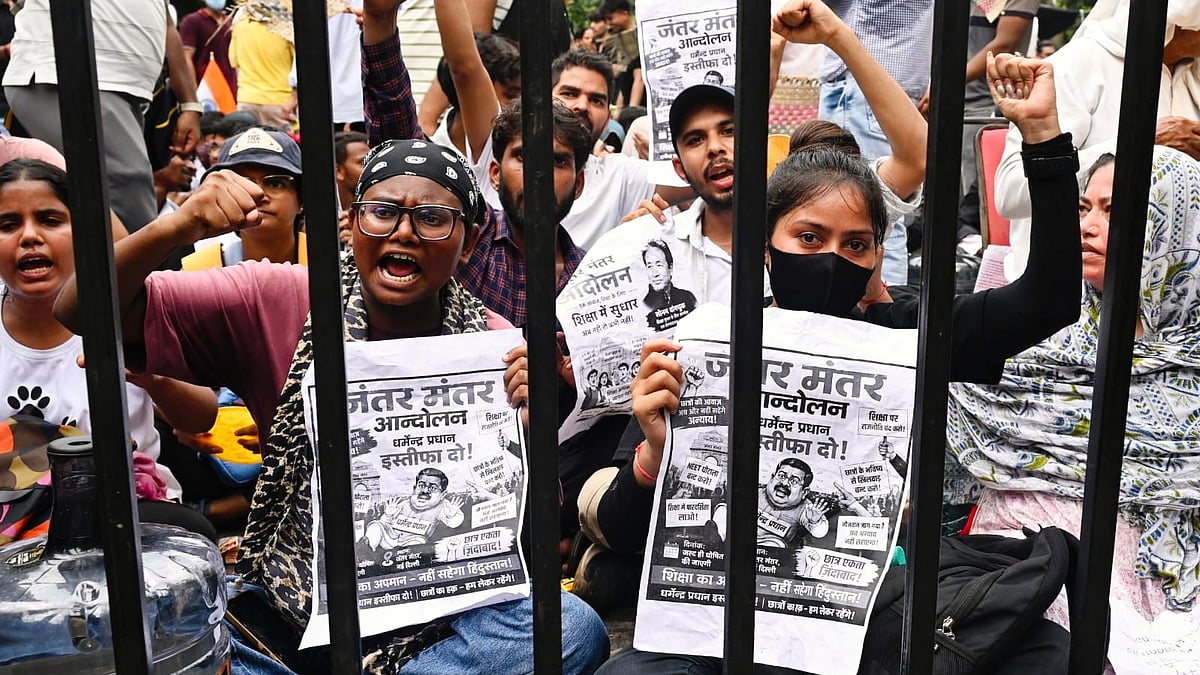
The editor of this paper has asked me to reflect in this piece on three questions about the current protests. Did this movement give me hope? Do I worry these protests might fizzle out? What do I wish comes out of this moment?
To take the first, the answer is yes. All protests and all dissent give activists hope because the assumption is that the State is imperfect. And correction can only come through demands for accountability. Corruption in its deep sense means erosion of the State apparatus and this happens only because the State, in this instance represented by the BJP government, does not behave as public servants but masters.
This particular protest is inspiring because the youngsters began with so little and made so much of it. Their commitment and courage and determination, even when they were sneered at initially, is the reason why their cause is today the dominant story in our vast nation.
To the second question, my view is that the protests will succeed. That there is no option but for the education minister to go. This might happen soon after the protests end for some reason, or it might happen through the subterfuge of transferring him or some other ruse. Insisting that he will stay on after admitting that NEET was compromised is untenable. The protest has made this impossible and the government knows this.
Its response — first ignoring the movement, then insulting its leaders, then the usual police violence and then slandering the youngsters — has not worked because it could not have worked.
I also think that the minister’s resignation will be only a small part of the larger victory the young protestors will have won. A democracy is one where public pressure forces government change. The students are following the farmers in this journey.
The third question on what I wish comes out of this moment has a two-part answer. Of course I want the students to receive justice and for the government to accept accountability. But I also wish that the crisis in education helps all of us and particularly the government focus on the important question of what lies ahead.
There are clear signals that employment and poverty will be the two main problems India will have to confront. The old route of nations transitioning its agriculture labour to manufacturing and then into services is closed and closed permanently.
Even China, which followed this route with greater success than any other nation, has hundreds of millions of people with either no work or insufficient work. Any strategy for India to deal with this crisis must begin with an honest acknowledgement of where we stand and the issues we face.
This seems like a banal thing to say and it is. But it must be said because this is a government and a prime minister that does not accept that there is a problem. ‘Sab changa si’ (all’s well) is the pose.
That is a lie, of course, and it’s no secret either. The frustration and anger of students stem as much from the corruption and incompetence that led to the NEET fiasco as their fear that the future is bleak.
They have spoken clearly about how they feel. Now it is for the government to accept their demands and begin a process that ensures we do not come back to this place again.
The real worry is that the government will not act. Even if it loses this round, which in my opinion it already has, it will treat it as an isolated incident unrelated to anything larger. Perhaps it even believes its own lies about external forces and motivated agendas.
Whatever its outlook, the last dozen years have shown that this is a government built around unfounded certainties and arrogance. That attitude will inevitably bring us back to where we are. Our farmers knew this. They realised that taking to the streets was their only option. Our students now feel the same.
Views are personal. More of Aakar Patel’s writing here
Join our official telegram channel (@nationalherald) and stay updated with the latest headlines