Opinion
Who really needs to make the sacrifices?
Arun Kumar on what lies ahead and how to brace for the war shocks
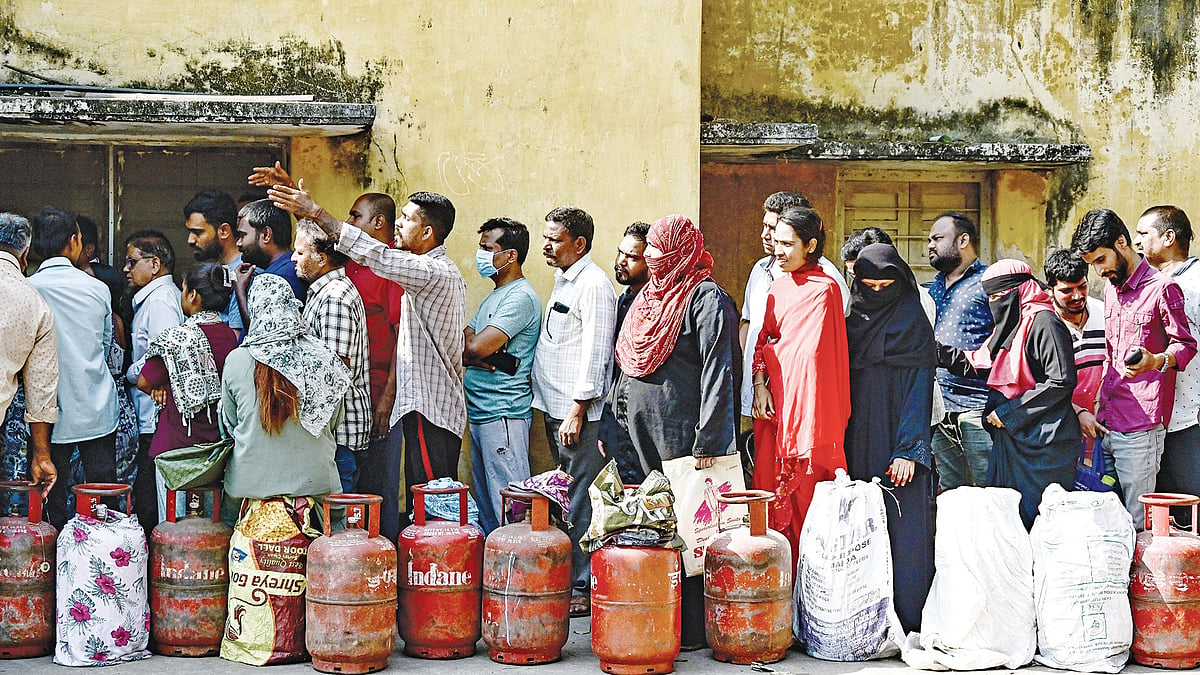
Speaking to members of the Indian diaspora at The Hague in mid-May, Prime Minister Modi said the war in West Asia can overturn the gains of the Indian economy in the past decade. Mass poverty could return, he warned, while listing the shocks of the COVID-19 pandemic, the ongoing wars and the global energy crisis.
To meet these challenges, he continued, India needs resilient supply chains, and conservation of energy must be seen as a national duty. Readers might remember similar exhortations during the demonetisation of November 2016.
No doubt, the pandemic was not of India’s making nor the current supply shock due to the closure of the Strait of Hormuz. Both adversely impact the economy, especially the unorganised sector. But all was not well with the economy before these shocks came.
Government policies have privileged the organised sector at the expense of the unorganised sector since 2014. As a result, the capital and energy intensity of the economy has risen and so have unemployment and inequality. The health of the Indian economy has increasingly depended on the organised sector, which employs a meagre 6 per cent of the work force. Even a small change in their fortunes and actions produces a disproportionate impact on the economy.
The black economy generated by the well-off and the organised sector has resulted in poor governance and policy failure and the flight of capital has created a shortage of capital and a loss of foreign exchange leading to a weak balance of payments. The corrupt rich hold hundreds of billions of dollars abroad that are not available to the national economy — and the prime minister has to make appeals for austerity and to conserve foreign exchange.
India’s economic data is suspect. This is partly due to the black economy but also for methodological reasons. The national GDP is overestimated; inflation is underestimated. The government’s default setting is to paint a glowing picture without bothering to remedy underlying weaknesses, which gets exposed in times of crisis.
****
The supply shock due to closure of the Strait of Hormuz is aggravating the underlying weakness of the economy and impacting it hard. The unorganised sector is reeling from forced cutbacks in production, declining incomes and rising unemployment. The all-round rise in prices has hit their purchasing power. The official CPI inflation of 3.5 per cent does not reflect the reality of the poor — it fails to account for the black market, which takes effective inflation up to 30-40 per cent.
The depreciation of the rupee vis-à-vis the dollar — more than 5 per cent in 75 days and a steep annual rate of 24 per cent — also impacts the poor because it jacks up prices of imported essentials like fertilisers. The sharp decline in the rupee is related to capital leaving India, which in turn is due to waning confidence in the Indian economy.
From Rs 83.28 to a dollar in May 2024, the exchange rate is now Rs 96 and rising. The rupee has dropped 15.2 per cent in two years. Thus, the return on investment in India, measured in dollar terms, has fallen sharply. Whereas the US stock market has risen sharply on the back of technology stocks, Indian tech companies are under pressure from AI-led displacement. So, foreign capital (including NRIs) is pulling out of India.
Further, since the rupee is declining, exporters are delaying bringing back proceeds while importers are importing more. Both these reduce India’s dollar holdings. Remittances are also impacted as workers in West Asia lose jobs and return to India.
Free market economists argue that the decline in the rupee is market-driven and the RBI shouldn’t defend the rupee. This argument is flawed. Speculators take advantage and make money by beating down the currency further. Also, free markets are not really free; they are dominated by monopolies and big players.
A rapid decline in the value of the rupee can set off a chain reaction, like the Southeast Asia Contagion, which led to the collapse of the booming Thai economy in 1997-98. India also faced a similar predicament between 1988 and 1991.
The foreign investment saga
Foreign investors have been leaving India since late 2024. It is argued that they need to be lured with more concessions. But, as stated above, they are leaving because they see better returns in the US vis-à-vis India.
But why is this such a big worry? In gross terms, it is 8 per cent of the total investment in India and in net terms, less than 1 per cent. Also, if India could stop the flight of domestic capital linked to its black economy, it would have no forex shortage.
Internal investment is 99 per cent of the total, and the real cause for worry is the inadequacy on this count. Low internal investment is linked to low capacity utilisation, due to inadequate demand, triggered by growing inequality. So, action is needed to reduce inequality via redistribution of income through taxation and employment generation, rather than more concessions to capital, as business economists suggest.
For them, reform means concessions to businesses whereas what is required is more employment generation in the unorganised sector. Foreign capital will only come to the organised sector and will hardly generate new (net) employment given its use of high technology. It will further marginalise the unorganised sector and reduce employment generation.
The unorganised sector constitutes a huge potential internal market — much larger than the external markets. This sector is so poor and unemployed that if it gets work, incomes will get a boost as will demand. Whatever is exported, like textiles, leather goods, food items, could also be sold in India if people had incomes. So, a drastic rethink is required.
Advanced countries are onshoring capital to shorten supply chains and boost employment. Trump is exhorting businesses and bullying allies to invest in the US. Trade won’t solve India’s problems, given that we lack the technology to compete. India must look inwards and onshore capital. Why is Mr Ambani investing $300 billion in the US and not in India?
Need for a strategy reset
There is no escaping the impact of supply shocks on production and prices. It is uncertain how long the Strait of Hormuz will remain closed and these effects may persist or worsen. The economy will be constrained by shortages and production will take a hit. India can only plan to minimise the impact, especially on vulnerable sectors.
Essential consumption must be maintained, otherwise inflation will shoot up and there will be social disruption. Inessential consumption — unnecessary travel and tourism, the five-star life, social waste — can be curtailed.
Economically, this will be less disruptive. Reduced inessential consumption will save both forex and energy, which can be redirected towards essentials. Employment, incomes and demand will inevitably be hit, and workers in affected sectors will need support.
Investment is likely to decline due to cutbacks in production, uncertainty and excess capacity in various sectors. But public investment in essentials, the social sector and welfare for the marginalised must be maintained.
****
The government has dithered for close to 90 days since the 2026 edition of the Iran war began on 28 February. Knee-jerk policies might lead to runaway inflation and a total loss of control over the direction of the economy. Mass poverty never went away, Mr Prime Minister, but it can certainly get worse with bad policy moves. Instead of asking India’s precariat to brace for the worst and prepare to make more sacrifices, consider a targeted appeal to the 3 per cent well-off Indians with their hoards stashed abroad and a five-star lifestyle.
Arun Kumar is a renowned economist and author most recently of Indian Economy’s Greatest Crisis: Impact of the Coronavirus and the Road Ahead. Get more of his writing here
Join our official telegram channel (@nationalherald) and stay updated with the latest headlines