


Bengal: Cong seeks to reclaim 21 July legacy as TMC factions battle for Martyrs' Day
Thirty-three years after Youth Congress protest over alleged poll rigging, anniversary becomes battle over history and political ownership
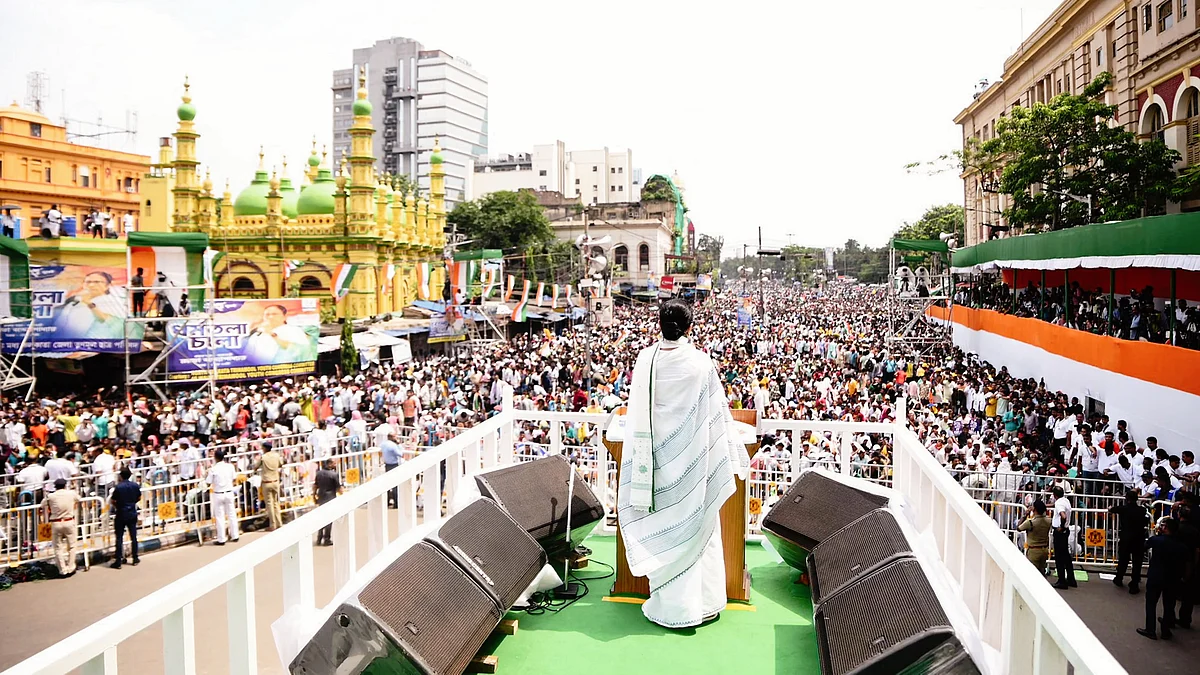


For more than three decades, West Bengal's 21 July observance has been inseparable from former chief minister Mamata Banerjee's political journey. The day commemorates the police firing on a Youth Congress rally led by then Youth Congress president Banerjee in Kolkata on 21 July 1993, when 13 activists were killed during a march demanding photo voter identity cards and electoral reforms to counter what the Congress — then West Bengal's principal Opposition party — alleged was the Left Front's 'scientific rigging' of elections.
Thirty-three years later, the politics of electoral integrity has once again returned to the centre of the state's discourse. Mamata Banerjee has alleged that the 2026 Assembly election was manipulated through the Election Commission's Special Intensive Revision (SIR) of electoral rolls and the Union home ministry, accusing the Centre of 'vote chori (theft)'. Against that backdrop, political observers will watch closely whether she uses this year's Shaheed Divas (martyrs' day) platform to launch another mass movement around electoral reforms, much as she did in 1993.
The symbolism of the occasion has become even more contested this year. The Congress is attempting to reclaim what it says was originally its movement, the Trinamool Congress (TMC) has splintered into two rival camps following its defeat in the 2026 Assembly election, and former TMC leaders are also seeking to preserve their association with the day.
Though the observance was originally organised by the Youth Congress in 1993, after she left the Congress in 1997 and founded TMC the following year, the annual commemoration gradually became synonymous with her party. Following the TMC's rise to power in 2011, the rally evolved into one of West Bengal's biggest annual political gatherings, serving both as a tribute to the 13 slain activists and a show of the party's organisational strength.
This year, however, the political landscape is dramatically different. Banerjee has lost power after 15 years in office, and multiple claimants are seeking ownership of one of Bengal's most politically significant anniversaries.
The state Congress will hold its programme at Shahid Minar and has publicly invited Banerjee to attend, with strings attached. During an inspection of the venue, state Congress chief Shubhankar Sarkar said, "If Mamata Banerjee has genuine courage, she should not distort history. She should come to this stage and admit that leaving the Congress was a mistake."
He reminded reporters that the 1993 movement was organised under the Youth Congress banner and Congress flags. "A political leader who respects their own history earns greater respect," he said.
Sarkar added that if Banerjee came to Shahid Minar to pay tribute to the martyrs and admitted that leaving the Congress had been an error, "it would at least be a step towards atonement". He insisted that the Congress platform remained open to everyone.
Responding to the invitation, senior TMC leader Kunal Ghosh maintained that while the Congress was free to organise its own programme, it had not stood by the protesters in 1993. "When Mamata Banerjee called the movement on 21 July 1993 as Youth Congress president, the state Congress did not stand beside the agitators," he said.
Meanwhile, the Ritabrata Banerjee-led TMC faction has intensified preparations for its own Martyrs' Day rally on Mayo Road. At a strategy meeting, opposition chief whip Akhruzzaman assigned six districts — North Kolkata, South Kolkata, Nadia, Howrah, Hooghly and South 24 Parganas — the responsibility of mobilising supporters.
He told party workers that despite the party's current circumstances, "21 July is not just a political programme. It is a day to pay tribute to the martyrs".
Understandably, given what is at stake, Ritabrata Banerjee declined to predict attendance, saying, "This is a collective organisational effort. I cannot comment on numbers without consulting everyone."
The TMC's Mamata faction has also fought a legal battle over its programme. Calcutta High Court permitted it to hold a meeting near Birla Planetarium between noon and 3.30 pm, with participation capped at 3,000 people and subject to strict traffic management conditions, a far cry from the huge turnouts of yore.
Adding another layer to the contest, 20 former TMC MPs who have joined the little-known BJP ally NCPI have also announced that they will observe 21 July. Speaking for the group, MP Kakoli Ghosh Dastidar said, "A martyr is a martyr. Kargil martyrs are martyrs, freedom fighters are martyrs, and those who laid down their lives on 21 July while fighting for law and order in West Bengal are martyrs too. We have always paid tribute to them; why shouldn't we do so now?"
Whether this year's 21 July is ultimately remembered for the rivalry over its legacy or for Mamata Banerjee's attempt to once again place electoral reforms at the heart of Bengal's politics may depend on the message she delivers from the stage. Either way, an anniversary that began as a protest over the conduct of elections has, three decades later, once again become intertwined with the battle over how elections are fought — and remembered — in West Bengal.
Join our official telegram channel (@nationalherald) and stay updated with the latest headlines