POLITICS
ECI ‘press note’ silent on role of DG (IT) flagged by election commissioners
Mamata Banerjee had earlier alleged Seema Khanna was linked to BJP’s IT cell
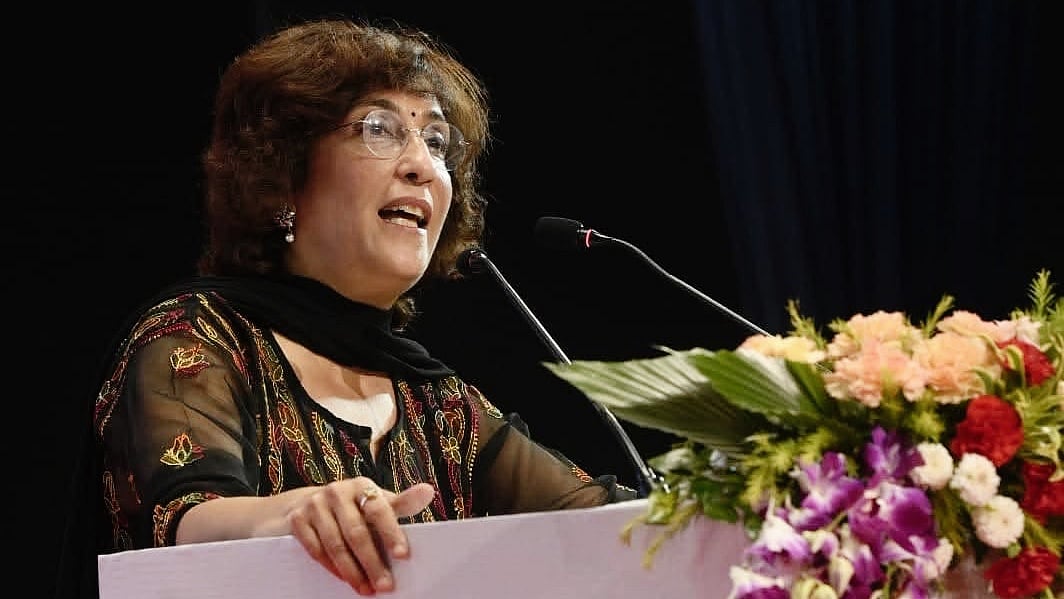
Serious concerns were raised about the working of the IT division in the Election Commission by the two election commissioners, reported the Indian Express
The election commissioners wanted an internal audit to be carried out on the functioning of ECINET rolled out in January
The explanatory ‘press note’ issued by ECI on 23 September fails to address or answer any of the concerns raised
Trinamool Congress (TMC) MP Mahua Moitra on Wednesday, 23 September accused chief election commissioner Gyanesh Kumar and Election Commission DG (IT) Seema Khanna of centralising control over electoral-roll software and using it to manipulate voter lists in West Bengal, following an Indian Express report detailing repeated objections raised by two election commissioners.
‘Khanna crossed all Seema... ECI’s DG of IT was a law unto herself. Aided by Gyanesh Kumar, she used the software to centrally add, delete and manipulate voter names and lists, bypassing on-ground officials who had ERONet logins in Bengal. On 18 February 2026, we visited the CEO, WB in a five-member delegation. We knew exactly how Gyanesh Kumar was using Khanna and backend software to manipulate lists and we called it out. But courts slept and he kept fiddling,’ Moitra posted on X.
TMC founder and former West Bengal chief minister Mamata Banerjee had earlier publicly alleged that Khanna was associated with the BJP's IT cell. The Indian Express investigation, meanwhile, reported that election commissioners Sukhbir Singh Sandhu and Vivek Joshi had repeatedly raised concerns about the functioning of ECINET, the platform that integrated the earlier ERONet system in January.
According to the report, the two commissioners objected to decisions taken by the IT division under Khanna without informing them or obtaining the approval of the full Commission. They recorded their concerns in writing and sent memos to Sanjay Kumar, a senior IAS officer and deputy election commissioner who was overseeing the IT division. Kumar subsequently followed up with official notes to Khanna, but the concerns did not result in any change, the report said.
The dispute escalated on 28 July, when Maneesh Garg, a senior deputy election commissioner given additional charge of administration, removed Sanjay Kumar from overseeing the DG (IT), according to the report.
Kumar had been acting as a bridge between the election commissioners and the IT division and briefing the Commission on the division's work. He had also proposed an internal audit of the system. Within hours of being given the additional charge, Garg called off the proposed audit, the report said.
The following day, on 29 July, Sandhu and Joshi separately wrote to the cabinet secretary, flagging the reallocation of work within the ECI and questioning its legality. They also sought appropriate action against Garg.
On 30 July, the two commissioners jointly set Garg's order aside, saying the changes had been made without "any reason and justification". They directed that the earlier allocation of work remain in place until the Commission reached a consensus. The communication to Garg was also copied to Gyanesh Kumar.
The report also said that on 16 April, Joshi recorded that no agenda had been circulated before Commission meetings for about a year and that minutes of meetings had not been circulated either during that period.
The reported concerns form part of 14 instances over 10 months in which Sandhu and Joshi recorded objections to decisions taken within the poll panel, according to the Indian Express.
Among the issues flagged were changes to Form 6 in July, which is used by new voters and those seeking restoration of names deleted during the Special Intensive Revision (SIR). The revised form reportedly required applicants to certify that their parent or parents had been covered by the previous intensive revision of electoral rolls conducted in 2002-03.
The commissioners also raised concerns over the access of Electoral Registration Officers (EROs) to ECINET. EROs are the statutory authorities responsible for additions and deletions from electoral rolls. According to the report, they no longer had full access to the system to reverse incorrect entries or make corrections, with some additions and deletions instead being carried out centrally by the IT division.
Another point of contention concerned the 60 lakh voters in West Bengal flagged for logical discrepancies and subsequently scrutinised by judicial officers from the state and neighbouring states. The judicial process resulted in the deletion of 27 lakh names, according to the report.
The ECI subsequently told the Supreme Court that 16 lakh appeals were pending before 19 appellate tribunals against decisions restoring voters. The two commissioners, according to the report, questioned who had authorised the Election Commission to file those appeals.
Sandhu wrote that it was 'strange' that statutory authorities in the field were responsible for electoral rolls while 'access control has been centralised by DG (IT)', who, he said, had no legal authority to restrict the complete access and freedom to operate provided to statutory authorities under the law.
He directed that full access be restored to the statutory authorities and asked the DG (IT) to obtain confirmation from chief electoral officers that statutory authorities across states and Union Territories had unrestricted access to ERONet and were able to perform their duties without restrictions.
Khanna joined the Election Commission on deputation in 2025, according to the report. A former deputy director-general at the National Informatics Centre, she has worked in cyber security and has presented ECINET's features to election officials, describing the system as one intended to improve efficiency and transparency.
The Election Commission's 23 September response to the Indian Express investigation, however, did not address the specific concerns surrounding Khanna or the IT division raised in the report.
Join our official telegram channel (@nationalherald) and stay updated with the latest headlines