POLITICS
Land-for-jobs case: Lalu had no role in railway appointments, CBI tells Court
Agency says prior sanction under anti-graft law not needed as decisions lay with general managers
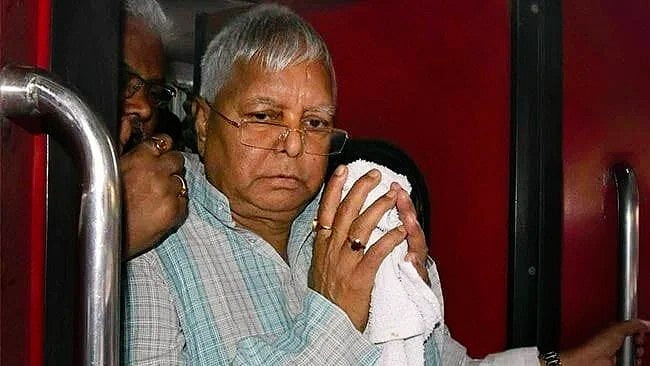
The CBI (Central Bureau of Investigation) on Tuesday told the Delhi High Court that RJD president Lalu Prasad Yadav had no role in railway appointments during his tenure as Union railway minister, arguing that the alleged acts in the land-for-jobs case were not connected to the discharge of any official duty and therefore did not require prior sanction under the Prevention of Corruption Act.
Opposing Yadav’s plea seeking quashing of the FIR and subsequent charge sheets, Solicitor General S.V. Raju, appearing for the CBI, submitted before Justice Ravinder Dudeja that the authority to make or recommend appointments in the railways rested with the general managers, not with the minister.
“Our case is that in the discharge of his official duties, he was not required to make any recommendation or take any decision in these appointments. Therefore, whatever recommendation or decision is alleged was not in discharge of his official duties,” Raju told the court.
No protection under Section 17A, says CBI
The agency contended that Section 17A of the Prevention of Corruption Act, which mandates prior approval for initiating an inquiry or investigation against a public servant for acts done in the discharge of official duties, does not apply in this case.
“The power to take such decisions lay with the general managers. The minister had no role. Hence, there was no public duty involved in the alleged acts,” Raju argued, adding that sanction under Section 17A had already been obtained in respect of the general managers concerned.
Additional Solicitor General D.P. Singh, also appearing for the CBI, informed the court that the statutory approvals for proceeding against the relevant railway officials were in place.
The bench listed the matter for further hearing next week.
Background of the case
The land-for-jobs case relates to alleged irregularities in Group D appointments in the West Central Railway zone, headquartered in Jabalpur, during Lalu Prasad’s tenure as railway minister between 2004 and 2009.
According to the CBI, certain candidates were appointed in return for land parcels that were allegedly gifted or transferred to members of Yadav’s family or close associates. The agency claims that the transactions were part of a quid pro quo arrangement linked to recruitment in the railways.
An FIR in the case was registered on 18 May 2022 against Yadav, his wife, two daughters, unidentified public servants and several private individuals.
Lalu’s challenge to FIR and charge sheets
In his petition before the Delhi High Court, Yadav has sought the quashing of the FIR as well as the three charge sheets filed by the CBI in 2022, 2023 and 2024, along with the consequential orders taking cognisance.
Senior advocate Kapil Sibal, appearing for the RJD leader, has argued that the entire investigation is vitiated as the CBI failed to obtain mandatory prior sanction under Section 17A before initiating the inquiry and registering the FIR.
The petition contends that the FIR was lodged after an unexplained delay of nearly 14 years, even though earlier enquiries by the agency had culminated in a closure report filed before the competent court.
“Initiation of a fresh investigation by concealing the earlier investigations and closure reports amounts to an abuse of the process of law. The petitioner is being made to suffer through an illegal and motivated investigation, in violation of his fundamental right to a fair probe,” the plea states.
CBI rejects claims of political vendetta
The agency has rejected allegations of political vendetta, maintaining that the investigation was reopened after fresh material came to light and that the procedural safeguards under the law have been duly followed.
Responding to the defence’s reliance on Section 17A, the CBI has maintained that the provision cannot be used as a shield where the alleged acts are not connected to the discharge of official functions.
“Section 17A is intended to protect honest public servants from vexatious litigation in relation to bona fide official decisions. It cannot extend to acts which are dehors official duty,” the agency submitted.
What lies ahead
With the High Court set to hear the matter further next week, the focus will remain on two key questions:
whether the alleged acts fall within the scope of official duty, attracting protection under Section 17A; and
whether the CBI’s reopening of the case after earlier closure amounts to an abuse of process.
The outcome will have significant implications for the future course of the prosecution in one of the most politically sensitive corruption cases involving a former Union minister.
Join our official telegram channel (@nationalherald) and stay updated with the latest headlines