POLITICS
Public protests are democratic, not anarchy, says Shiv Sena (UBT)
Saamana editorial challenges Mohan Bhagwat’s remarks on agitations, questions RSS role in past movements for political change
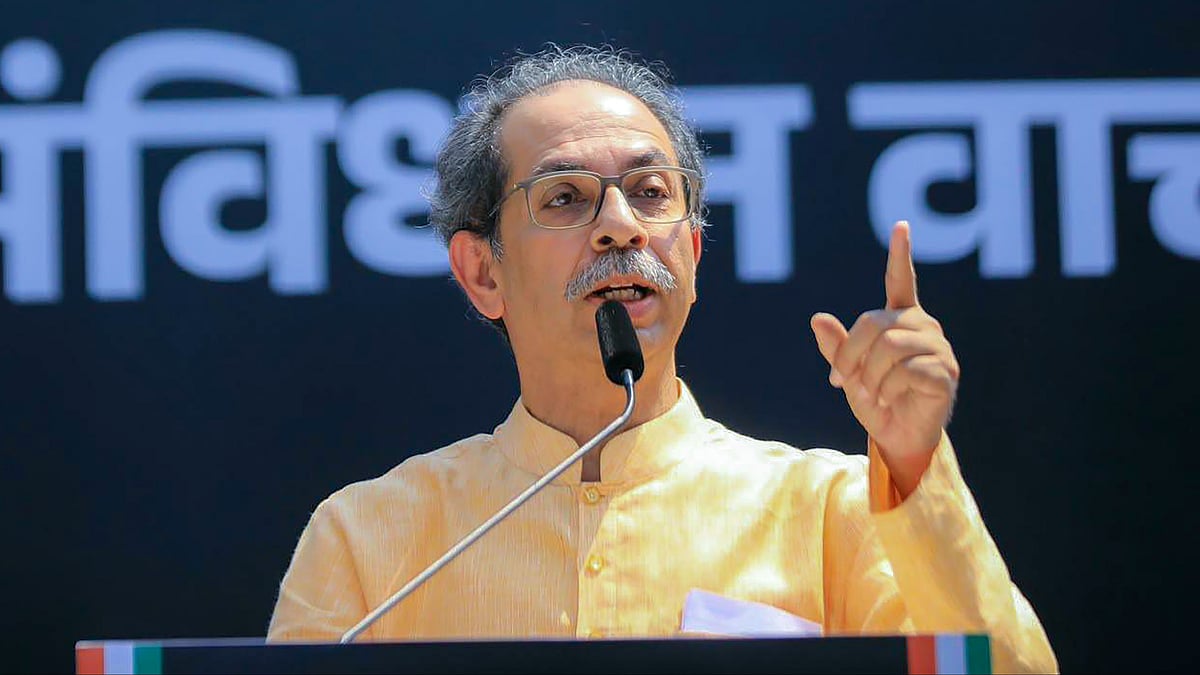
Shiv Sena (UBT) has defended public protests against the Modi government as democratic expressions of dissent
An editorial in Saamana questioned RSS chief Mohan Bhagwat’s remarks linking agitations to political self-interest and social divisions
The party cited past movements involving the Sangh and argued that protests are essential to holding governments accountable
Shiv Sena (UBT) on Thursday defended public protests against the Modi government, arguing that resistance to those in power is a legitimate democratic activity and should not be dismissed as anarchy.
An editorial in the party mouthpiece, Saamana, criticised RSS chief Mohan Bhagwat’s Vijayadashami address, in which he expressed concern that public agitations could serve political interests and deepen divisions in society.
The Uddhav Thackeray-led party said Bhagwat’s references to unrest in France, Italy, Belgium, Nepal, Sri Lanka and Bangladesh failed to address why people take to the streets against governments. It argued that public anger must be examined in the context of governance and people’s grievances.
The editorial also challenged Bhagwat’s observation that a change of government does not necessarily resolve fundamental problems. It interpreted the remark as raising questions about the political transition that brought Narendra Modi to power in 2014.
Recalling the Sangh’s involvement in earlier campaigns for political change, including in 1977, the party questioned whether the RSS now regretted supporting such transitions.
Turning to the Union government’s record, the editorial cited inflation, unemployment, distress among young people and farmers, and student protests over examination paper leaks. It also accused the administration of favouring selected corporate interests and weakening democratic institutions.
The party further claimed that the independence of the judiciary and the Election Commission had been undermined and Parliament’s authority diminished. These were presented as reasons for public discontent and demands for accountability.
To challenge the portrayal of agitations as destabilising, the editorial invoked India’s freedom struggle, asking whether independence and the establishment of the republic would have been possible without mass participation.
It also referred to the Ram temple movement and the Anna Hazare agitation, which it described as RSS-inspired, questioning whether the Sangh regarded those campaigns as acts of anarchy.
The editorial maintained that public mobilisation provides a necessary check on unchecked political power. It urged Bhagwat against lending support to a model of governance that the party considers damaging to India’s democratic institutions, reiterating that peaceful opposition to oppressive rule is rooted in democratic principles.
With IANS inputs
Join our official telegram channel (@nationalherald) and stay updated with the latest headlines