Tribute
A century of grace and grit: honouring Shaukat Azmi’s legacy of art, activism
On her 100th birth centenary, we celebrate the trailblazing artist and fearless social crusader whose life redefined creativity, courage and commitment to justice
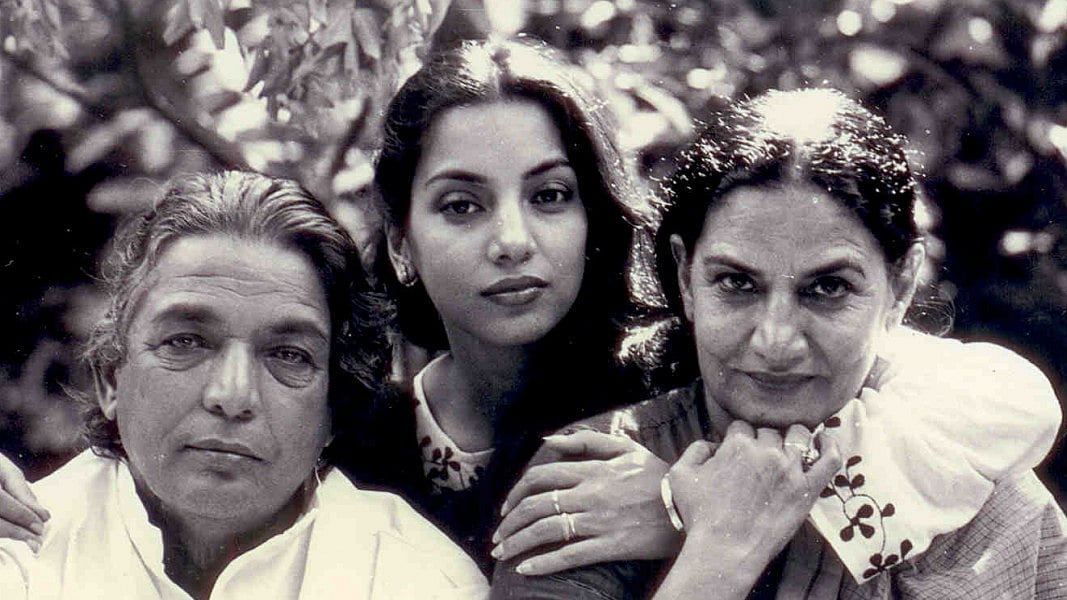
Uth meri jaan, mere saath hi chalna hai tujhe
Qalb-e-mahaul mein larzaan sharar-e-jang hain aaj
(Rise, my love, for you must walk with me now / Today, the very heart of our surroundings trembles with the sparks of war)
~Kaifi Azmi
Aurat (Woman)
A century ago on this day, a force of nature was born—one whose life would become a luminous canvas where art merged seamlessly with ideology, and personal resilience defined the trajectory of cultural revolution.
Shaukat Kaifi Azmi, born on October 20, 1926, was never merely the muse to a legendary revolutionary poet, nor just the matriarch of India’s most celebrated artistic lineage. She was an institution in her own right: a trail-blazing titan of the stage, an unforgettable presence in parallel cinema, a fierce crusader for social justice, and the foundational anchor of a radical, bohemian universe.
On her birth centenary, as we reflect on her towering legacy, we celebrate a woman who transformed the act of living into a grand, purposeful performance. Her journey from the aristocratic comforts of Hyderabad to the spartan communes of Mumbai is a timeless testament to a life lived entirely on one’s own terms, driven by an unshakeable faith in human equality and creative expression.
Her story began in the culturally rich backdrop of Hyderabad State, where she grew up surrounded by privilege. Yet, beneath the traditional upbringing beat the heart of a rebel. The pivotal turning point came when she met a fiery young progressive poet at a mushaira. It was a meeting of minds and spirits that defied societal norms. Choosing love over luxury, she left behind her secure world to marry him, embarking on an extraordinary journey into a life defined by shared ideals and immense economic hardship.
Settling in Mumbai during the late 1940s, the young couple lived in the famous Red Flat Hall, a commune shared by families committed to the Communist Party of India. In this vibrant, bohemian crucible, where resources were scarce but intellect and creativity were boundless, she discovered her true calling. The commune was a masterclass in egalitarian living, where traditional gender roles were dismantled, and the struggle for a new, just India was debated every evening. It was here that she transitioned from an observer of social change to one of its primary cultural architects.
On the progressive stage
Her foray into theatre was born out of both necessity and an inherent creative urge. She quickly became one of the leading lights of the Indian People’s Theatre Association (IPTA) and Prithvi Theatre. Working alongside stalwarts like Prithviraj Kapoor, she honed a style of acting that was revolutionary for its time—subtle, deeply rooted in realism and entirely devoid of the theatrical melodrama that characterised the era.
On stage, she was a commanding presence. She possessed a rare ability to inhabit characters from all strata of society with absolute authenticity. Whether playing a disenfranchised peasant woman fighting oppression or a sophisticated urbanite navigating modern existentialism, she brought a fierce dignity to her roles. Theatre, for her, was never mere entertainment; it was a potent weapon for political awakening and social transformation. Her performances became the emotional heartbeat of the progressive cultural movement, reflecting the anxieties, hopes and struggles of a newly independent nation.
When she transitioned to cinema, she brought the same uncompromising commitment to realism that had defined her stage career. While her filmography is selective, her impact was monumental. In a cinematic landscape often dominated by archetypes, her portrayals stood out as masterclasses in nuance.
Her performance in the partition masterpiece Garam Hawa remains one of the finest portrayals of quiet resilience in Indian cinema. As the wife of a man watching his world crumble around him, she anchored the film’s domestic tragedy, projecting the deep, internalised trauma of a family caught in the vicious crosscurrents of history. Similarly, in Umrao Jaan, her portrayal of the complex madam of a Lucknow salon bypassed clichés to reveal a layered woman wielding authority within a deeply patriarchal structure. In Bazaar, her brief but unforgettable performance exposed the vulnerabilities and harsh realities of the societal trade of young brides. Each of these roles reflected her sharp socio-political consciousness, using the screen to mirror the systemic cracks in the world around her.
Beyond the applause of the theatre and the accolades of cinema, her greatest masterpiece was her life itself. As a social activist, she marched on the streets, organised relief camps, and fought passionately for the rights of women and the marginalised. She lived her politics daily, turning her Juhu home into a sanctuary for writers, artists, and revolutionaries, where ideas were nurtured and resistance was planned.
Her life, beautifully captured in her memoirs Kaifi and I, and later immortalised on stage in a poignant theatrical adaptation Kaifi Aur Main, was a tapestry of profound love, intense struggle, and ultimate triumph. She balanced the demanding roles of a working mother, a committed comrade, a stellar artist and a devoted partner with an effortless grace that inspired generations. She did not merely support the revolution; she was its nurturing spine.
A century after her birth, her presence continues to reverberate through the artists she inspired, the causes she championed, and the indomitable spirit of progressive art that she helped ignite. Shaukat Kaifi Azmi remains an enduring beacon of what it means to live courageously, love fiercely, and create purposefully. Her legacy is a reminder that art is at its most beautiful when it is entirely dedicated to the service of humanity.
~Hasnain Naqvi is a former member of the history faculty at St. Xavier’s College, Mumbai
Join our official telegram channel (@nationalherald) and stay updated with the latest headlines