


The 'last Mughal' of melody: A tribute to Asha Bhosle (1933–2026)
A singular voice of range and reinvention whose music shaped Hindi cinema across generations
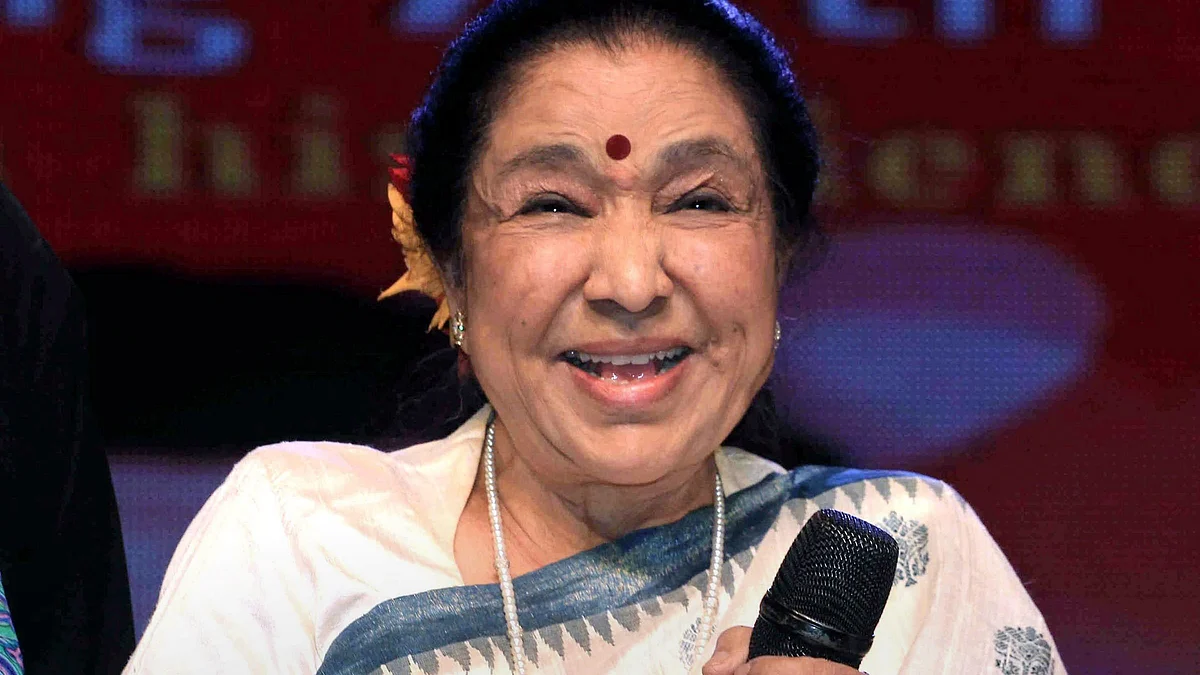


The curtains have finally fallen on one of the most vibrant eras of Indian playback music. Asha Bhosle, the unmatched voice of versatility who reshaped the soundscape of Hindi cinema for over eight decades, passed away in Mumbai on Sunday, 12 April at the age of 92. With her passing, the industry loses more than a singer; it loses a restless creative force who remained energetic and curious well into her later years.
“Main is film industry ki aakhri Mughal hoon (I am the last Mughal of the film industry),” she had famously said at a concert in Dubai a few years ago. Performing her Broadway-style show Asha@90, she commanded the stage with regal ease, her confidence and vitality defying time itself.
Born Asha Mangeshkar in 1933, her journey was marked by resilience. An early marriage that did not endure pushed her into the film industry as a young mother determined to make a living. For years, she worked tirelessly on the margins, taking on assignments that others often overlooked. Yet persistence gradually carved out a path that was entirely her own.
By the late 1950s, her collaboration with composer O. P. Nayyar produced enduring classics such as 'Aaiye Meherban' and the lively duets of Naya Daur, signalling the emergence of a singer capable of bringing distinct character to every composition she touched.
Her rise was often framed through the lens of comparisons with her sister, Lata Mangeshkar. The popular imagination cast the relationship as a rivalry, yet the reality was more layered: two extraordinary voices shaping an entire industry. While Lata’s soprano came to represent technical perfection, Asha embraced tonal warmth, sensuality and experimentation, expanding the expressive possibilities of film music and proving there was space for multiple musical identities at the top.
Asha’s artistic journey was marked by powerful collaborations that reshaped the sound of Hindi cinema. Her association with O.P. Nayyar produced memorable songs such as 'Isharon Isharon Mein' and 'Jaiye Aap Kahan Jayenge'. Their eventual professional split in the early 1970s was widely seen as a turning point, prompting yet another reinvention that led her towards the modern, rhythm-driven compositions of her husband-to-be, R.D. Burman.
Her partnership with R.D. Burman introduced a contemporary, Western-influenced energy into mainstream film music. Songs such as 'Dum Maro Dum' and 'O Mere Sona Re' captured the pulse of a changing generation.
Yet her range was equally evident in more classical and introspective compositions. Under composer Khayyam for Umrao Jaan, she delivered timeless ghazals such as 'Dil Cheez Kya Hai' and 'In Aankhon Ki Masti Ke', while devotional pieces like 'Tora Man Darpan Kehlaye' reflected her command over spiritual expression.
Despite global acclaim, honours including the Padma Vibhushan, and recognition in the Guinness World Records as one of the most recorded artists in history, Asha Bhosle remained remarkably grounded.
I had the privilege of encountering her twice — once at a friend’s wedding reception in Vile Parle, and another time at the Dadar (West) vegetable market years ago. Watching a global icon browse vegetables among ordinary shoppers spoke volumes about her personality. On both occasions, she carried her extraordinary legacy with quiet ease and humility.
To lose Asha Bhosle is to lose one of the last living links to the golden age of Indian playback singing. She was a bridge between classical discipline and modern experimentation, between tradition and reinvention. India may feel a little less melodic today, yet her music continues to resonate across generations.
Thank you, Ashaji, for a voice that will continue to echo far beyond its time.
Hasnain Naqvi is a former member of the history faculty at St Xavier’s College, Mumbai. More of his writing may be read here
Join our official telegram channel (@nationalherald) and stay updated with the latest headlines