


Indian markets tumble as oil surge fuels inflation and currency concerns
Rising crude prices after US-Iran tensions weigh on equities, with analysts warning of volatility ahead
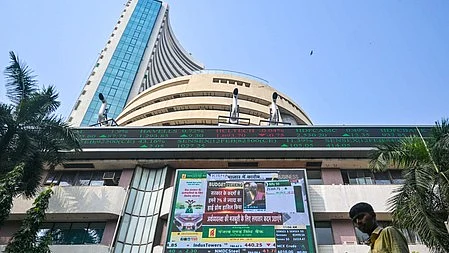


Indian financial markets came under pressure on Monday as a sharp rise in global oil prices reignited concerns over inflation, currency stability and the country’s external balances.
The spike in Brent crude, which climbed above $100 a barrel following escalating tensions between the United States and Iran, has unsettled investors. The surge follows the collapse of diplomatic talks and the announcement by Donald Trump of a naval blockade aimed at curbing Iranian oil flows.
Analysts warned that higher crude prices pose a significant risk to India, which relies heavily on imports to meet its energy needs. V.K. Vijayakumar, chief investment strategist at Geojit Investments, described the rebound in oil prices as a fresh threat to both the economy and financial markets, noting that heightened geopolitical uncertainty could trigger further volatility.
He cautioned that the Indian rupee may face renewed downward pressure, while recent inflows from foreign investors could reverse, adding to market weakness.
Equity benchmarks reflected the nervous sentiment at the opening bell. The BSE Sensex dropped 1,388.61 points, or 1.79 per cent, to 76,161.64, while the Nifty 50 fell 418.55 points, or 1.74 per cent, to 23,632.05.
Technical analysts indicated that the Nifty slipping back below the 24,000 level has weakened its near-term outlook. Immediate support is now seen in the 23,600–23,500 range, with a decisive breach potentially opening the door to further declines towards 23,300 or lower.
Market participants also flagged that early signs from GIFT Nifty had pointed to a weak start, with continued trading below key support levels suggesting the possibility of further profit-taking and heightened volatility.
The surge in crude prices is expected to have a mixed impact across sectors.
According to brokerage assessments, oil marketing companies such as Bharat Petroleum Corporation Limited, Indian Oil Corporation and Hindustan Petroleum Corporation Limited could face margin pressures, while industries including aviation, chemicals, paints, tyres and plastics may also be adversely affected by higher input costs.
Conversely, upstream producers such as Oil and Natural Gas Corporation and Oil India Limited are likely to benefit from elevated crude prices.
Experts noted that the earlier optimism in equities, driven by easing oil prices and improved global sentiment, has now reversed. Last week’s rally, which saw benchmark indices gain nearly 6 per cent, is at risk of losing momentum amid renewed geopolitical tensions.
The situation is particularly significant for India given its dependence on the Strait of Hormuz, through which a substantial share of global oil supplies passes. Any disruption along this route could widen the current account deficit, weaken the rupee and push inflation higher.
In terms of investment strategy, wealth managers advised caution. While some suggested lump-sum investments in hybrid funds at current levels, they recommended a staggered approach, such as systematic investment or transfer plans, for equity exposure over the coming months, given the uncertain outlook.
They also pointed to opportunities in fixed income strategies focused on accrual, as rising yields, driven by inflationary pressures and currency weakness, may limit the scope for monetary easing.
With geopolitical risks intensifying and oil prices remaining volatile, analysts expect markets to remain sensitive to global developments in the near term.
With PTI and IANS inputs
Join our official telegram channel (@nationalherald) and stay updated with the latest headlines