


Ceasefire effect: Oil plunges, global markets rebound
US crude plunges over 14% below $100, while Brent falls 13% to the mid-$90 range
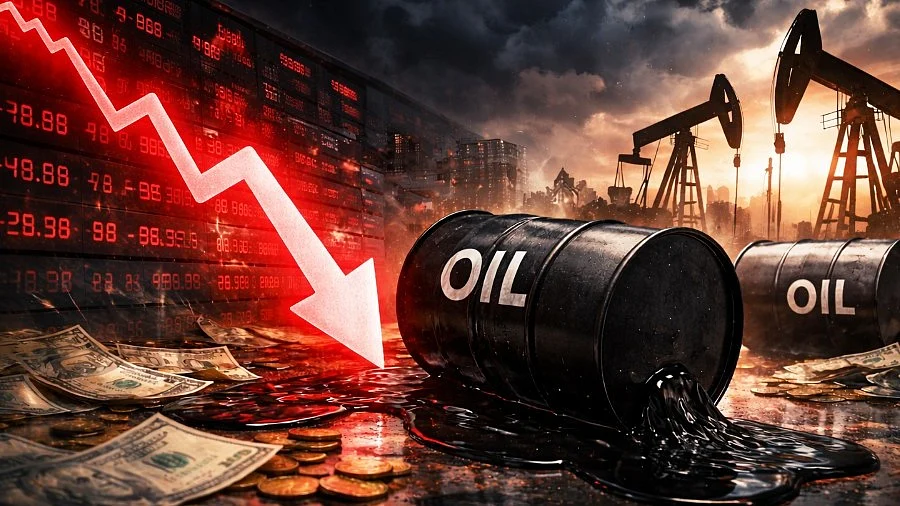


A fragile breath of relief swept through global financial markets as oil prices tumbled and equities surged, following a tentative two-week ceasefire agreement between the United States and Iran, anchored by the partial reopening of the vital Strait of Hormuz.
After weeks of turbulence driven by war fears, crude prices dramatically retreated from their highs. US benchmark crude plunged more than 14 per cent to settle below $100 a barrel, while Brent crude — the global standard — fell over 13 per cent, easing to the mid-$90 range. The sharp decline marked a striking reversal from recent spikes that had briefly pushed prices above $117 amid fears of prolonged supply disruptions in the Persian Gulf.
The easing of oil prices triggered a powerful rally across global equities. In Asia, Japan’s Nikkei 225 soared 4.8 per cent, while South Korea’s Kospi jumped 5.6 per cent. Optimism rippled into Wall Street futures, with the S&P 500 climbing over 2 per cent and Dow futures rising in tandem, signalling a buoyant start ahead.
The rally followed a dramatic late-night announcement by Donald Trump, who said he would hold off on threatened strikes targeting Iranian infrastructure, including bridges and power plants. In parallel, Tehran indicated that it would allow maritime passage through the Strait of Hormuz for the next two weeks under its supervision — an assurance that soothed immediate fears of a supply chokehold.
The strait, a narrow artery through which a significant share of the world’s oil flows, has remained central to the crisis. Its earlier closure had snarled production and transport, sending shockwaves through energy markets and fuelling inflationary anxieties worldwide.
Yet even as markets cheered the apparent de-escalation, uncertainty lingered beneath the surface. Neither Washington nor Tehran clarified when the ceasefire would formally take effect, and reports of fresh strikes across Israel, Iran, and parts of the Gulf underscored the volatility of the situation.
The past weeks have seen markets lurch wildly with each twist in the conflict. Earlier trading sessions reflected that anxiety, with Wall Street swinging sharply as Trump warned of catastrophic consequences if Iran failed to meet his deadline. At one point, the S&P 500 dropped more than 1 per cent, only to rebound into positive territory by the close, ending with a modest gain.
Oil markets mirrored that instability. Prices surged above $117 per barrel at the height of tensions before retreating, reflecting traders’ constant recalibration of geopolitical risk. The fear has been that any prolonged disruption in Gulf supplies could entrench high energy costs, triggering a broader wave of global inflation.
That concern has already begun to filter into everyday life. In the United States, gasoline prices have surged past $4 per gallon, a sharp jump from below $3 just before the conflict erupted — placing added strain on households and businesses alike.
In the bond market, a flicker of calm emerged as Treasury yields eased slightly on hopes of a ceasefire, with the 10-year yield dipping to around 4.24 per cent. Still, borrowing costs remain elevated compared to pre-war levels, continuing to weigh on economic activity.
Beyond geopolitics, markets remain caught in a wider web of uncertainty — grappling not only with war risks but also with concerns over tariffs, shifting economic signals, and the disruptive potential of artificial intelligence.
For now, the ceasefire has offered a momentary reprieve — a pause in the storm that has buffeted global markets since late February. But as oil tankers cautiously resume their passage through the Strait of Hormuz and traders watch every headline with bated breath, the path ahead remains as uncertain as ever, with stability hanging delicately in the balance.
With AP inputs
Join our official telegram channel (@nationalherald) and stay updated with the latest headlines