


Old warnings from Buffett and Lynch resurface as markets slide on oil shock
Investing legends urge calm during downturns as global equities tumble amid geopolitical tensions
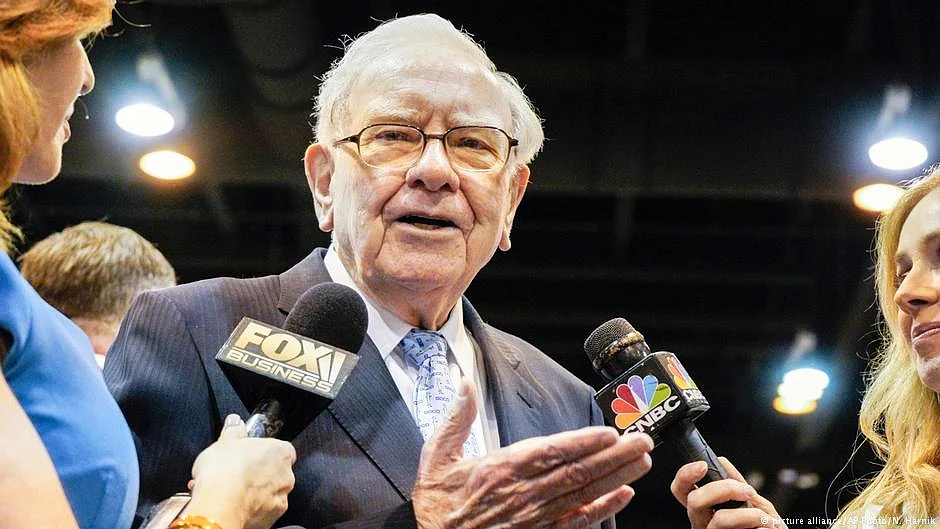


As global stock markets tumble and oil prices surge past $100 a barrel, decades-old advice from two of the world’s most prominent investors has resurfaced on social media, offering perspective on market volatility during periods of economic and geopolitical turmoil.
A video clip of renowned fund manager Peter Lynch has recently gained widespread attention on social media platform X and shared by moneycontrol, where he reflects on the inevitability of market downturns and the importance of long-term thinking for investors.
In the clip, Lynch emphasises that market declines are a normal part of investing and should not come as a surprise.
“What you learn from history is the market goes down. It goes down a lot,” he says.
Drawing on roughly a century of market data, Lynch explains that stock markets have experienced around 50 declines of 10 per cent or more over that period. Such corrections, he notes, occur roughly once every two years.
More severe downturns are also common. According to Lynch, there have been about 15 instances where markets have fallen by more than 25 per cent — the threshold often used to define a bear market — which historically occurs around once every six years.
“You need to know the market’s going to go down sometime. If you’re not ready for that, you shouldn’t own stocks,” he adds.
Viewing volatility as opportunity
Lynch’s message focuses less on predicting market movements and more on how investors respond to them.
Rather than attempting to time downturns, he argues that investors should concentrate on understanding the underlying businesses they invest in. If a company’s fundamentals remain strong, a falling share price may present an opportunity rather than a threat.
“If you like a stock at 14 and it goes to 6, that’s great,” Lynch says, explaining that lower prices can create better entry points for long-term investors.
To illustrate the value of patience, Lynch refers to the early years of retail giant Walmart. Even investors who bought shares a decade after the company’s 1970 initial public offering could still have seen their investment grow more than 30-fold, highlighting how long-term growth can outweigh short-term market fluctuations.
Buffett’s perspective during conflict
Another widely shared clip features billionaire investor Warren Buffett discussing how geopolitical conflict influences investment decisions.
In the footage, Buffett is asked whether the prospect of major wars — even something on the scale of a global conflict — would deter him from investing in equities.
His response is clear: “If you tell me all of that’s going to happen, I will still be buying stocks.”
Buffett argues that wars historically tend to trigger inflationary pressures, which can erode the value of cash holdings over time.
“The last thing you’d want to do is hold money during a war,” he says, noting that assets linked to real economic activity — such as farmland, property or productive businesses — generally retain value better over the long term.
He also points to the experience of the Second World War, during which stock markets continued to advance despite the scale of the global conflict.
Remarks gain relevance amid current turmoil
Moneycontrol reported that newed interest in these comments comes at a time when financial markets are grappling with a fresh wave of geopolitical uncertainty.
Escalating tensions involving the United States and Iran have pushed oil prices above $100 per barrel, sending shockwaves through global financial markets and triggering sharp declines in equities.
Major stock markets across Asia have fallen significantly. India’s benchmark indices dropped around three per cent, South Korea’s market fell more than eight per cent and Japan’s stocks slid roughly seven per cent. China’s main equity index also recorded losses.
The situation remains uncertain as tensions in the Middle East continue to intensify. Iran on Monday appointed the son of the late Ayatollah Ali Khamenei as the country’s new supreme leader, signalling a possible continuation of the standoff with Western powers.
Meanwhile, US President Donald Trump defended the rise in oil prices, describing it as a temporary cost linked to maintaining global security and stability.
With energy prices climbing and geopolitical risks increasing, many investors have shifted towards defensive positions. Yet the enduring advice from seasoned investors like Lynch and Buffett suggests that volatility, while unsettling, has always been an inherent feature of financial markets.
Join our official telegram channel (@nationalherald) and stay updated with the latest headlines