


US cuts duties on agricultural machinery while tightening domestic metal rules
Temporary tariff relief for farm and industrial machinery comes alongside stricter incentives to use American-made steel, aluminium and copper
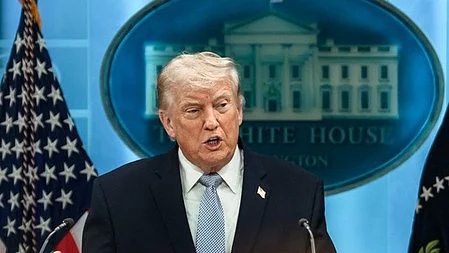


US President Donald Trump has signed a new proclamation reducing tariffs on a range of agricultural and industrial equipment while introducing measures aimed at increasing the use of domestically produced steel, aluminium and copper in American manufacturing.
The move revises existing tariffs imposed under Section 232 of the Trade Expansion Act, which the administration says are intended to safeguard national security and strengthen the country's strategic industrial base.
Under the revised framework, tariffs on several categories of agricultural machinery, including combines and harvesters, will be lowered from 25 per cent to 15 per cent until 31 December 2027. The temporary reduction is designed to provide relief to industries that depend heavily on specialised equipment while supporting broader investment across the manufacturing sector.
The proclamation also widens the range of industrial products eligible for the reduced tariff rate. Mobile industrial equipment such as bulldozers, forklifts and other material-handling machinery imported from countries covered by trade agreements will now benefit from the lower 15 per cent duty.
According to the White House, the changes are intended to address national security concerns more effectively while encouraging investment in sectors considered critical to the US economy, including agriculture, housing and manufacturing.
In a significant shift, the administration has also eased the eligibility criteria for imported products seeking preferential treatment based on their use of American-produced metals. Products will now qualify if at least 85 per cent of their steel, aluminium or copper content by weight originates in the United States, compared with the earlier requirement of 95 per cent.
Officials said the revised threshold is expected to encourage manufacturers to incorporate greater volumes of domestically produced metals into finished products while maintaining competitiveness in downstream industries.
At the same time, the administration has expanded the list of derivative products subject to tariffs, adding items such as aluminium lithographic plates and steel racks. The White House argued that the move would help prevent companies from bypassing existing trade measures through product reclassification or other means.
The administration maintained that the policy strikes a balance between supporting industries reliant on imported machinery and preserving protections for strategic domestic sectors. It noted that agricultural equipment remains essential for food production, while construction and material-handling equipment play a critical role in industrial expansion and infrastructure development.
The White House also highlighted what it described as renewed momentum in the US metals industry. According to administration figures, the United States became the world's third-largest steel producer in 2025, with more than four million tonnes of additional crude steelmaking capacity expected to come online over the next two years.
Several major investments have recently been announced across the country, including new steel-related projects in West Virginia, Arkansas and South Carolina. The administration also pointed to developments in the aluminium and copper sectors, citing plans for a new aluminium smelter in Oklahoma through a joint venture involving Century Aluminum and Emirates Global Aluminum, along with expansion projects by companies such as Highland Copper, Ivanhoe Electric, Rio Tinto and Wieland.
The latest tariff adjustments underscore the administration's broader strategy of combining targeted trade protections with incentives aimed at expanding domestic manufacturing capacity, securing supply chains and encouraging long-term industrial investment.
With IANS inputs
Join our official telegram channel (@nationalherald) and stay updated with the latest headlines