


US lawmakers push border ban bill to tighten curbs on Chinese-linked vehicles
Democrats warn vehicles from China and other adversarial nations entering via Canada and Mexico pose national security and job risks
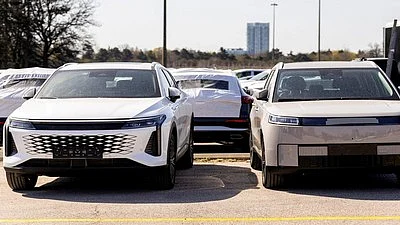


Two senior US Democrats have introduced legislation aimed at preventing connected vehicles from China and other adversarial countries from entering the United States through Canada and Mexico.
Michigan Congresswoman Haley Stevens and Senator Elissa Slotkin unveiled the Protecting America from Chinese Cars Act at the Mackinac Policy Conference. The bill would ban vehicles manufactured in China, those produced by Chinese firms, or those with significant Chinese ownership from crossing US borders.
Stevens said the measure would stop the Chinese Communist Party from accessing sensitive data on American drivers, roads and infrastructure. She described current rules as containing “dangerous loopholes” that allow Chinese connected vehicles to reach the US via its northern and southern neighbours.
Slotkin emphasised the national security dimension, calling the vehicles “surveillance packages on wheels” capable of tracking drivers, recording video and mapping sensitive sites, including military installations.
The legislation builds on her earlier Connected Vehicle Security Act and seeks to block fully finished Chinese vehicles from entering the country, even temporarily.
Chinese vehicles currently hold around 15 per cent of the Mexican market, while Canada is set to lower tariffs on Chinese cars under a new trade agreement from 2026. The bill’s sponsors said the combination leaves the US exposed on both borders.
Under the proposals, vehicles made or designed in China or by companies with more than 15 per cent Chinese ownership would be prohibited. Manufacturers could apply for exemptions, but any approvals would face strict conditions, transparency rules and congressional oversight.
US Customs and Border Protection would be required to publish a list of banned vehicles within 90 days of the law taking effect. The legislation reflects growing bipartisan concern in Washington over data collection by modern vehicles through cameras, sensors and connected systems.
With IANS inputs
Join our official telegram channel (@nationalherald) and stay updated with the latest headlines