


Why Iran’s Chabahar Port matters to India amid fresh US strikes
Strategic gateway to Afghanistan and Central Asia faces renewed uncertainty as Washington intensifies military action against Iran
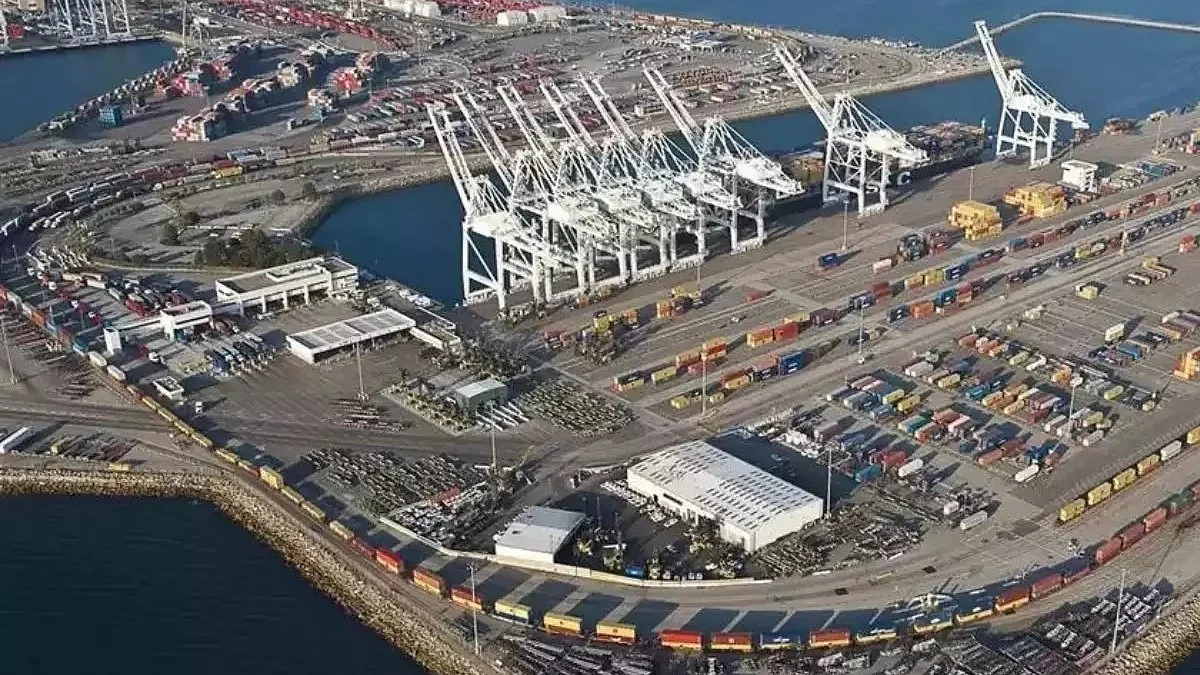


Renewed US military strikes on Iran have once again brought the strategic importance of Chabahar Port into focus, raising fresh questions over the future of one of India's most significant overseas infrastructure projects.
US defence secretary Pete Hegseth on Friday shared an image showing a port tower collapsing following an air strike. While he did not identify the location, the Associated Press reported that the structure appeared to be at Iran's Chabahar Port. Iranian state media also acknowledged that the port had been struck in three separate rounds of attacks.
The latest developments come against the backdrop of Washington's progressively tougher stance on Chabahar. Although the US Treasury exempted the port from sanctions in 2018 because of its role in supporting trade with Afghanistan, the Trump administration revoked those exemptions in September 2025.
Business Today reported that India is understood to have sought an extension of the sanctions waiver until April 2026 while committing to gradually wind down its operations at the port.
The Centre's Union Budget for 2026-27 reflected that shift. Budget documents showed no allocation for the Chabahar project in the current financial year, effectively halting government funding.
India had allocated Rs 400 crore to the project in 2024-25. Although the initial allocation for 2025-26 was Rs 100 crore, it was later raised to Rs 400 crore in the Revised Estimates. The allocation has now been reduced to zero.
Despite the funding pause, Chabahar remains strategically important for India. In 2024, India signed a 10-year agreement to operate the Shahid Beheshti terminal, reinforcing its long-term interest in the port.
Located on Iran's southeastern coast along the Gulf of Oman, Chabahar comprises the Shahid Kalantari and Shahid Beheshti terminals. For nearly two decades, the port has been central to India's efforts to improve connectivity with Afghanistan and Central Asia.
The project's importance stems largely from geography. With Pakistan lying between India and Afghanistan, overland access remains constrained by longstanding political tensions. Chabahar provides an alternative route, allowing Indian cargo to reach Iran by sea before moving onwards by road and rail into Afghanistan and Central Asia.
The port also carries wider strategic significance. It is situated around 140 kilometres west of Pakistan's Gwadar Port, a Chinese-backed deep-water facility that has become a focal point of Beijing's regional maritime ambitions. Indian strategic planners have long viewed Chabahar as a counterbalance to Gwadar, offering New Delhi an important foothold on the Gulf of Oman.
Chabahar also serves as the southern gateway to the International North-South Transport Corridor (INSTC), the 7,200-kilometre multimodal trade network linking India with Iran, Russia and parts of Europe through a combination of sea, rail and road transport.
With the port now caught in the escalating US-Iran conflict, its future role in India's regional connectivity and strategic planning is likely to face renewed uncertainty.
With agency inputs
Join our official telegram channel (@nationalherald) and stay updated with the latest headlines