


Asia Cup cricket: how long will awards ceremony continue to be a farce?
Sense of déjà vu as Harmanpreet Kaur & Co. refuse trophy from Mohsin Naqvi over his country of origin
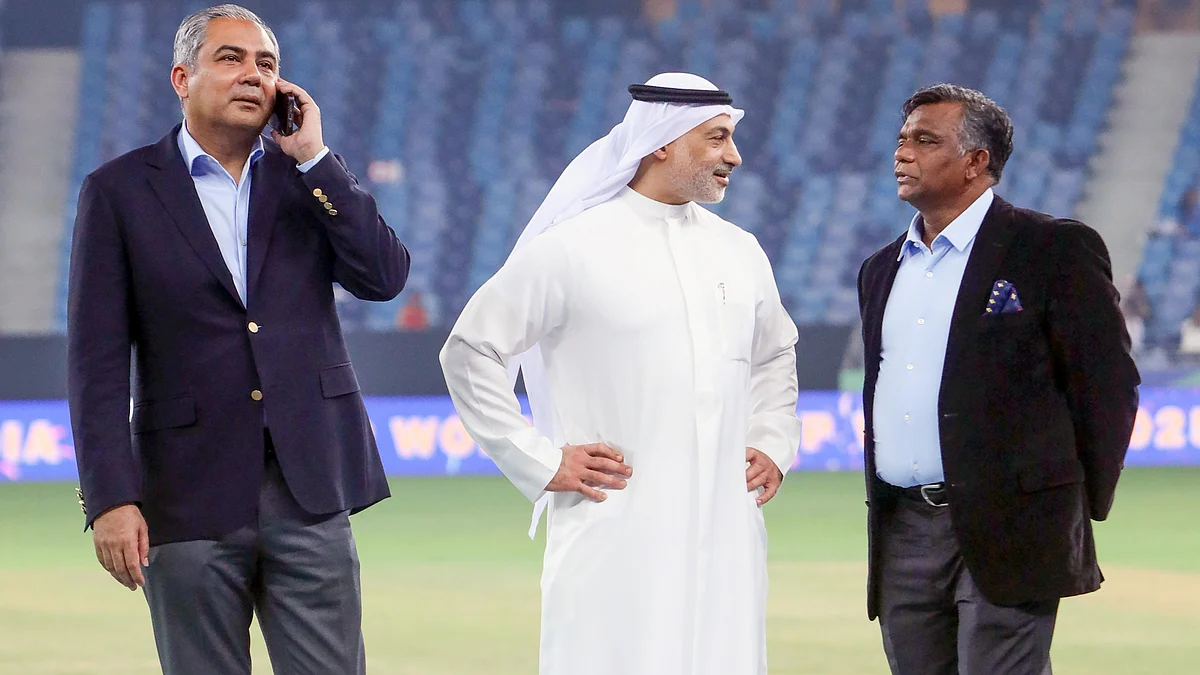


The sense of déjà vu was impossible to miss as drama unfolded during the winners’ trophy presentation after the eighth Women’s Asia Cup final on Sunday. A year separated the men’s and women’s editions of the Asia Cup, but the winners were the same — India — and so was the venue, the Dubai International Stadium, as well as the person at the centre of the storm: Mohsin Naqvi.
To the Indian fan, Harmanpreet Kaur & Co. may have again won a war of optics — albeit with guidance from the BCCI top brass present at the venue. One cannot vouch for the sentiments of Pakistan fans, as Naqvi’s dictatorial ways as chairman of the Pakistan Cricket Board (PCB), coupled with his dogged insistence on presenting the winners’ trophy himself as the Asian Cricket Council (ACC) supremo, have left many of them frustrated.
However, what made it a tiresome replay of last year’s drama was that neither party showed the will or maturity to give ground and pre-empt a saga that has made the powerful Asian bloc a laughing stock in the wider cricketing community. A throwback to this unsavoury saga reminds us that it started with Suryakumar Yadav & Co. refusing to shake hands with their Pakistan counterparts, followed by the manner in which his players were weaponised as they dedicated their multiple wins against the Green Shirts — including the final — to Indian soldiers.
The Pakistan players retorted with no subtlety — but what had far-reaching consequences was the manner in which Naqvi and his entourage walked away with the men’s Asia Cup trophy and locked it away at the ACC headquarters in Dubai. When last heard, the trophy was yet to reach the BCCI headquarters in Mumbai. Last night, India women’s team coach Amol Muzumdar said the silverware, in reality, was not of much significance to them.
“The stance has been taken by the BCCI, and we stand by it. For us, this tournament is over. We’re the champions — that’s good enough. It’s on the big board that India are the champions of 2026,” Muzumdar said, before adding, “We are happy that we’ve turned out to be champions. Now, we look forward to the Asian Games.”
BCCI secretary Devojit Saikia later clarified that the women’s gesture was in solidarity with the men’s team, which had made a similar gesture last year in the wake of the Pahalgam terror attack in April 2025. This brings one back to the moot question of whether India should have boycotted matches against Pakistan altogether, given the public sentiment. But Saikia’s response was predictable: “Our government has a policy that we must play against every country in multi-national tournaments.”
This is where the fault lines in cricket’s ecosystem come under the scanner once again, as it’s a no-brainer that an India-Pakistan game in any ICC or multi-nation tournament remains cricket’s biggest money-spinner — despite the lopsided nature of the contests over the past decade. It is the biggest bargaining chip for both parties, and one remembers how an egoistic Naqvi, who is also Pakistan’s Interior Minister, held the last ICC Men’s T20 World Cup to ransom by threatening to pull out of the tournament.
At the end of it all, the T20 World Cup went ahead, with the marquee India-Pakistan game being played in Sri Lanka as part of the hybrid formula agreed upon by the ICC until 2027. The prevailing geopolitics can safely guarantee that such an arrangement is all set to be renewed once again — so what if it drills a hole in the ICC’s coffers in terms of logistics?
The Asia Cup, meanwhile, will continue to be an exercise in financially benefiting the countries of the region through television revenues, while the driving philosophy behind forming a powerful bloc in the subcontinent has long been passé. India and Pakistan will continue to play each other but not shake hands; men who matter can be seen exchanging pleasantries in the Royal Box, yet players cannot even resort to the token gesture of shaking hands or accept a trophy from the head of the continental body simply because of his country of origin.
The bandwagon now moves to Aichi-Nagoya in Japan, where both men’s and women’s cricket events will be held under the aegis of the Olympic Council of Asia (OCA), with the technical expertise of the ACC. India go into the tournament as defending champions in both the men’s and women’s events and look like title favourites once again — which may require some advance planning from the organisers to prevent another fiasco!