


Economic Survey flags global headwinds, keeps domestic outlook secondary
The global outlook, according to the survey, remains bleak over the medium term, with downside risks dominating


The Economic Survey tabled in Parliament on Thursday struck a note of cautious optimism on India’s growth prospects, projecting real GDP growth of 6.8 to 7.2 per cent in FY27. Yet, a closer reading of the document suggests that its dominant concern was not the state of the domestic economy but the mounting uncertainties in the global economic environment that continue to cast a long shadow over India’s outlook.
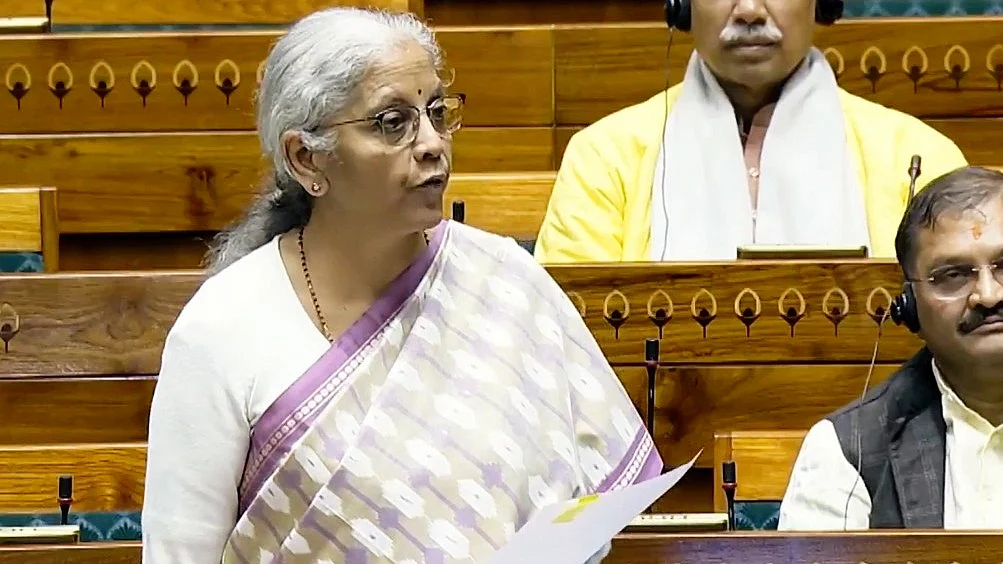
Presented by finance minister Nirmala Sitharaman in the Lok Sabha, the survey repeatedly underscored external risks, global trade disruptions and financial volatility, framing India’s economic trajectory largely through the prism of international developments. “The outlook is one of steady growth amid global uncertainty, requiring caution, but not pessimism,” the survey said, encapsulating its overarching tone.
While the document noted that FY27 would be a year of adjustment as firms and households adapt to changing conditions, with domestic demand and investment expected to gain strength, these observations were consistently tempered by warnings about an unsettled external environment. The survey explicitly acknowledged that global uncertainty would continue to shape the overall outlook, suggesting that domestic fundamentals alone may not be sufficient to insulate the economy.
A significant portion of the survey was devoted to assessing the challenges faced during FY26, which it described as an unusually difficult year on the external front. Heightened uncertainty in global trade, coupled with the imposition of high and penal tariffs, created stress for manufacturers, particularly exporters, and dented business confidence.
The government, the survey said, responded by using the crisis to push structural measures such as GST rationalisation, faster deregulation and simplification of compliance norms. Even here, the emphasis remained on responding to global shocks rather than addressing internal bottlenecks.
The global outlook, according to the survey, remains bleak over the medium term, with downside risks dominating. Global growth is expected to remain modest, commodity prices broadly stable, and inflation trending downward, prompting more accommodative monetary policies across economies. However, the survey cautioned that these positives are fragile and subject to reversal.
Among the key risks flagged were the possibility that the much-hyped artificial intelligence boom may fail to deliver anticipated productivity gains, potentially triggering corrections in overvalued asset markets and leading to financial contagion. The protraction of trade conflicts was cited as another major threat that could further weaken global investment and growth.
For India, the survey argued, these global conditions translate into persistent external uncertainties rather than immediate macroeconomic stress. Slower growth in major trading partners, tariff-induced trade disruptions and volatile capital flows could periodically weigh on exports and investor sentiment. While ongoing trade negotiations with the United States may help reduce uncertainty if concluded successfully, the survey stressed the need for maintaining adequate buffers and policy credibility.
Detailed discussion of domestic challenges, such as employment, consumption stress or sector-specific weaknesses, remained limited. Instead, the Economic Survey appeared more preoccupied with navigating a turbulent global landscape, making it clear that India’s economic story, for now, cannot be separated from the uncertainties unfolding beyond its borders.
Join our official telegram channel (@nationalherald) and stay updated with the latest headlines