


'Deeply disappointing': Congress on NGT clearing Great Nicobar project
Critics have flagged concerns over large-scale forest diversion, potential damage to coral reefs, nesting habitats, and indigenous tribes
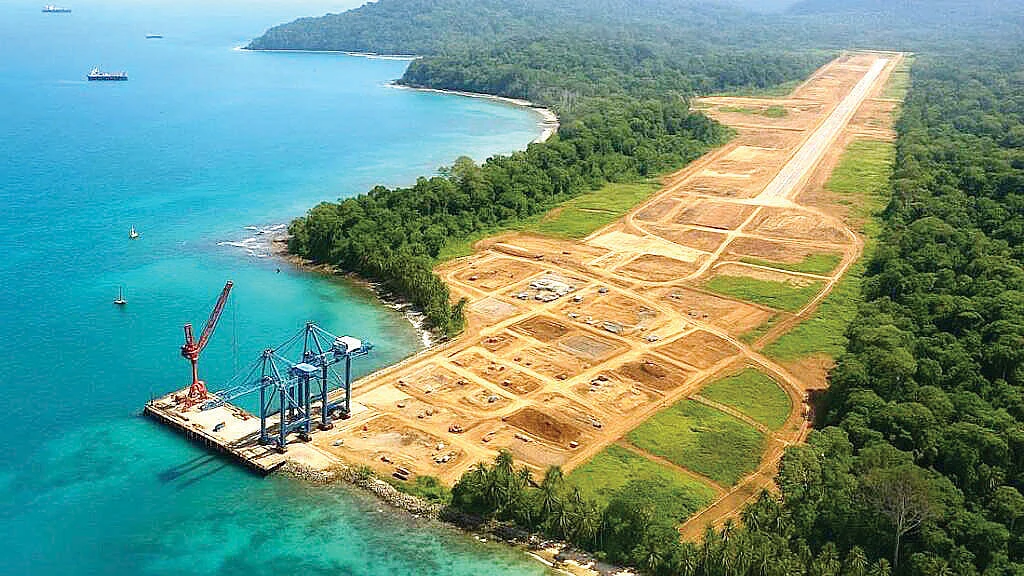


The Congress on Monday described the National Green Tribunal’s (NGT) decision to clear the Great Nicobar mega infrastructure project as “deeply disappointing”, warning that the development poses serious and irreversible ecological risks despite regulatory safeguards cited by the tribunal.
A six-member special bench of the NGT reportedly disposed of petitions challenging the project, observing that it found “no good ground to interfere” with the environmental clearance granted to the proposal, as “adequate safeguards” had been built into the approval process.
The project — formally known as the Great Nicobar Island Development Project — is being spearheaded by the NITI Aayog and implemented by the Andaman and Nicobar Islands Integrated Development Corporation. It envisions transforming the southernmost island of the Andaman and Nicobar archipelago into a strategic transshipment port, greenfield international airport, power plant and township, with an estimated investment exceeding Rs 70,000 crore.
Critics, however, have consistently flagged concerns over large-scale forest diversion — including in ecologically fragile coastal and rainforest zones — potential damage to coral reefs and nesting habitats, and the project’s impact on the island’s indigenous communities, particularly the Shompen tribe, classified as a Particularly Vulnerable Tribal Group (PVTG).
Congress Rajya Sabha MP and general-secretary (communications) Jairam Ramesh said the tribunal’s order overlooked “clear evidence” of long-term environmental harm. “The decision of the National Green Tribunal giving its approval to the Great Nicobar project is deeply disappointing. There is clear evidence that the project will have disastrous ecological impacts,” he said in a post on X.
Ramesh — a former Union environment minister — argued that the conditions cited in the environmental clearance would do little to mitigate structural and irreversible ecological consequences. He added that the matter remains under consideration before the Calcutta High Court, which he described as “the only beacon of hope” for those opposing the project.
The Congress has mounted sustained opposition to the initiative over the past two years. Congress Parliamentary Party chairperson Sonia Gandhi had earlier termed the project a “planned misadventure”, alleging that it poses an existential threat to indigenous communities and accusing the BJP-led government of making a “mockery of legal and deliberative processes”.
The government has rejected these allegations. Union environment minister Bhupender Yadav has maintained that all statutory approvals — including environmental and forest clearances — were granted after due process and expert appraisal. He has defended the project as strategically vital, arguing that it would strengthen India’s maritime presence in the Indo-Pacific, reduce reliance on foreign transshipment hubs and catalyse economic development in a remote region.
The project’s supporters also point to its national security dimension, given Great Nicobar’s proximity to the Malacca Strait, one of the world’s busiest shipping lanes. Officials have described the initiative as key to boosting India’s logistics competitiveness and strategic footprint.
Environmental groups and civil society organisations, however, contend that the island’s fragile ecology — including mangroves, leatherback turtle nesting sites and biodiverse tropical forests — cannot withstand the scale of planned construction. They have also questioned whether cumulative impact assessments adequately accounted for seismic vulnerability in the region, which was severely affected during the 2004 Indian Ocean tsunami.
With the tribunal declining to intervene and litigation continuing in the Calcutta High Court, the legal battle over the Great Nicobar project now shifts to the higher judiciary.
With PTI inputs
Join our official telegram channel (@nationalherald) and stay updated with the latest headlines