


Explained: Why extreme summers are becoming Europe’s new normal
WWA estimates that comparable heatwaves were about 3.5°C cooler in 1976 and around 2°C cooler in 2003
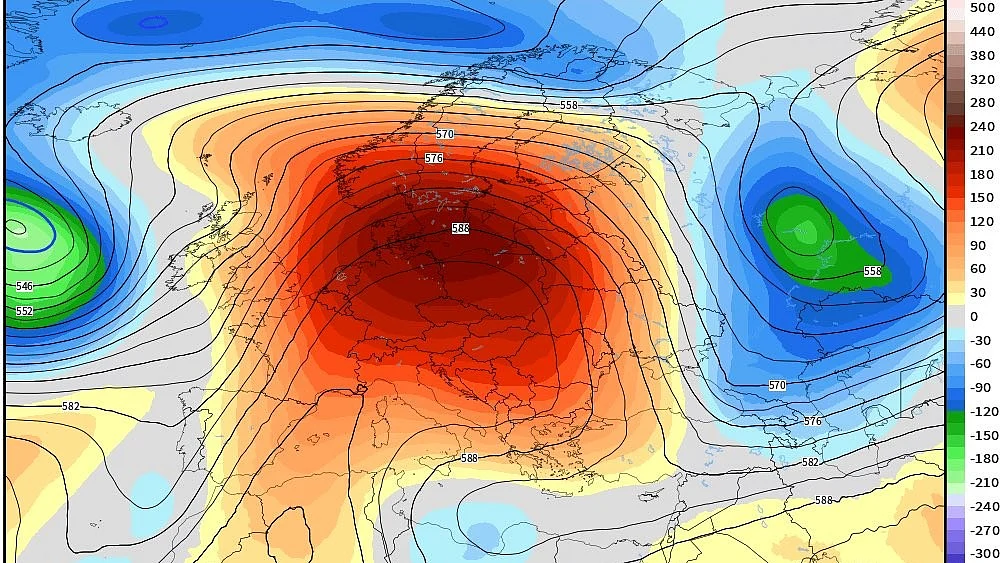


Europe's relentless summer heat is no longer an anomaly — it is fast becoming the continent's new climate reality. Record-breaking temperatures, collapsing infrastructure and rising heat-related deaths are painting a stark picture of a future shaped by global warming, according to scientists and public health experts.
The latest heatwave swept across much of Europe, pushing temperatures to 40°C in Germany, Poland and the Czech Republic, while France recorded average daytime temperatures of 29.8°C, with the mercury soaring to 44°C in one town before violent storms followed. The extreme weather left an estimated 1,000 excess deaths in France alone and disrupted transport networks across several countries, the Al Jazeera reported.
Scientists say these episodes are no longer rare events but previews of what ordinary European summers could look like within decades.
According to a new analysis by World Weather Attribution (WWA), heatwaves of this intensity are now tens to hundreds of times more likely than they were in 2003 and would have been virtually impossible half a century ago.
"Heat-related mortality is likely to remain a feature of Europe's warming climate," Dr Hans Kluge, the World Health Organization's regional director for Europe, told Al Jazeera. Heat-related deaths have already increased by an average of 52 per million people every year since the 1990s, a trend he says is unlikely to reverse without decisive action.
The findings underscore how rapidly Europe's climate has changed. WWA estimates that comparable heatwaves were about 3.5°C cooler in 1976 and roughly 2°C cooler even in 2003.
"Think of it like a race where the starting line has been moved much closer to the finish," Dr Akshay Deoras of the University of Reading told Al Jazeera, explaining that global warming has dramatically raised baseline temperatures, making extreme heat far more likely.
Europe has warmed at roughly twice the global average since the 1980s, according to the European Commission's Copernicus Climate Change Service. At current greenhouse gas emission levels, WWA projects that heatwaves comparable to this summer's could occur every couple of decades, with similarly intense conditions becoming commonplace by the middle of the century.
Meteorologists attribute the immediate trigger to a persistent "heat dome" — a high-pressure system that traps hot air over a region for days or even weeks. While heat domes themselves are not new, scientists say a warmer planet means they now generate far more extreme temperatures than they once did.
Professor Hannah Cloke, also of the University of Reading, said today's extreme weather reflects pollution released decades ago, as the climate system takes time to respond to greenhouse gas emissions.
The Copernicus European State of the Climate 2025 report reinforces the warning. More than 95 per cent of Europe experienced above-average temperatures last year, alongside record Alpine glacier loss and the highest sea-surface temperatures ever recorded on the continent.
Some consequences, experts caution, are already irreversible. Alpine glaciers that feed Europe's major rivers have shrunk beyond recovery, permanently reducing their contribution to summer water supplies.
Yet scientists insist the future is not predetermined.
"Every tonne of emissions avoided changes the odds of what comes next," Cloke said, stressing that today's policy choices will determine whether future summers remain challenging or become dangerously unliveable.
The human cost is already mounting. The Lancet Countdown Europe estimates that around 62,000 people died from heat-related causes across Europe in 2024, with projections indicating a sharp increase by 2050 if meaningful action is delayed.
Kluge argues that Europe's infrastructure remains poorly adapted to a warming climate.
"Most of the housing stock across this region was designed for a colder climate — to retain heat, not shed it," he said, calling for large-scale retrofitting and long-term planning rather than treating heatwaves as isolated emergencies.
Experts say governments must expand early warning systems, modernise ageing water infrastructure and protect vulnerable populations, particularly older people living alone. Cutting greenhouse gas emissions, they add, will not eliminate heatwaves but will make them less frequent, less intense and shorter-lived.
The message from scientists is unequivocal: Europe's climate has entered a new era. Whether summers in 2050 remain bearable or become increasingly hostile will depend on decisions taken today — not after the next record-breaking heatwave.
Join our official telegram channel (@nationalherald) and stay updated with the latest headlines