


Is there light at the end of this tunnel?
The Wayanad tunnel disaster could show the way to eco-sensitive development in Kerala’s mountain districts, writes K.A. Shaji
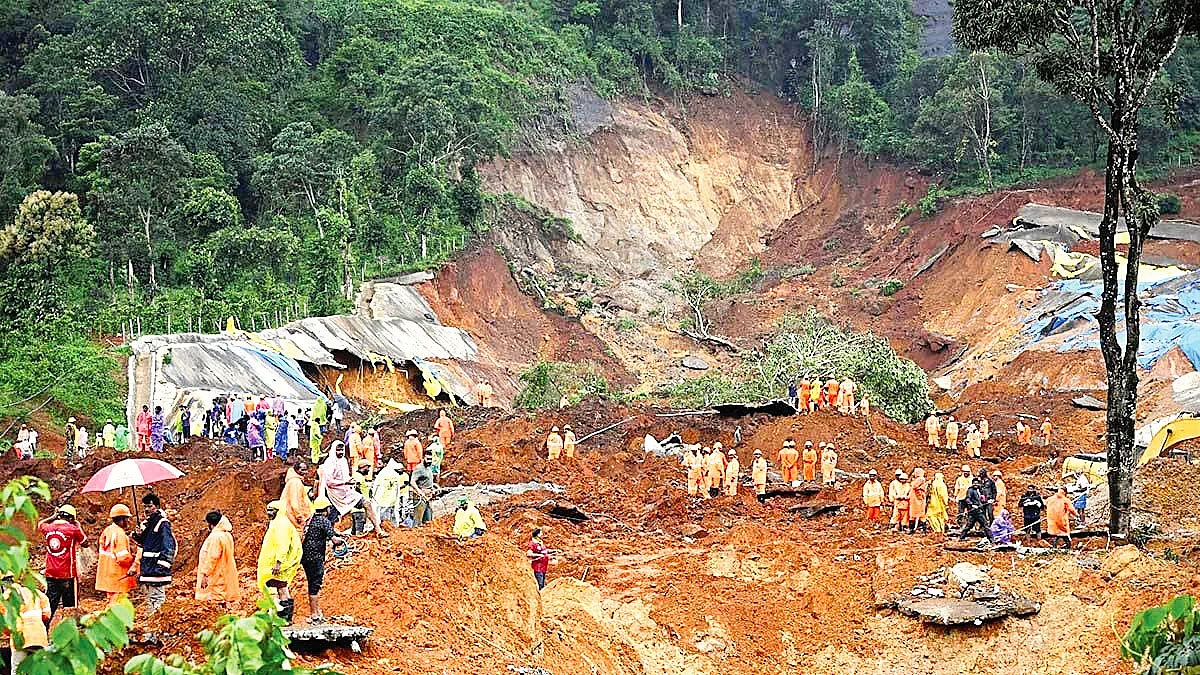


The recent landslide at the Anakkampoyil-Kalladi-Meppadi tunnel road project in Kerala’s Wayanad district has shaken public confidence.
The immediate questions are straightforward. What caused the landslide? Could it have been prevented? Were safety protocols followed? Did construction activities contribute to slope failure? We’ll hopefully have some answers when the results of the technical investigations ordered by the V.D. Satheesan-led UDF government are in.
Some larger questions loom: why did the previous government allow this huge infrastructure project in such a vulnerable landscape? Were geological warnings heeded or did political expediency overshadow ecological caution? And has Kerala learnt anything from all the climate disasters that have scarred its mountains over the past decade?
These questions are now central to Kerala’s political discourse. More so because the disaster occurred barely five kilometres from the Chooralmala-Mundakai mountains, where a massive landslide in 2024 killed 298 and left many more severely injured or homeless.
It is ironic that one of Satheesan’s first big governance challenges concerns a project he had vehemently opposed as Leader of the Opposition. He had underlined the need for extreme care and a higher threshold of scientific scrutiny because the tunnel passed through a very sensitive stretch of the Western Ghats and mistakes could have irreversible conse-quences. Satheesan’s objections were dismissed as politically motivated. He was accused of obstructing development and denying Wayanad better connectivity.
The Pinarayi Vijayan-led LDF government billed it as a transformative link between Kozhikode and Wayanad through one of the longest road tunnels in southern India. It promised to reduce travel time, improve connection to Karnataka’s IT hubs in Bangalore and Mysore, improve year-round connectivity for residents and tourists, and provide an alternative to the existing accident-prone Thamarassery Ghat Road, where negotiating nine hairpin bends is an uphill task. For a district whose economy depends heavily on tourism apart from agriculture, the proposal has obvious appeal.
But the alignment passes through terrain that has repeatedly been marked in scientific assessments as fragile and vulnerable to landslides. Ecologists like C.K. Vishnudas of Wayanad-based Hume Centre for Ecology and Wildlife Biology have long argued that mountain ecosystems cannot be understood through conventional engineering calculations.
The Western Ghats are dynamic geological systems where rock formations, groundwater movement, vegetation, drainage and rainfall interact in complex ways. Disturbing one part of that system can trigger changes elsewhere, and the impact is cumulative.
Renowned climate scientist S. Abhilash of Cochin University of Science and Technology (CUSAT) says this under-standing is even more critical because climate change is altering rainfall patterns in Kerala. Short bursts of extremely heavy rain have become more frequent. Slopes that were stable for decades are now failing and infrastruc-ture planning in this terrain requires geological investigation that goes beyond routine surveys.
The latest landslide has refocused attention on decisions taken during the conception, approval and execution of the project, Sreedhar Radhakarishnan, a leading environmental activist, points out. “Questions that were earlier treated as procedural objections now form part of the official inquiry.”
The Satheesan government has suspended work and constituted a high-level expert committee to determine: a) how the landslide occurred and b) whether the project can safely proceed in its present form. The committee is headed by geologist C.P. Rajendran, whose work on earthquakes, tectonics and geological hazards is internationally recognised.
Could geological risks have been understood better before excavation began? Were hydrological studies sufficiently detailed? Were warning signs missed during construction? Did changing rainfall patterns demand additional safeguards? Answers to these questions will influence not just the future of this project but also infrastructure planning across Kerala’s mountain districts.
Also Read: One reserve forest, three governments
Long before the disaster, Rajendran had argued that tunnelling through complex mountain formations requires extensive geological investigations because excavation changes stress conditions within rock masses and may alter groundwater pathways.
Vishnudas has repeatedly emphasised that mountains do not respond to individual projects in isolation. Every inter-vention — roads, quarries, plantations, buildings, tunnels and tourism infrastructure — adds pressure to a system already coping with erratic monsoon behaviour.
Kerala has experienced a series of disasters since 2018, when devastating floods triggered landslides across the state. Puthumala, Kavalappara, Koottickal, Pettimudi and finally Mundakkai and Chooralmala became painful reminders that extreme rainfall now interacts with altered landscapes in ways that old planning models failed to anticipate.
The Madhav Gadgil-led Western Ghats Ecology Expert Panel a.k.a. Gadgil Commission, set up in 2010, had called for stronger ecological safeguards and warned against unregulated development in environmentally sensitive landscapes. Its recommendations became politically contentious.
The recommendations of the K. Kasturi-rangan committee, which submitted its report in 2013, were moderate by comparison, but faced resistance nevertheless from political parties, sections of the Church, farmer organisations and, of course, business interests.
****
If the tunnel is eventually found to carry unacceptable environmental or geological risks, what alternatives does Wayanad have to improve connectivity? The rationale for better connectivity is also compelling — for agriculture, tourism, healthcare, education and emergency response.
Options include scientific strengthening of vulnerable stretches of the existing Thamarassery Ghat Road, advanced slope stabilisation techniques, better drainage management, careful evaluation of alternative alignments, real-time landslide monitoring, intelligent traffic systems and better public transport. The committee’s recommendations could become a blueprint for all infrastructure projects proposed in Kerala’s hill regions.
As climate expert K.G. Thara says: “Environment science should enter policy discussions before disasters occur. It must feature in the decision-making process before the first survey is conducted, before the first tender is issued and before the first excavator begins cutting into a mountain.”
K.A. Shaji has chronicled rural distress, caste and tribal realities, environmental struggles and development fault lines. More of his writing here
Join our official telegram channel (@nationalherald) and stay updated with the latest headlines